OCR GCSE化学 J248 粒子模型 键合 电解 摩尔
OCR 的化学 GCSE 有两门,J248 是 Gateway Science 那一门,按主题顺序编教材,C1 到 C6 加一个实践技能主题。学校里用 Twenty First Century 的会考 J258,两门的卷面分工不同,先确认自己考的是哪一门再安排复习。下面按 J248 的七个主题走一遍,每一节落到具体知识点和卷面上的问法。
OCR offers two chemistry GCSEs, and the paper you sit decides what revision actually looks like. This walkthrough follows J248, the Gateway Science route, topic by topic, using the wording OCR uses in its own specification.
J248 两张卷子的内容分工
J248 的第一张卷考 C1 到 C3,第二张卷考 C4 到 C6,实践技能 C7 贯穿两张。Foundation 用 J248/01 与 J248/02,Higher 用 J248/03 与 J248/04,每张 90 分、1 小时 45 分钟、各占 50%。第二张卷会默认你仍然会用第一张卷的内容:写反应速率要能配平方程式,做电解计算要会摩尔。Foundation 给 5 到 1 级,Higher 给 9 到 4 级,OCR 在两卷之间留了至少 20% 的共同题,瞄准 4 到 5 级的难度。复习顺序照这个结构走,先把 C1 到 C3 的方程式和摩尔练熟,第二张卷的计算题才有落脚点。卷面由选择题、短答和一道 6 分的 level of response 长答组成,OCR 在《Exploring our question papers》里给了这套题型说明。很多学生以为两张卷是并列的两半,实际是前后依赖的关系。
Paper 1 and Paper 3 cover C1 to C3, while Paper 2 and Paper 4 cover C4 to C6 and treat the earlier topics as assumed knowledge. Each paper is worth 90 marks and 50 per cent of the qualification, and OCR keeps at least 20 per cent of the marks common to both tiers for grades 4 and 5. Revision that treats the two papers as independent halves tends to break down on calculation questions in the second paper, because the equations and moles were never re-drilled.
C1 粒子模型与原子结构的演变
状态变化在粒子模型里只是粒子间作用力被破坏,粒子本身的大小和数目不变,熔化与沸腾的区别在于后者把粒子完全分开。原子模型的演变按证据走:Dalton 的实心球,Thomson 发现电子后的布丁模型,Rutherford 用金箔散射推出原子核,Bohr 再补上分层电子。质子数决定元素种类,中子数不同就是同位素,相对原子质量按丰度加权,氯的 35 与 37 约 3 比 1,得到 35.5。电子层排布决定它跟谁反应、反应得多剧烈,这一条把 C1 和 C4 的预测题连在一起。同位素的化学性质几乎相同,物理性质与用途不同,重水与普通水的反应速率就有差别。常见的错误是只背模型的名字,说不出每个模型被什么证据推翻。
Every model in that sequence was replaced because the old one could not explain new evidence; Thomson's plum pudding survived until Rutherford's scattering experiment revealed a dense centre. Isotopes explain why relative atomic mass is rarely a whole number, and the weighted calculation for chlorine is a routine one-mark step. Electron arrangement is the link students most often miss, since it decides both group chemistry in C1 and the predictions examined in C4.
C2 纯度、分离方法与三种键合
C2 的两块内容是分离与键合。纯净物有固定的熔点,混合物在一个温度区间内熔化,测熔点就成了判断纯度的常用手段。分离按性质差异选方法:过滤分离不溶固体,结晶按溶解度随温度的变化,简单蒸馏按沸点,分馏处理沸点接近的混合物,色谱靠吸附强弱把色素分开。键合分三类,离子键是电子转移后正负离子之间的静电吸引,共价键是共享电子对,金属键是离域电子与正离子骨架。共价键的方向性解释了分子为什么有固定的形状,形状又决定它能不能与目标分子结合。结构决定性质,离子化合物熔点高、熔融或溶解后导电,简单分子物质熔点低、通常不导电,金刚石这类巨分子共价结构熔点极高,金属延展性好、导电导热。
Separation questions are really questions about properties: solubility, boiling point or adsorption picks the method, and a melting point range is the quickest purity test. Bonding is examined through consequences rather than definitions, so a full-mark answer explains why an ionic solid conducts only when molten and why a simple molecular substance melts easily. Graphite and diamond appear often because both are carbon, yet the different arrangement produces very different behaviour.
C3 方程式配平、摩尔与电解产物
C3 的重心是方程式、摩尔与电解。配平从最复杂的分子开始,单质留到最后,检查原子数再看电荷,状态符号要写清楚。摩尔把质量和粒子数连起来,n 等于质量除以相对分子质量,室温常压下 1 mol 气体约占 24 dm3,浓度则是摩尔数除以体积。例如 4.0 g 氢氧化钠,相对分子质量 40,物质的量 0.100 mol,溶于 250 cm3 水,浓度就是 0.400 mol/dm3。电解熔融的离子化合物,阴极得到金属,阳极得到非金属。配平完要回头数一遍两边的氧和氢,很多失分就出在这一步。水溶液的产物要看放电顺序,铜离子比氢离子容易得电子,所以硫酸铜溶液电解时阴极析出铜。
Mole calculations fail for boring reasons: units, significant figures and a missing conversion from cm3 to dm3. Electrolysis is marked on the electrode, the product and the reason, so a bare product name often earns only half the marks available. In aqueous solutions the competition between ions decides the outcome, which is why copper appears at the cathode of copper sulfate rather than hydrogen.
C4 用周期表预测反应与离子检验
C4 把周期表当成预测工具用。金属活性顺序从钾钠钙镁铝锌铁铜银金往下排,越靠前的金属与水或酸反应越剧烈,也能把后面的金属从盐溶液中置换出来。卤素活性向下递减,氯气通入溴化钾溶液会把溴置换出来,溶液呈橙色。离子检验靠现象:焰色反应里锂是洋红、钠是黄色、钾是紫色但要透过蓝色钴玻璃看,氢氧化物沉淀的颜色是铜蓝、亚铁绿、铁棕。焰色反应里的钾要隔着蓝色钴玻璃看,直接看会被钠的黄光盖住。气体检验考得更频繁,带火星的木条复燃是氧气,爆鸣声是氢气,湿润的石蕊试纸先变红再褪色是氯气,石灰水变浑浊是二氧化碳。
Predictions in C4 rest on two trends, the reactivity series for metals and the decreasing reactivity of the halogens down the group. Ion tests are worth memorising as observations rather than names, because the mark is usually awarded for the colour or the gas. Gas tests appear on almost every paper, and examiners want the test plus its result, not the gas formula on its own.
C5 反应速率、碰撞理论与平衡移动
C5 考速率与平衡。影响速率的因素有浓度、温度、表面积和催化剂,碰撞理论把前三者解释为碰撞频率的变化,催化剂则提供一条活化能更低的路径。温度的影响最大,因为它既增加碰撞频率,又提高每次碰撞越过活化能的比例。测速率有两种常考装置,用注射器收集气体读单位时间的体积,或用天平读单位时间的质量损失。温度升高时有更多粒子越过活化能这一关,写解释要把这句话落在纸面上。平衡是正逆反应速率相等、各物质浓度不再变化的状态,改变条件后按勒夏特列原理移动。催化剂只缩短达到平衡的时间,不改变平衡位置,也不提高平衡产率。
Rate questions usually ask for an explanation rather than a list, so the answer has to connect a change in conditions to collision frequency or to the proportion of successful collisions. Temperature does both, which is why it dominates graphs of volume against time. A catalyst shifts the time axis only; it never moves the position of equilibrium, and answers that claim otherwise lose the mark.
C6 温室气体、原油分馏与有机反应
C6 的内容最杂,从温室气体到有机化学都在里面。温室气体主要是二氧化碳、甲烷和水蒸气,化石燃料燃烧产生二氧化碳,不完全燃烧会产生一氧化碳和烟尘。原油用分馏按沸点分成不同馏分,碳链越长沸点越高、越黏。烷烃通式 CnH2n+2,全是单键,化学性质相对稳定;烯烃通式 CnH2n,含碳碳双键,能使溴水褪色,也能加成聚合成聚合物。分馏塔里原油按沸点从下到上分开,这张装置图经常出现在题里。乙醇可以由糖类发酵或乙烯水合制得,羧酸与醇在酸催化下生成酯。合金通常比组成它的纯金属硬,金属的提取方式按活性选,太活泼的只能电解,中等活性的用还原剂,不活泼的可以以单质形式存在。
C6 rewards students who can move between scales, because a greenhouse gas, a fraction of crude oil and a polymer are all examined as chemistry with consequences. Crude oil fractions are separated by boiling point, and the trend is that longer chains boil higher and burn less cleanly. Organic reaction families matter more than individual equations, since one double bond explains both the bromine water test and addition polymerisation.
C7 八个实践活动的装置与误差问法
C7 在 OCR 的叫法是 Practical Activity Group,八组内容是活性顺序、电解、分离、蒸馏、离子鉴定、滴定、盐的制备和速率测定。考试不给实验操作分,但要求你能描述装置、读数和误差来源。滴定用移液管取 25.0 cm3,用滴定管滴加,读数看凹液面最低点,终点是颜色刚好持续不褪。测速率的实验要等气体温度回到室温再读数,否则体积偏大。读滴定管要读到小数点后两位,最小分度是 0.1 cm3。误差类问题常问为什么要重复三次取平均,为什么滴定时用蒸馏水冲洗锥形瓶内壁。Ofqual 要求试卷中至少 15% 的分数涉及实践技能,OCR 把这条写进了规范。
Practical skills are examined on paper, so the marks come from describing apparatus, reading instruments and explaining error rather than from having done the experiment. Titration carries the most procedure marks: the pipette volume, the burette reading at the bottom of the meniscus and the endpoint colour. Ofqual requires at least 15 per cent of the marks to assess practical skills, and OCR examines the principles behind the activities rather than the specific activity a school chose.
C7 之外的数学分:摩尔、浓度与产率
C7 之外另有一层容易被忽略的分值: 数学。Ofqual 规定化学卷至少 20% 的分数考数学技能,生物是 10%,物理是 30%。常考的计算有质量与摩尔、浓度与体积、气体体积、滴定比例、产率与原子经济性。产率等于实际产量除以理论产量再乘 100%,原子经济性越高,说明反应把反应物的原子用得越充分,副产物越少。它只跟方程式的相对分子质量有关,与产率是两回事。单位换算是丢分点,cm3 换 dm3 要除以 1000,浓度单位写成 mol/dm3。举例,25.0 cm3 的 0.100 mol/dm3 氢氧化钠与 0.125 mol/dm3 盐酸按 1 比 1 反应,盐酸体积是 20.0 cm3。常见的错误是把体积直接代进 n 等于 m 除以 Mr 的公式,忘记先算物质的量。
Roughly one mark in five depends on maths, and most of those marks are lost on units rather than on chemistry. Percentage yield and atom economy are separate ideas that students routinely merge, although only yield depends on how the experiment was run. Writing the formula and the substitution before the answer protects part of the mark when the arithmetic goes wrong, which is how OCR marks calculation questions.
6 分长答题的因果链与给分点
最后是 6 分的 level of response 长答题。OCR 的评分目标里 AO1 占 40%、AO2 占 40%、AO3 占 20%,长答题通常同时压到三个目标,只堆知识点拿不到满分。题目给的数值要用上,某个数据一直用不到,通常意味着漏了一问。写法上按因果链展开:先说要解释的现象或变量,再给化学原理与方程式,然后用题目给的数据支撑,最后回到结论。每一句只推进一步,把因为、所以、因此写明,不要留跳跃。阅卷时最常见的是方程式没配平、单位漏写、解释温度影响时只说分子运动加快而不提活化能。计算题即使最终答案错,写出公式与代入过程仍能拿到过程分,OCR 在评分说明里明确写了这一点。
The six-mark level of response question is where a good student and a top grade separate, and the difference is structure rather than knowledge. A full-mark answer names the variable, gives the chemistry, uses the data printed on the paper and closes with a conclusion that follows from it. Examiners see the same three faults every summer: unbalanced equations, missing units, and a claim that particles move faster without any mention of activation energy.
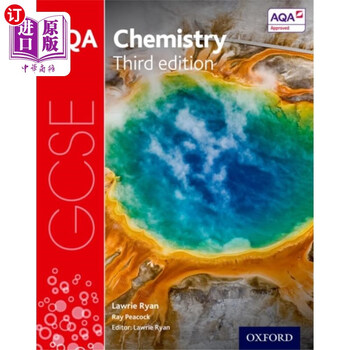
海外直订AQA GCSE Chemistry Student Book AQA GCSE化学学生手册¥588.0📱 去京东购买京东精选
A-Level / GCSE / IB / KS2-KS3 全科辅导
更多咨询请联系16621398022(同微信)
Visit aleveler.com
或截图后用「扫一扫 → 相册」选择本图