IB物理IA 选题 不确定度 线性化 斜率 结论
IB 物理的内部评估现在只有一件作品:scientific investigation。它不计入笔试,却是唯一一个可以靠方法赢分的环节。下面按真实的写作顺序拆开讲,从怎么选题,到数据表怎么填,到斜率的不确定度怎么写,最后落到阅卷人真正在找的那几行字。
The internal assessment in IB Physics is a single piece of work, and it is the only part of the grade you can win through method rather than recall. The sequence below follows the order in which the report is actually written: choosing a question, designing the table, treating uncertainty, linearising the data, and finally stating what the gradient means.
现行框架与四分维度
2023 年发布的 IB 物理指南(2025 年 5 月首考)把内部评估定名为 scientific investigation,IBO 给出的时长是 10 小时,占最终成绩 20%,SL 与 HL 权重相同。旧版里的 personal engagement 和 communication 两项已经取消,现在只剩四项标准,每项 6 分,合计 24 分:research design、data analysis、conclusion、evaluation。报告上限 3000 词,附录不计入评分。很多学生以为篇幅越长越安全,实际阅卷时看的是这四段之间有没有形成闭环。四项标准是递进关系,研究设计站不住,后面三段的分也跟着塌。
Under the Physics guide published in 2023 and first assessed in May 2025, the internal assessment is one scientific investigation; it runs for 10 hours and carries 20 percent of the final grade at both SL and HL. Personal engagement and communication are gone; four criteria of six marks each remain, covering research design, data analysis, conclusion and evaluation; reports are capped at 3,000 words, and appendices score nothing; length is not a defence, because what gets marked is whether the four sections close into a chain.
把兴趣压成一个可测的问题
research question 要能被一个数字回答。「研究摩擦力」不是研究问题,「改变接触面积时,木块在粗砂纸上的滑动摩擦系数如何变化」才是。判断一个题能不能做,看三件事:自变量至少取五个不同值,因变量能用现成仪器读到写明的精度,整套数据在两小时内收得完。常见的错误是把工程题当物理题,搭一个装置看它能跑多快,读出一堆数,背后却没有一个可以检验的关系。改题的成本其实不高,先写一页纸的方法草案,能跑通再动手采数。
A research question must be answerable with a number. Studying friction is a hobby; asking how the coefficient of sliding friction on coarse sandpaper varies with contact area is an investigation; three practical tests settle whether a question survives: at least five distinct values of the independent variable, a dependent variable your instruments can read to a stated precision, and a complete data set collectable within two hours. Engineering projects that build a device and time it generate plenty of readings and no testable relationship, which is exactly where design marks disappear.
自变量 因变量与控制变量的物理含义
写 methodology 时,变量表不是填空题。自变量写成「接触面积 20 到 100 平方厘米,五个取值」,因变量写成「拉力除以正压力」,控制变量要具体到「同一块木块、同一张砂纸、同一台电子天平」。控制变量的意义在于排除一个具体的替代解释,而不是凑字数。比如温度会影响砂纸的摩擦特性,那就写明每次测量前静置十分钟,让表面回到室温。写不出来的控制变量,往往就是后面 evaluation 里要承认的漏洞。表写完后回头查一遍,每个控制变量都要能指出它排除了哪种替代解释。
The variables table in a methodology is not a formality. The independent variable is written as a range with named values, the dependent variable as a ratio you can compute from raw readings, and each control names a real quantity held fixed: the same block, the same sheet of abrasive, the same balance; a control earns its place only by ruling out one specific rival explanation; temperature, for instance, changes how abrasive paper behaves, so the report should state that the apparatus was left to settle for ten minutes before each run. Controls you cannot describe become the limitations you later admit.
重复读数与仪器分辨率
单次读数说明不了可靠性。同一个设置下重复五次,把五次结果写进表格,读者才知道你的手稳不稳。仪器的分辨率要单独交代:毫米刻度尺读到 0.5 毫米,数字秒表显示到 0.01 秒但反应时间在 0.2 秒量级,这两件事不能混。分辨率的绝对不确定度通常取最小分度的一半,反应时间则按你实际的按键延迟估。写清楚这两项的差别,data analysis 的第一档分就稳了。五次读数之间要重新装夹、重新调零,不是把同一个数字抄五遍。
One reading proves nothing about reliability; repeating a setting five times and showing all five values tells the reader how steady the hands were; instrument resolution deserves its own sentence: a millimetre rule read to half a division, a digital stopwatch displaying 0.01 s while human reaction sits nearer 0.2 s, are two different limits. Absolute uncertainty from resolution is normally half the smallest division, whereas reaction time is estimated from your own delay. Separating those two numbers is what the first band of data analysis is checking.
数据表该长成什么样
表格的每一列都是「物理量 / 单位」,单位不写在标题行之外。原始数据一段,处理后数据一段,两段之间留有明显的分隔。每个原始读数后面跟着绝对不确定度,或者整列在表头统一注明。有效数字的位数要和仪器分辨率匹配,电子天平给 0.01 克就不要抄成 12.3456 克。表格下面的图注写清测量了几次、什么时候测的、有没有剔除数据;剔除了就要给理由,不能悄悄删掉不顺眼的那一行。表格要放在正文里,阅卷人不会翻附录去找你的原始数据。
Every column carries a quantity and its unit, and the unit never wanders into the cells. Raw readings sit in one block, processed values in another, with a visible break between them; each reading is followed by an absolute uncertainty, or the column header states one figure that applies throughout. Significant figures should match the instrument: a balance reading to 0.01 g does not justify four decimal places; captions below the table record how many trials were run, when they were taken, and whether any point was rejected, along with the reason; silent deletion of an awkward row is easy to spot.
随机误差与系统误差的区分
随机误差让读数在真值两侧散开,多测几次取平均能压下去。系统误差把整组数据往同一个方向推,重复再多次也不会消失,只能靠换仪器、换方法或者校准。零点偏移是最常见的一种:电子天平没去皮,所有质量都多 0.3 克,斜率反而可能不受影响,截距却明显偏离零。判断方法是看截距,若拟合直线不过原点且偏差远超不确定度,就该怀疑系统误差,而不是继续加测。还有个笨办法很有效:换一台仪器测同一个点,差得多就是仪器本身的问题。
Random error scatters readings around the true value and shrinks when you average repeated trials. Systematic error pushes the whole set in one direction; repeating the run will not remove it, and only recalibration, a different instrument or a different method will. Zero offset is the usual suspect: an un-tared balance adds the same 0.3 g to every mass, leaving the gradient almost intact while the intercept drifts away from zero; the intercept is therefore a diagnostic; if the fitted line misses the origin by far more than its uncertainty, suspect a systematic effect rather than collecting more data.
不确定度的传递与有效数字
处理后的量要把不确定度一起算过去。加减法用绝对不确定度相加,乘除法用百分比不确定度相加,平方项按 2 倍百分比计。举个例子,周期 T 用 10 次摆动计时,T 的百分比不确定度是 0.02 除以测得值再乘 100;接着算 T 的平方,百分比要翻倍。有效数字最后只保留一位不确定度,结果位数跟着不确定度走。很多学生把中间步骤四舍五入到两位,最后一位数字就再也对不上了。百分比不确定度一旦在中途丢掉,最终结果就只能凭感觉写。
Uncertainty travels with the processed value. Absolute uncertainties add under addition and subtraction, percentage uncertainties add under multiplication and division, and a squared quantity doubles its percentage. Timing ten oscillations, for instance, gives a period whose percentage uncertainty comes from dividing the timing uncertainty by the measured period; squaring that period doubles the percentage again; the final answer keeps one significant figure in the uncertainty, and the value is quoted to the same place; rounding at intermediate steps is the usual reason a last digit refuses to agree.
线性化把曲线变成直线
物理关系很少天生是直线,作图前先做线性化。单摆的周期与摆长是平方根关系,横轴放摆长、纵轴放周期的平方,得到的斜率就是 4π²/g,反解 g 比逐个点算更稳。线性化的目的是让作图检验关系成立与否,不是为了画得好看。取对数也是常用手段,幂函数在双对数坐标下变直线,斜率直接给出指数。线性化写错,后面的斜率、截距、结论会一起偏。横纵轴的量纲要写全写对,斜率才带得出物理单位。
Few relationships arrive linear, so the data are transformed before plotting. For a simple pendulum the period depends on the square root of length, so plotting period squared against length yields a gradient of 4 pi squared over g, and g follows from that single number more reliably than from any individual pair of readings; the point of linearising is to test whether the relationship holds, not to produce a tidy picture. Logarithms do the same job for power laws, where the gradient returns the exponent directly; a wrongly transformed axis corrupts the gradient, the intercept and everything downstream.
斜率和截距的物理含义
拟合直线的斜率必须回到物理量,不能只写一个数字。报告里要出现「斜率 = 4π²/g,因此 g = 9.8 加减 0.2 米每二次方秒」这样的句子,单位也要跟着走。截距同样有含义:若理论预期过原点,截距就该与零在不确定度范围内相容,不相容就要解释。斜率的不确定度可以用最大最小斜率法估,即在误差棒范围内画两条极端直线,取两者斜率差的一半。这条估算比软件输出的标准误更贴近实验实际。拟合优度只作参考,它替代不了对残差偏离方向的分析。
A gradient has to be translated back into physics rather than reported as a bare number. The report should contain a sentence such as: the gradient equals 4 pi squared over g, so g is 9.8 plus or minus 0.2 metres per second squared, with units carried through. The intercept carries meaning too, since a relationship expected through the origin should have an intercept consistent with zero inside its uncertainty, and any inconsistency needs explaining. Maximum and minimum gradients drawn through the error bars, with half their difference taken as the uncertainty, usually reflect the experiment better than a software standard error.
结论要与研究问题逐字对应
conclusion 开头就回答 research question,用一句话把方向和数值都说完。接着把结果和公认值比对,写出百分比差异,并说明差异是否落在不确定度之内。举例,测得 g 为 9.8 加减 0.2,公认值 9.81,差异 0.1,落在范围内,结论可以说是相容。若差异远大于不确定度,就要承认存在未识别的系统误差,而不是含糊地说「基本符合」。结论里不要出现新的数据,也不要引入正文没做过的推算。百分比差异用公认值做分母,这一点在文中写明,免得算反。
The conclusion opens by answering the research question in one sentence, giving both direction and value. It then compares the result with an accepted figure, states the percentage difference, and says whether that difference sits inside the uncertainty. A measured g of 9.8 plus or minus 0.2 against an accepted 9.81 differs by 0.1, comfortably inside the range, so the two are consistent; when the gap exceeds the uncertainty, the honest move is to name an unidentified systematic effect instead of writing that the result broadly agrees; no new numbers belong in this section.
常见扣分点
阅卷时最容易看到的三类失分,都不是文笔问题。一是方法描述停在「用尺子测量长度」,没写读几次、怎么读、读数精度多少。二是误差棒画了却没用,图上有点落在棒外,正文一句解释也没有。三是 evaluation 只列缺点不给改进,写了「仪器不够精确」,却没说换成什么仪器、精度提高到多少、重测哪一组。改进建议要能落地,最好指明具体器材与可达到的精度,这样才拿得到那一档分。改进建议要和前面列的限制一一对应,一条限制配一条改进。
The marks that slip away are rarely about prose. Methods often stop at the phrase measuring the length with a ruler, with no trial count, no reading protocol and no stated precision; error bars get drawn and then ignored, so a point sitting outside its bar goes unmentioned; evaluations list weaknesses without remedies: the instrument was not precise enough, with no replacement named and no target precision. Improvements earn marks when they are concrete, naming the apparatus and the precision it would deliver.
10 小时怎么分配
IBO 给的 10 小时是指导时间,不是限制,但按它排能避免最后一周赶工。比较稳的切法是:选题与背景阅读 1 小时,试做与调整方法 2 小时,正式采集数据 2 小时,数据处理与作图 2 小时,撰写与修改 3 小时。试做那一步不要省,先跑一遍才知道五个取值够不够、仪器读数稳不稳。写完初稿留一天再回头读,方法里的漏洞自己就能看出来。时间表不必写进报告,但采样那两天要提前占住实验室。
The 10 hours are guidance rather than a hard ceiling, yet planning against them prevents a final-week rush; a workable split is one hour for choosing the question and reading background, two for trialling the method, two for collecting the full data set, two for processing and plotting, and three for writing and revising; the trial run is the step students skip, and it is the only way to learn whether five values are enough or whether the readings hold steady. Leaving a day between draft and revision exposes gaps in the method that were invisible while writing.
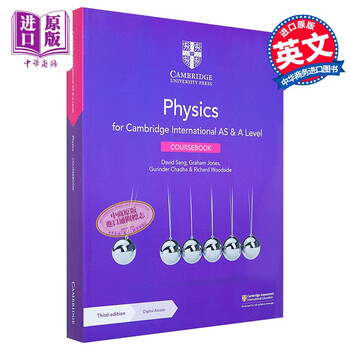
Cambridge International AS ALevel Physics Coursebook 正版剑桥国际AS ALevel考试物理教材带线上账号 英文原版¥557.0📱 去京东购买京东精选
需要一对一辅导?Need One-on-One Tutoring?
A-Level / GCSE / IB / KS2-KS3 全科辅导,物理 IA 选题与数据处理可单独辅导
16621398022同微信
Visit aleveler.com

或截图后用「扫一扫 → 相册」选择本图