WJEC物理 动能 重力势能 比热容 效率
WJEC 的 GCSE 物理把能量拆在两个单元里考。Unit 1 的 1.2 与 1.4 讲发电和家庭用电,Unit 2 的 2.3 专题就是 Work and energy。两个笔试各占 45%,各 80 分,考试时间都是 1 小时 45 分钟。
能量这条线真正拉开分数的不是背公式。公式全部印在考试局给的公式表上,能拉开差距的是单位换算、平方关系和答题格式。
数学技能在这份资格里至少占 30%,这是 WJEC 官网 specification 写明的权重。能量计算正好落在这一块,短计算题在每份卷子里都有好几道。答案数字对、单位写错,依然不算全对。
In WJEC GCSE Physics, energy calculations appear in two different places. Unit 1 covers generating electricity and domestic electricity, while topic 2.3 in Unit 2 is titled Work and energy. Each written paper runs for 1 hour 45 minutes and carries 80 marks, and the specification published on the WJEC website states that mathematical skills make up at least 30 per cent of the qualification. Candidates who know the six relevant equations still lose marks through unit slips and unfinished substitution lines.
功的公式 W = Fd 与位移方向
功的定义在 WJEC 公式表上写作 W = Fd,单位是焦耳。d 是从力的作用点沿力的方向量出的位移,不是物体走过的路程。很多学生以为物体移动了就有功,其实手提书包水平行走时提力竖直、位移水平,两者互相垂直,提力做的功是零。斜向拉动物体时要先取力在位移方向的分量,再乘位移。1 焦耳等于把 1 牛的力沿力的方向推过 1 米所转移的能量。试卷常把这段写成推箱子或拉雪橇的情境。阅卷时只写 W = Fd 却没有代入方向分量的答案,通常只能拿到过程分。
Work equals force multiplied by the distance moved along the line of action of that force, and the joule is the unit that comes out of the calculation. Candidates often substitute the total distance travelled instead of the component of displacement, which is why a bag carried horizontally ends up with zero work done by the upward pull. When the force acts at an angle, the resolution step has to be written down before any numbers are inserted. In practice, examiners award that step separately, so a bare substitution of two figures rarely earns full marks.
动能 KE = ½mv² 与速度的平方关系
动能写成 KE = ½mv²,质量用千克,速度用米每秒,结果单位是焦耳。这里最容易忽略的是速度带平方,速度翻倍动能变成四倍。一辆车从 20 米每秒加到 40 米每秒,动能不是两倍,而是四倍。很多学生以为刹车距离与速度成正比,其实动能随速度平方增长,制动距离也按平方放大。WJEC 的数据题常把这条规律放进道路安全情境。算之前先把克换成千克,把厘米每秒换成米每秒,否则答案会差出一千倍。常见的错误是漏掉二分之一的系数,直接写 mv²。
Kinetic energy is half the mass multiplied by the square of the speed, so doubling the speed quadruples the stored energy rather than doubling it. Many candidates expect braking distance to rise in proportion to speed, yet the road safety data questions rest on a quadratic relationship between speed and kinetic energy. Convert grams to kilograms and centimetres per second to metres per second before substituting anything, because a missed conversion shifts the answer by a factor of a thousand. Leaving out the half in front of mv squared is the most frequent single mistake in this section.
重力势能 PE = mgh 与高度差
重力势能写成 PE = mgh,m 是质量,g 取 9.8 牛每千克,h 是竖直高度差。h 只看起点与终点的高度差,与走了多长的路无关。爬山绕远路和直上山顶,只要起点终点相同,重力势能的变化一样。WJEC 的题目喜欢给一张斜坡图,让学生从斜坡长度与角度求高度。这一步要用三角函数,sin 值乘斜坡长才得到竖直高度。很多学生以为斜坡长就是 h,这是本专题失分最多的一处。落到参考面以下时 h 取负值,势能随之减少。
Gravitational potential energy comes from mass, field strength and the vertical height difference between the start and end points. A slope diagram usually requires the sine of the angle multiplied by the slope length to obtain that vertical height, and the path itself is irrelevant to the answer. Substituting the slope length directly for h is the single most common loss of marks in this topic. Negative values are acceptable when the object drops below the reference level, and the potential energy falls accordingly.
能量守恒与耗散能量的写法
能量守恒在 WJEC 的表述是能量可以从一个形式转移到另一个形式,总量不变。落体问题里势能转成动能,可以写成 mgh = ½mv²。质量在等式两边约掉,速度只与高度差有关,与质量无关。这条结论常被用来解释为什么轻重两个球几乎同时落地。真实的落体会有空气阻力,一部分能量转移到周围空气的内能,这部分叫耗散。答题时要写清哪些是 useful energy,哪些是 wasted energy。常见的错误是把耗散写成能量消失了,这种表述在评分标准里不给分。
The specification describes conservation in terms of transfers between forms rather than energy appearing or vanishing, so answers should name what is useful and what is wasted. For a falling object the potential energy lost equals the kinetic energy gained only while air resistance is ignored, and that is why mass cancels out of the equation. Once friction is present, some energy moves to the thermal store of the surroundings. Writing that energy has disappeared earns nothing from the mark scheme, however neat the arithmetic looks.
比热容 ΔQ = mcΔθ 与加热水实验
比热容的公式是 ΔQ = mcΔθ,c 的单位是焦每千克每摄氏度。水的比热容约 4200,金属一般在几百的量级,同样质量加热同样的温差,水要吸收更多热量。加热水的实验里,温度计要浸没在液体中但不能碰杯底,否则读的是杯底温度。很多学生以为升温曲线一开头就是直线,其实前几十秒有一部分热量被容器和搅拌棒吸收。计算时先用末温减初温得到 Δθ,再把克换成千克。常见的错误是把 250 克直接代进公式,答案会大一千倍。数据表给出的 c 值只保留两三位有效数字,答案不必写得更长。
Specific heat capacity links the energy supplied to the mass, the material and the temperature rise, with water needing far more energy than an equal mass of metal. Copper warms roughly ten times faster than water for the same input, which is why heating experiments with water take so long to show a clear result. In the required practical the thermometer must sit in the liquid without touching the base of the beaker, and the earliest readings are distorted because the container and stirrer absorb heat too. Recording the starting temperature before switching on the heater prevents a systematic error in the value of the temperature change.
潜热 Q = mL 与物态变化平台
物态变化时温度不变,吸收的热量用 Q = mL 计算,L 是比潜热。冰融化成水、水沸腾成蒸汽都要吸热,但温度停在零摄氏度或一百摄氏度。这段平台区的热量不改变温度,只改变分子之间的排列。很多学生以为温度不变就没有吸热,于是把这一段整段漏掉。WJEC 的曲线题常画一条升温曲线,平台的横段就是潜热部分。算总热量时要分段相加,先算升温,再算熔化,最后算继续升温。水的汽化潜热比冰的熔化潜热大得多,所以蒸发那一环通常耗能最多。
During a change of state the temperature stays flat while energy is still being supplied, and that energy comes from mass multiplied by specific latent heat. A heating curve therefore shows two sloped sections with a horizontal platform between them, and the platform length carries the latent heat term. Candidates who assume nothing is absorbed once the thermometer stops rising usually lose the whole of the final mark. Total energy questions require the three stages to be added separately, because evaporating water takes far more energy than melting the same mass of ice.
功率 P = E/t 与 W/t 的互换
功率写成 P = E/t,也可以写成 P = W/t,单位是瓦特。1 瓦特就是每秒转移 1 焦耳。功率说的是快慢,不说明总量。两台机器做同样多的功,用时短的那台功率大。很多学生以为功率大就做功多,两者之间还差一个时间。电梯题常问把 600 牛的负载提升 10 米需要多大功率,先算功再除以时间。瓦特等于焦耳每秒,千瓦等于一千瓦特。答案若写成焦耳,说明除时间这一步被漏掉了。
Power describes how quickly energy is transferred, so the same job completed in half the time requires twice the power. Lifting questions are answered by calculating the work first and then dividing by the time taken, and the two versions of the formula give the same number. A watt is one joule per second, and an answer left in joules shows that the division step was skipped. Machines rated at a higher power are not doing more work, they are simply doing it faster.
电功率 P = VI 与千瓦时电费
家庭用电部分要会用 P = VI 与 E = Pt。电费按千瓦时计算,1 千瓦时就是 1 度电,等于 3.6 兆焦。先把功率从瓦换成千瓦,再把时间从分钟换成小时,两者相乘得到度数。很多学生以为电费与电流大小直接相关,其实账单只看功率与用时。WJEC 的题会给一张家电铭牌,让学生比较两个月的账单差额。熔断器与断路器的选择依据是额定电流,不是功率。算完把单位写成便士或英镑,不要在同一题里混用。
Domestic electricity questions combine power, time and cost, with the bill calculated in kilowatt hours where one unit equals 3.6 megajoules. Convert watts to kilowatts and minutes to hours before multiplying, because appliance labels are rarely given in the units that appear on a bill. Fuse ratings are chosen from the current rather than the power, so the current has to be found first. Keeping pence and pounds separate across a two-part question avoids a marking error that costs both parts.
效率百分比与损耗计算
效率的公式是百分比形式,有用的能量或功率除以总输入,再乘 100。答案通常不带单位,写成百分数。发电与输电链路里每一步都有损耗,整条链的效率是各级效率相乘。变压器升温、导线发热都属于耗散。很多学生以为把各级效率相加就能得到总效率,两级各 80% 的链路总效率其实是 64%。题目若问损失了多少,用 100% 减去效率即可。老式灯泡与开关电源的对比题,考的就是这条思路。
Efficiency is the useful output divided by the total input, expressed as a percentage, and it carries no unit of its own. In a supply chain the efficiencies multiply rather than add, so two stages at 80 per cent leave roughly 64 per cent overall. Where a question asks for the energy lost, subtract the percentage from one hundred instead of recalculating the totals. Transformer heating and cable resistance are the usual examples of wasted transfer along the way.
Unit 1 与 Unit 2 的版面与层级
WJEC GCSE Physics 的资格编号是 3420。Unit 1 叫 Electricity, Energy and Waves,Unit 2 叫 Forces, Space and Radioactivity。两个笔试各 1 小时 45 分钟、各 80 分、各占 45%。Unit 3 是实践评估,30 分占 10%,一月到二月之间由学校组织,试卷由 WJEC 外部评阅。笔试分 Foundation 与 Higher 两个层级,Foundation 最高给到 C,Higher 覆盖 A* 到 D。终考规则要求至少 40% 的分数来自最后一次考试。数学技能至少占 30%、实验技能至少占 15%,两条都写在 WJEC 官网的 specification 里。
The qualification is numbered 3420 and splits into two written papers plus a practical assessment worth 10 per cent. Each paper runs for 1 hour 45 minutes, carries 80 marks and accounts for 45 per cent of the total, and both are tiered with the foundation tier capped at grade C. The terminal rule requires at least 40 per cent of the marks to come from the final series of examinations. Minimum weightings of 30 per cent for mathematical skills and 15 per cent for practical skills are set out in the specification on the WJEC website.
单位换算 毫安 千瓦 兆焦与厘米
单位换算是能量题的第一道门槛。毫安换成安培要除以一千,千瓦换成瓦特要乘一千,兆焦换成焦耳要乘一百万。厘米换成米要除以一百,克换成千克要除以一千。很多学生以为公式对了答案就一定对,其实量级错一位整题零分。养成先写单位再代数字的习惯,能在最后一步发现量级不对。WJEC 的公式表附了 SI 乘数表,前缀 m 是十的负三次方,k 是十的三次方,M 是十的六次方。看到 kW 与 h 一起出现,基本就是要算千瓦时。
Almost every energy question opens with a conversion, and a single slipped prefix is enough to lose all the marks for the calculation. Milli means divided by a thousand, kilo means multiplied by a thousand and mega means multiplied by a million, while centimetres become metres by dividing by one hundred. Writing the unit beside every number makes a wrong order of magnitude visible before the answer is handed in. Seeing kilowatts alongside hours is a reliable signal that the question wants kilowatt hours rather than joules.
扣分点 平方漏算与答案不带单位
阅卷时最常见的三类错误都出现在最后两步。第一类是速度没有平方,或者平方之后忘了乘二分之一。第二类是单位没有换算,克与千克混用,毫安与安培混用。第三类是答案只有数字没有单位,评分标准对单位单独给分。作答时把公式、代入、答案分成三行写,中间那行写上换算后的数值。即使最终算错,公式与代换两行通常还能拿到过程分。有效位数按题目给出的数据取,多写几位不加分。
Most lost marks appear in the final two lines rather than in the physics itself. Squaring the speed but dropping the half, mixing grams with kilograms, and giving a bare number without a unit account for a large share of the shortfall. Setting the formula, the substitution and the answer on separate lines preserves method marks even when the arithmetic goes wrong. Matching the significant figures to the data given in the question is worth doing, though extra digits earn nothing.
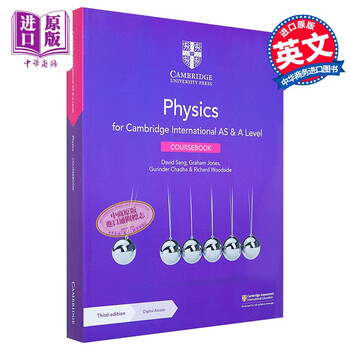
Cambridge International AS ALevel Physics Coursebook 正版剑桥国际AS ALevel考试物理教材带线上账号 英文原版¥557.0📱 去京东购买京东精选
需要一对一辅导?Need One-on-One Tutoring?
A-Level / GCSE / IB / KS2-KS3 全科辅导
16621398022 同微信
Visit aleveler.com
或截图后用「扫一扫 → 相册」选择本图