OCR物理 力与运动 SUVAT 抛体 牛顿定律
OCR A Level Physics A(H556)把力与运动放在 Module 3,也是 H556/01 Modelling physics 卷面上分量最重的一块。运动学计算、受力分析、能量与动量四类题混在同一张卷子里出,评分点落在公式选择、方向约定和单位上,不在公式背了多少条。
下面按 OCR 的评分习惯把这块内容拆成六组知识点,每组给出可以照着走的步骤、一个带数字的算例,以及阅卷时反复出现的丢分点。
位移、速度与加速度的方向约定
OCR 的运动学题几乎都会给一段描述,比如小球从 1.8 m 高的桌面以 4.0 m s^-1 水平抛出。做题第一步是定正方向,不是套公式。取向上为正,则竖直加速度写成 a = -9.81 m s^-2;取向下为正则写 +9.81。两种约定都能算出正确答案,混用才会出错。
位移是位置的变化,不是走过的路程。很多学生以为这两个量可以互换,碰到先上升后下落的抛体就出问题:位移可能只有 -1.8 m,路程却在 3.6 m 以上。OCR 的问法是 displacement,答案要带符号或方向词。
Displacement measures the change in position, not the route taken. A ball thrown upwards and caught again at the same height has zero displacement and a non-zero distance. In OCR questions the sign convention decides whether g appears as +9.81 or -9.81 m s^-2, and mixing the two conventions inside one calculation is the most common way to lose the method mark.
匀加速运动的五个公式与选式规则
五个 SUVAT 公式各含四个量。选式的办法是先数已知量:给了 u、a、t 问 v,用 v = u + at;给了 u、v、a 问 s,用 v^2 = u^2 + 2as;给了 u、a、t 问 s,用 s = ut + 0.5at^2。每道题只有一个公式刚好不含多余未知量,按这个原则选不需要猜。
算例:一辆车以 12 m s^-1 行驶,加速度 -3.0 m s^-2,求 3.0 s 内的位移。s = 12*3.0 + 0.5*(-3.0)*9.0 = 36 - 13.5 = 22.5 m。这里 3.0 s 时车速还有 3.0 m s^-1,仍在运动;如果题目问的是 5.0 s 内的位移,车在 4.0 s 停下,直接套公式会算出比实际小的数。
Each SUVAT equation links four quantities, so the choice is mechanical: list what the question supplies and pick the equation containing exactly those symbols. The braking example hides a trap. A car decelerating at 3.0 m s^-2 from 12 m s^-1 stops after 4.0 s, so a question asking for the displacement in 5.0 s requires 4.0 s in the equation, with nothing added for the final second.
自由落体与竖直上抛
自由落体就是初速为零、加速度为 g 的匀加速运动,两个常用结论:从静止下落 h 的时间 t = sqrt(2h/g),落地速度 v = sqrt(2gh)。竖直上抛要记住最高点速度为零、加速度仍为 g。这一点在选择题里反复出现。
常见的错误是把最高点当成加速度也为零,于是算出物体在最高点停留了一段。正确做法是用 v = u - gt 得上升时间 t = u/g,再乘 2 得到落回原处的时间,全程加速度保持 -9.81 m s^-2,速度图像是一条斜率为负的直线。
At the top of a vertical throw the velocity is momentarily zero while the acceleration remains 9.81 m s^-2 downwards. Treating the top as a point of zero acceleration produces a fictional pause that costs marks every session. The time to the top is u/g, the velocity-time graph stays a single straight line, and the area under it returns to zero when the ball comes back to the thrower's hand.
抛体运动:两个方向各自独立
抛体的处理方式是分解。水平方向离开手之后没有力作用(忽略空气阻力),速度恒定;竖直方向只有重力,做匀加速运动。两个方向共用同一个时间 t,这是把两条线连起来的唯一桥梁。
算例:从 1.8 m 高处以 4.0 m s^-1 水平抛出小球。竖直方向 1.8 = 0.5*9.81*t^2 得 t = 0.606 s,水平射程 x = 4.0*0.606 = 2.42 m,取两位有效数字 2.4 m。落地竖直速度 v_y = 9.81*0.606 = 5.95 m s^-1,合速度 sqrt(4.0^2 + 5.95^2) = 7.2 m s^-1,与水平方向成 56 度。
Projectile questions split into two independent one-dimensional problems that share a single time. Horizontal velocity stays constant once the object has left the thrower, because no horizontal force acts; vertical motion is uniform acceleration at 9.81 m s^-2. The worked example gives a flight time of 0.61 s, a range of 2.4 m and a landing speed of 7.2 m s^-1 at 56 degrees below the horizontal.
斜抛时先把初速度分解:水平分量 u cos(θ),竖直分量 u sin(θ)。以 20 m s^-1、仰角 30 度抛出,两个分量分别是 17.3 m s^-1 和 10.0 m s^-1,上升时间 1.02 s,最高点约 5.1 m,落回同一高度时射程 17.3*2.04 = 35 m。空气阻力会让实际射程明显小于这个数,题目注明忽略阻力时才可以直接用这套算法。
For a launch at an angle, resolve the initial velocity first into u cos(theta) horizontally and u sin(theta) vertically. A launch at 20 m s^-1 and 30 degrees gives 17.3 and 10.0 m s^-1, a rise time near 1.0 s, a peak of about 5 m and a range of roughly 35 m back to the same level. Real flights fall short because of air resistance, so the clean calculation applies only when the question says to ignore drag.
牛顿第二定律与受力分析图
F = ma 里的 F 是合力,不是某一个力。画受力图的顺序固定:重力、接触面的支持力、摩擦力、绳子或弹簧的力、外加推力。每画一个力都要能说出施力物体,说不出来的力多半是凭空加的,比如所谓的向前冲力。
算例:2.0 kg 的物块放在水平面上,受 12 N 水平拉力,摩擦力 4.0 N,则 a = (12 - 4.0)/2.0 = 4.0 m s^-2。若同一物块被 12 N 的力斜向上 30 度拉,竖直分量 6.0 N 会减小支持力,摩擦力随之下降,加速度就不再是 4.0 m s^-2。
The F in F = ma is the resultant force, so the free-body diagram comes before the algebra. Draw weight, normal contact force, friction, tension or spring force and any applied push, then name the object providing each arrow. Anything you cannot attribute is usually invented, and invented forces are what cost method marks on OCR calculation questions about lifts, slopes and towing.
斜面与连接体:分量分解与整体法
光滑斜面上重力沿斜面的分量是 mg sin(θ),垂直分量是 mg cos(θ)。这两个式子要能自己推:把 mg 投影到平行与垂直于斜面的方向就行。有摩擦时支持力 N = mg cos(θ),摩擦力的上限是 μN。
两个物体用绳子连在一起时,求整体加速度用整体法,把两者看成一个系统,内力互相抵消;求绳中张力再隔离其中一个物体。初学者常先隔离两个物体各写一方程,多出一个未知量,把两行能出的题做成四行。
On a smooth incline the component of weight along the slope is mg sin(theta), the perpendicular component is mg cos(theta). With friction the normal force is mg cos(theta), so the friction limit is mu times that value. Two masses joined by a string move with one acceleration, found by treating them as a single system; isolate one mass afterwards to get the tension.
力矩与平衡:力臂不是距离
力矩等于力乘以力臂,力臂是支点到力的作用线的垂直距离,不是支点到作用点的距离。力与杆成角度时力矩写成 F*d*sin(θ)。一对大小相等、方向相反、作用线平行的力组成力偶,它的力矩是 F 乘以两力之间的垂直间距,与支点位置无关。
平衡条件有两条:合力为零、合力矩为零。做题时先选支点,把支点放在某个未知力的作用点上,这个力的力矩就是零,方程立刻少一个未知量。OCR 的梯子、铰链门、吊桥题都用这个办法。
A moment is force times the perpendicular distance from the pivot to the line of action, not the distance to the point of application. Equilibrium needs zero resultant force and zero resultant moment. Putting the pivot where an unknown force acts removes that force from the moment equation and turns a two-unknown problem into a one-line solution, which is why ladder and hinged-door questions reward that choice.
算例:3.0 m 长的均匀木板重 200 N,一端架在支点上,距支点 2.0 m 处挂 150 N 的重物。重物的力矩 150*2.0 = 300 N m,木板重心在 1.5 m 处,力矩 200*1.5 = 300 N m,两侧相等,木板刚好平衡。
Numbers make the balance condition visible. A uniform 3.0 m plank weighing 200 N is pivoted at one end, with a 150 N load hung 2.0 m from that pivot. The load contributes 300 N m, and the weight acting at the centre of mass contributes 200 times 1.5, also 300 N m, so the plank sits level.
功、能量与功率:路径无关的部分
重力做功只看高度差,与路径无关,所以重力势能变化写成 mg 乘以高度变化。摩擦力做功与路径有关,来回走一趟做功翻倍,这是两类力在能量题里的分界线。动能定理说的是合外力做功等于动能变化。
算例:60 kg 的人爬 12 m 高的楼梯,用时 20 s,机械功率 P = mgh/t = 60*9.81*12/20 = 353 W。人体真实的代谢消耗远大于这个数,肌肉效率通常在 20% 到 25% 之间,题目若问人体的机械输出功率,只算这个 353 W。
Work done by gravity depends only on the height change, while work done by friction depends on the path length, which is why a there-and-back journey doubles the friction term. The work-energy theorem states that the net work done equals the change in kinetic energy. For the staircase example the mechanical power output is about 350 W, while the metabolic cost is several times larger at typical muscle efficiency.
功率还有另一种算法:物体以恒定速度运动时 P = Fv,其中 F 是驱动力,大小等于阻力。汽车以 25 m s^-1 匀速行驶、总阻力 600 N,输出功率就是 15 kW。同一辆车爬坡时阻力变大,要保持速度就得加大功率,这也是上坡要降挡的原因。
Power also appears as force times velocity for motion at constant speed, where the driving force balances the resistive force. A car holding 25 m s^-1 against 600 N of drag delivers 15 kW. On a gradient the resistive force grows, so the same speed needs more power, and that is why a lower gear is selected on hills.
动量与冲量:方向先定,再谈守恒
动量 p = mv 是矢量,一维问题用正负号表示方向。冲量等于动量变化,F*Δt = Δp,这条式子解释了安全气囊和缓冲垫为什么能减小作用力:动量变化相同,把作用时间拉长,力就变小。
碰撞题先判断动量是否守恒:外力冲量可以忽略时动量守恒,动能是否守恒用来区分弹性碰撞与非弹性碰撞。常见错误是漏掉方向,两球相向运动时把两个速度都取正值,算出的总动量翻倍,后面全部跟着错。
Momentum is a vector, so a one-dimensional problem needs a sign convention before any arithmetic. Impulse equals change in momentum, which is why a crumple zone reduces the force by extending the collision time. Momentum is conserved when external impulse is negligible; kinetic energy is conserved only in an elastic collision. Two balls approaching each other with both velocities taken as positive is the classic sign error.
算例:0.15 kg 的球以 20 m s^-1 撞墙后以 15 m s^-1 反弹,接触时间 0.05 s。取初速方向为正,动量变化 0.15*(-15 - 20) = -5.25 N s,平均力 5.25/0.05 = 105 N,负号表示方向与初速相反。漏掉反弹带来的第二次符号变化,答案会变成 15 N,差了一个数量级。
A worked case makes the signs concrete. A 0.15 kg ball hits a wall at 20 m s^-1 and rebounds at 15 m s^-1 with a contact time of 0.05 s. Taking the initial direction as positive gives a momentum change of minus 5.25 N s and an average force of 105 N pointing away from the wall. Losing the second sign change turns that into 15 N and wrecks the answer.
胡克定律与杨氏模量
胡克定律 F = kx 只在比例极限内成立,x 是伸长量而不是弹簧总长度。弹性势能 E = 0.5*F*x = 0.5*k*x^2,在力-伸长量图像上就是图线下的面积。
杨氏模量 E = 应力/应变 = (F/A)/(Δx/L)。它是材料属性,与样品尺寸无关,所以同种材料粗细不同的钢丝模量相同,劲度系数却不同。这一条是 OCR 材料题最爱考的概念区分。
Hooke's law holds only up to the limit of proportionality, and x is the extension rather than the total length. The area under a force-extension graph gives the elastic strain energy stored. Young modulus, stress over strain, describes the material itself: two steel wires of different diameter share the same modulus but have different stiffness constants, and examiners test exactly that distinction.
图像题与有效数字
运动学图像题分三类:位移-时间图的斜率是速度,速度-时间图的斜率是加速度、面积是位移。面积落在时间轴下方时取负值,符号不能丢。加速度-时间图的面积是速度变化。
有效数字按题目给的数据定,一般保留两位或三位,中间步骤多留一位,最后再修约。单位必须写出来,OCR 的评分方案把单位单独列分,数字对但漏单位照样不满分。
In displacement-time graphs the gradient is velocity; in velocity-time graphs the gradient is acceleration and the area is displacement, with areas below the axis counted as negative. Significant figures follow the data given in the question, usually two or three, with one extra digit carried through intermediate steps. Units are marked separately in the OCR mark scheme, so a numerically correct answer without a unit still drops a mark.
真题怎么用:一周的安排
力与运动这块真题量大,做完不整理等于白做。可行的安排是:周一到周三每天限时做两道理科计算大题,周四只看画错的受力图,周五重做上周错的两道,周末做一套 H556/01 的力与运动部分并计时。
错题本上只记三样:画错的受力图、选错的公式、丢掉的单位。这三类覆盖了多数失分点,把公式抄一遍的复习方式对提分几乎没有作用。
Past papers are only useful when the mistakes get catalogued. A workable week is two timed calculation questions from Monday to Wednesday, a Thursday session on the free-body diagrams you drew wrongly, a Friday redo of last week's two failures, and one timed section of H556/01 at the weekend. Record only the wrong diagram, the wrong equation choice and the missing unit.
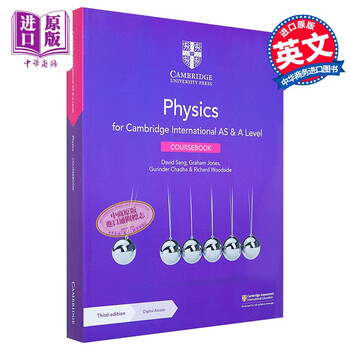
Cambridge International AS ALevel Physics Coursebook 正版剑桥国际AS ALevel考试物理教材带线上账号 英文原版¥557.0📱 去京东购买京东精选


需要一对一辅导?Need One-on-One Tutoring?
A-Level / GCSE / IB / KS2-KS3 全科辅导
16621398022 同微信
Visit aleveler.com
或截图后用「扫一扫 → 相册」选择本图