Edexcel物理 运动 速度时间图 加速度 动量
Edexcel GCSE 物理(1PH0)把运动学放进 Topic 2 Motion and forces,与力、牛顿定律合成一个主题,Paper 1 的第一道大题通常就在这里。这一块的计算不难,难在读数与选式:卷面给的是图、是文字情境,公式要自己挑。下面按官方 spec 的条目顺序,把读数规则、单位换算、公式选择与常见失分点逐条拆开。
Motion sits inside Topic 2 of the Pearson Edexcel GCSE Physics specification (1PH0), and Paper 1 almost always opens there. The arithmetic is rarely the difficulty; reading a graph correctly and picking the right equation is where marks disappear. The notes below follow the specification order, from scalars and vectors through to stopping distances and circular motion.
位移与速度都是矢量 方向不能丢
标量只有大小,没有指定方向,时间、距离、质量、能量都属于标量。矢量同时有大小和方向,位移、速度、加速度、力、重量、动量都是矢量(spec 2.1 至 2.5)。很多学生以为路程和位移只是叫法不同,其实绕操场跑一整圈回到起点时,路程是一圈的长度,位移是零。速度与速率的区别也在这里,速率只讲快慢,速度要说明朝哪个方向。答题写方向时不要只写正负号,题干若规定向右为正,应该用一句话把方向说清。凡是问 velocity 而不是 speed 的题,答案缺方向就要扣分,阅卷时这种情况每个考季都能见到。
A scalar carries size only, while a vector carries size and a stated direction, which is why distance and speed behave differently from displacement and velocity (Edexcel spec 2.1 to 2.5). Run one lap of a track and come back to the start: the distance covered is the whole lap, but the displacement is zero, and examiners use that contrast again and again. Dropping the direction from a velocity answer costs a mark even when the number is correct.
平均速度 先换单位再代数
平均速度等于路程除以时间,公式在 spec 2.6a,反过来写就是路程等于平均速度乘以时间(2.6b)。这一步的失分几乎全在单位,题目给的是分钟、千米每小时,公式要的是秒和米。常见的错误是把 72 千米每小时直接代进公式算加速度,正确做法是先除以 3.6 换成 20 m/s。一小时等于 3600 秒,这个换算在 2 分钟、45 秒这类零碎时间上最容易漏。平均速度只对整段路程有意义,中途忽快忽慢的运动不能用它倒推某一时刻的速度。题目问 average speed 时,分母必须是总时间,不是有效运动的那段时间。
Average speed is distance divided by time, and the same relationship rearranged gives distance from speed and time (spec 2.6a and 2.6b). Almost every lost mark traces back to units, because papers quote minutes and kilometres per hour while the equation needs seconds and metres. Divide a speed in kilometres per hour by 3.6 before substituting, and remember that an average describes a whole journey rather than any single moment of it.
距离时间图 斜率就是速度
距离时间图上,直线的斜率等于速度,斜率越大走得越快,水平线表示静止(spec 2.7)。曲线表示速度在变,求某一点的速度要画该点的切线,用切线斜率而不是两点连线的斜率。很多学生把线在上升当成在加速,上升只说明在向前走,加速要看斜率是否越来越陡。回程那段线斜率是负的,速度方向与出发时相反,速率仍是斜率的绝对值。图上两条线相交表示两者在同一时刻到达同一位置,不代表速度相同。读图题先看坐标轴单位,纵轴是千米、横轴是分钟的话,斜率算出来是千米每分钟。
On a distance-time graph the gradient of a straight line is the speed, and a horizontal section means the object is stationary (spec 2.7). A rising line only shows motion away from the start, so acceleration appears as a gradient that becomes steeper rather than as any upward slope. Read the axis units before dividing, since kilometres against minutes will return a speed in kilometres per minute.
加速度公式 减速记得带负号
加速度等于速度变化量除以所用时间,公式写在 spec 2.8。分子是末速度减初速度,顺序颠倒会把符号算反。减速时加速度取负值,答案可以写减速度,代入公式时仍然要带负号。常见的错误是把速度变化量算成初速度减末速度,结果的正负就与运动方向相反。单位是米每二次方秒,写作 m/s²,题目给的加速度是否已经带方向要看清楚。一辆车 3 秒内从 12 m/s 减到 3 m/s,加速度是负 3 m/s²,这个负号就是减速的证据。
Acceleration is the change in velocity divided by the time taken, with the change written as final minus initial (spec 2.8). Reverse that order and the sign flips, which is exactly how a deceleration answer ends up pointing the wrong way. Keep the negative sign when a vehicle slows from 12 m/s to 3 m/s in 3 seconds, because minus 3 m/s² is the only version that matches the motion.
没有时间就用速度平方差公式
当题目不给时间,只给初速度、末速度与距离中的两组,spec 2.9 的公式最好用:末速度的平方减初速度的平方等于 2 乘加速度乘距离。这个公式在刹车、穿木块、列车进站这几类题里出现频率很高。很多学生以为它只能用在加速过程,其实匀减速同样成立,只要加速度带负号。代入之前先把单位统一到米和秒,速度的平方会把单位错误一起放大。求距离时两边同时除以 2a,a 取负值后距离仍然是正数。这类计算不需要写出时间,硬算时间反而多一步还容易出错。
The formula linking the squares of the two velocities to acceleration and distance is the one to reach for when a question hides the time (spec 2.9). It works for braking as well as for speeding up, provided a negative acceleration is carried through the algebra. Squaring a speed magnifies any unit slip, so convert to metres and seconds before substituting.
速度时间图 面积读位移
速度时间图的斜率是加速度,图线与时间轴围成的面积是位移(spec 2.10)。分段直线就分段算面积,三角形用底乘高的一半,矩形用长乘宽,梯形用上底加下底乘高再除以二。常见的错误是只加时间轴上方的面积,忘了负速度的面积要相减,物体反向运动时那块面积在轴的下方。匀加速段的加速度只用该段的斜率算,不要拿整段时间的总变化去除。问哪一段加速度最大时,比较的是斜率陡峭程度,与速度高低无关。面积算完看单位,横轴秒、纵轴米每秒,面积的单位就是米。
In a velocity-time graph the gradient gives acceleration and the area between the line and the time axis gives displacement (spec 2.10). Split a multi-stage journey into rectangles, triangles and trapeziums, and treat any area below the axis as negative displacement. A steep gradient means large acceleration, which has nothing to do with how fast the object happens to be travelling.
光门与纸带 实验室怎么测速度
官方 spec 2.11 要求能描述实验室测速度的方法,光门是最标准的一种:小车上的遮光片通过光门,计时器记录通过时间,用遮光片宽度除以时间得到接近瞬时值的速度。另一种做法是用打点计时器,纸带上留下等时间间隔的点,量出两点间距再除以时间间隔。常见的错误是拿两个光门之间的距离当遮光片宽度,这两个量完全不是一回事。纸带题的时间间隔由电源频率决定,五十赫兹就是每 0.02 秒打一个点。同一次运动多测几次再取平均,可以减小计时反应带来的随机误差。
Light gates time a card of known width as it passes, and dividing that width by the recorded time gives a speed close to the instantaneous value (spec 2.11). A ticker-tape timer leaves dots at fixed intervals set by the mains frequency, so fifty hertz means one dot every 0.02 seconds. Confusing the gap between the gates with the card width is the usual slip, and repeating a run reduces the random error from reaction time.
自由落体 g 取 10 米每二次方秒
官方 spec 2.13 要求记住自由落体的加速度 g 是 10 m/s²,估算题都按这个值批改。真实的重力加速度大约是 9.8 m/s²,用 10 会让答案偏大一点点,这是允许的。很多学生以为下落越久速度增加得越快,其实每秒增加的速度固定是 10 m/s。从静止下落 3 秒,速度约 30 m/s,下落的距离用面积算约 45 米。空气阻力明显的物体,比如羽毛,实际加速度会小于 10。答估算题要写清用了 g 等于 10 这个前提,漏写会被扣方法分。
The specification asks students to recall that free-fall acceleration is 10 m/s², and estimates in the exam are credited on that value (spec 2.13). Speed grows by the same 10 m/s every second, so three seconds of falling from rest reaches about 30 m/s. Real gravity is close to 9.8 m/s², and an object with noticeable air resistance falls more slowly than the figure suggests.
牛顿第一定律 合力为零的两种状态
官方 spec 2.14 的牛顿第一定律说,合力为零时物体要么静止,要么做匀速直线运动,这两种状态在物理上是等价的。很多学生以为不受力才叫合力为零,其实受了力但相互抵消也算。匀速转弯的汽车不满足这一条,速度方向一直在变,合力不为零。答题时先判断速度有没有变化,再看合力,顺序反过来容易把匀速直线运动误判成需要持续推力。滑冰的人收力后继续滑行,是这条定律最常见的例子。摩擦力不为零时,要维持匀速就得一直推,这不是定律失效,而是合力里还有摩擦。
Newton's first law states that with zero resultant force a body is either at rest or moving at constant velocity, and the two cases are physically the same (spec 2.14). Forces may still act, as long as they cancel, which is why a skater keeps gliding after the push has ended. A car turning at steady speed fails the test, because a changing direction means a changing velocity.
F 等于 ma 里的 F 是合力
官方 spec 2.15 里的 F 等于 ma,F 指合力,也就是所有力相加的结果。先做受力分析,同方向的力相加,反方向的力相减,再代进公式。常见的错误是看到摩擦力就减掉,却忘了题目还给了牵引力。质量必须用千克,力用牛顿,加速度才会是 m/s²。核心实验 2.19 用小车加砝码验证这条关系,保持拉力不变、增加质量,加速度下降,画加速度与质量倒数的图应当是过原点的直线。实验里垫高一端轨道来补偿摩擦,这一步不做,图线就不经过原点。
In F = ma the F stands for the resultant force, so the forces have to be combined before anything is substituted (spec 2.15). Core practical 2.19 tests the relationship by adding masses to a trolley while the pulling force stays fixed, and a graph of acceleration against one over mass should be a straight line through the origin. Tilting the runway slightly compensates for friction, without which that line misses the origin.
重量与质量 惯性质量的定义
质量是物体所含物质的多少,单位千克,到哪里都不变;重量是重力作用在物体上的力,单位牛顿,随 g 变化(spec 2.16 至 2.18)。公式是 W 等于 m 乘 g,地球上取 g 等于 10 N/kg,2 千克的物体重量约 20 牛顿。测重量用弹簧测力计,测质量用天平,两种仪器原理不同不能互换。官方 spec 2.22 把惯性质量定义为力与加速度的比值,它衡量改变速度有多难,数值上与质量相同。月球上的 g 约为 1.6 N/kg,同一个物体重量变小,质量一点没变。答这类题要分开写两个量,不要把重量当成质量的别名。
Mass measures how much matter an object contains and does not change with location, while weight is a force that depends on gravitational field strength (spec 2.16 to 2.18). Weight equals mass times g, so on Earth a 2 kg object weighs about 20 N at g = 10 N/kg. Inertial mass is defined as force divided by acceleration, and its value matches the mass.
动量与冲量 安全气囊为什么有用
动量等于质量乘速度,是矢量,方向与速度相同(spec 2.24)。牛顿第二定律可以写成力等于动量变化除以时间,这条式子解释了安全气囊的作用:动量变化量固定,时间拉长,力就变小(spec 2.26)。碰撞题先规定正方向,把反向的速度写成负数,否则动量守恒算不平。常见的错误是两个物体碰后速度都写成正数,答案看着合理其实方向错了。碰撞前后总动量守恒,动能不一定守恒,弹性与非弹性的区别就在这里。算力时用的是接触时间,不是整个过程的时间。
Momentum is mass times velocity, and because velocity has a direction so does momentum (spec 2.24). Written as force equals the change in momentum divided by time, Newton's second law explains why a crumple zone reduces injury: the same change spread over a longer interval needs a smaller force (spec 2.26). Fix a positive direction before calculating, otherwise a collision problem will not balance.
停车距离 速度翻倍距离变四倍
停车距离等于反应距离加制动距离(spec 2.28)。反应距离是车速乘以反应时间,制动距离取决于刹车状态、路况、轮胎摩擦与车重(spec 2.29)。反应时间受药物、疲劳与手机影响,官方 spec 2.30 把这些都列进了考点。很多学生以为速度加倍停车距离也加倍,实际上制动距离与速度的平方成正比,速度翻倍距离变成四倍,spec 2.33P 要求用做功与动能的关系说明这一点。大型车辆刹车时减速度大,乘客受到的力也大,2.31 要求能估算典型情况下的受力。这类题分两段写,先算反应距离再算制动距离,最后相加。
Stopping distance is the thinking distance plus the braking distance (spec 2.28), and the two parts are limited by different things. Thinking distance follows speed and reaction time, while braking distance depends on the brakes, the road surface and the mass of the vehicle. Doubling the speed quadruples the braking distance, because the work done to stop a vehicle equals its kinetic energy (spec 2.33P).
圆周运动 速度方向变就有加速度
匀速圆周运动的速度大小不变,方向一直在变,所以速度是变的,加速度不为零(spec 2.20)。维持圆周运动需要一个指向圆心的合力,这个力叫向心力(spec 2.21)。常见的错误是认为匀速圆周运动没有加速度,理由只是速率没变。绳系小球在水平面转圈时,向心力由绳的拉力提供,绳一断小球沿切线方向飞出。这里的匀速只指速率恒定,写答案时最好把速率和速度分开说。考题只要求定性解释,不必代入向心加速度的公式。
An object in a circular orbit at constant speed still has a changing velocity, because its direction turns continuously (spec 2.20). A resultant force towards the centre, called the centripetal force, is needed to keep it on that path (spec 2.21). Cut the string and the ball leaves along the tangent, which shows the force was never pushing it outwards.
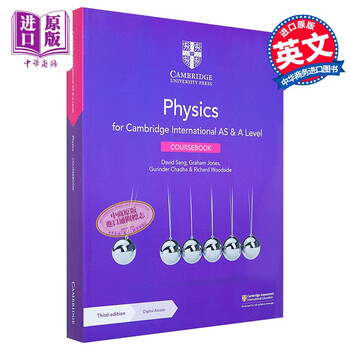
Cambridge International AS ALevel Physics Coursebook 正版剑桥国际AS ALevel考试物理教材带线上账号 英文原版¥557.0📱 去京东购买京东精选

需要一对一辅导?Need One-on-One Tutoring?
GCSE / IGCSE / A-Level / IB 物理与全科辅导
16621398022 同微信
aleveler.com 的 GCSE 科学页面,或点这里联系课程顾问

或截图后用「扫一扫 → 相册」选择本图