GCSE物理 电流电阻串并联 电功率 家庭电路
电学是 Edexcel GCSE 物理(1PH0)里知识点最密的一块。Topic 10 Electricity and circuits 排在 Paper 2,和能量、磁学一起撑起后半张卷子,官方 spec 从电路符号一直排到家庭用电安全,条目接近三十条。真正反复出现在计算题里的式子其实只有五六个:Q = It、E = QV、V = IR、P = IV、E = Pt。很多学生以为电学难在公式记不住,其实丢分大多发生在单位换算和串并联的判断上。这篇按考点顺序把这一章拆成十二个具体环节,每个环节给一个算例和一个容易失分的位置。
Electricity rewards precision more than memory. Edexcel 1PH0 Topic 10 sits on Paper 2, and the same five or six relationships turn up year after year in different costumes. What separates a grade 7 from a grade 4 is rarely the formula itself; it is whether the student notices that the time is given in minutes, or that the supply voltage is shared across two resistors rather than delivered to each of them.
电流是电荷的定向移动
电流的定义是单位时间内通过某截面的电荷量,写成 I = Q / t,单位安培,1 A 就是每秒通过 1 库仑。电子的电荷量是 1.6 × 10⁻¹⁹ C,所以 1 A 的电流对应每秒大约 6.25 × 10¹⁸ 个电子通过,这个数字本身不用算进答案,但能帮学生理解电流不是电子跑得快,而是通过的数目多。算例:某段导线在 60 s 内通过 120 C 的电荷,电流就是 2 A。反过来给电流和时间求电荷,2 A 持续 5 min,先换单位再乘,得到 600 C。常见的错误是直接把分钟当代入秒,答案一次差 60 倍。题目里出现 mA 时先除以 1000,250 mA 就是 0.25 A,这个换算在后面的 V = IR 里还要再用一次。
Current is simply charge per second, and the unit follows from that definition: one ampere is one coulomb passing a point each second. Many students lose the mark here without noticing, because the arithmetic is easy and the unit conversion is not. A current of 250 mA must become 0.25 A before it goes anywhere near a resistance calculation.
电势差是每单位电荷转移的能量
电势差(potential difference)的定义是每单位电荷转移的能量,V = E / Q,1 V 等于 1 J/C。电池或电源提供的是电势差,它把化学能转成电能,再在元件上转成热、光或机械能。算例:一个 12 V 电池驱动 5 C 电荷通过外电路,转移的能量是 60 J。用公式时容易混的是 E 这个符号,电学里的 E 指能量,力学里的 E 也指能量,但单位不同场合读法不同,写答案时把单位带上就不会乱。伏特表测电势差要并联在元件两端,串进去会把电路断开,读数接近电源电压而元件不工作。很多学生以为电压是电流的强度,其实电流描述流得快慢,电势差描述每一份电荷带多少能量。
Potential difference describes the energy carried by each coulomb, which is why one volt equals one joule per coulomb. Exam answers that omit the unit tend to lose the mark even when the number is right. A voltmeter belongs in parallel with the component; wired in series it stops the circuit working and the reading becomes meaningless.
电阻与欧姆定律的适用范围
电阻定义为 R = V / I,单位欧姆,1 Ω 表示加 1 V 时通过 1 A。欧姆定律说在温度不变时,通过一段金属导体的电流与两端电势差成正比,这句话里的温度不变不能省。算例:某电阻两端加 6 V,通过 0.5 A,电阻是 12 Ω;把电压改成 3 V,电阻仍是 12 Ω,电流变成 0.25 A。很多学生以为电阻会随着电压变小而变小,实际阻值由材料和温度决定,不随电压改变。灯丝就不一样,电流一大温度升上去,阻值跟着变大,所以灯丝的 V 与 I 不成正比。改写公式时注意 R = V / I 与 I = V / R 的差别,把除法写成乘法是最常见的粗心。
Resistance tells you how many volts are needed to drive one ampere, and the relationship is linear only while the temperature stays constant. Students who treat resistance as something that shrinks when the voltage drops will mis-predict every second part of a question. For a filament lamp the assumption fails outright, which is exactly why the specification asks for its characteristic curve.
串联电路:电流相同,电势差分配
串联电路只有一条路径,电流在每个元件上完全相同,电源的电势差由各元件分掉,各元件电势差之和等于电源电压。总电阻等于各电阻相加,这一点 Edexcel 的 spec 第 10.15 条明确要求会算。算例:6 V 电源接两个 3 Ω 电阻,总电阻 6 Ω,电流 1 A,每个电阻两端各 3 V。若换成 2 Ω 与 4 Ω,电流仍是 1 A,电势差变成 2 V 与 4 V,阻值大的分到的电势差多。串联的好处是开关一处就能控制全部,坏处是一个灯丝烧断整条路都断。两个阻值相同的电阻串联时,电势差正好各分一半;题目若给总电压和两个阻值,做法是先求总电阻与电流,再分别求各元件的电势差。常见的错误是认为电流经过第一个电阻后变小,其实串联电流处处相等,变小的是电势差。
In series the current has only one route, so it is identical through every component while the supply voltage is shared. The largest resistance takes the largest share of the potential difference, and the total is just the sum. This is why one broken filament switches off the whole string.
并联电路:电势差相同,电流分配
并联电路各支路两端电势差相同,都等于电源电压,总电流等于各支路电流之和。并联后的总电阻比任何一条支路的电阻都小,因为电流多了一条路可走。算例:6 V 电源接 6 Ω 与 3 Ω 两条支路并联,各支路电流是 1 A 与 2 A,总电流 3 A,总电阻 6 / 3 = 2 Ω。家庭插座全部并联,所以每件电器都拿到 230 V,关掉一件不影响其他。做题时先判断连接方式再动手,看到两条支路各自接到电源两端就是并联。问总电阻时也可以先求总电流再用电源电压相除,两条路都对,中途单位要保持一致。常见的错误是把并联总电阻按相加处理,算出 9 Ω,方向完全反了。
Parallel branches each see the full supply voltage, so the currents add and the combined resistance falls below the smallest branch. Houses are wired this way for the obvious reason: switching off one appliance must not switch off the rest. Adding resistances as if they were in series is the single most common arithmetic error in this topic.
I-V 特性曲线与核心实验
Edexcel 的核心实验之一就是分别测量电阻和灯丝的电流与电势差关系。固定电阻在一定温度下得到过原点的直线,斜率表示 1 / R,斜率不变说明电阻不变。灯丝的图线是曲线,电流越大温度越高,阻值越大,曲线向右弯,斜率逐渐变小。实验时用可变电源或串联变阻器改变电势差,每改一次同时记录电流和电势差,至少取六组数据。作图时过原点连一条平滑曲线,不要用折线把点逐个连起来。读图题常问某点电阻,做法是用该点的 V 除以 I,不是取整条线的斜率。误差主要来自读数与接触电阻,导线接头松动会让读数偏低。
The core practical compares a fixed resistor with a filament lamp, and the two graphs behave differently for a physical reason rather than a mathematical one. A lamp heats up as the current rises, so its resistance climbs and the curve bends. When a question asks for the resistance at one point, divide that point's voltage by its current; the gradient of the whole line is not the answer.
二极管、热敏电阻与光敏电阻
二极管只允许电流在一个方向通过,反向时几乎没有电流,正向要达到阈值电压才明显导通,硅二极管常写约 0.7 V。热敏电阻(thermistor)随温度升高阻值下降,光敏电阻(LDR)随光照增强阻值下降,两者都用在自动控制里,比如温控开关与路灯。考法通常是给一张图线,问某温度或某光照下的阻值,做法仍是读对应点的 V 与 I 相除。若题目问电路里元件的作用,答案要落到阻值变化如何改变总电流或某段电势差,不要只写阻值变了。很多学生以为二极管在反向时会被烧坏,其实它只是不导通,除非反向电压超过极限值。
A diode conducts in one direction only, a thermistor loses resistance as it warms, and an LDR loses resistance as light intensity rises. Questions usually hand you the graph and ask for a resistance at a stated condition. Explaining the purpose of a component means tracing how its changing resistance alters the current or the potential difference elsewhere in the circuit.
电功率与电能的计算
功率是能量转移的速率,电学里用 P = I V,配合 V = I R 还能写成 P = I² R,后者专门用来算电阻发热。算例:一个接在 230 V 上的电水壶通过 4 A,功率 920 W;若通过 8 A,功率 1840 W,电流翻倍功率也翻倍,但按 I² R 算损耗时是四倍。电能是功率乘时间,E = P t,单位焦耳,家庭电费习惯用千瓦时,1 kWh 等于 3.6 × 10⁶ J。算例:2000 W 的电暖器工作 3 h,用电 6 kWh。电费单上的度就是千瓦时,算一个月用电量时把每件电器的功率与每天使用小时数相乘再累加。做题时先看给的是功率还是电流,再决定用哪条式子,把时间换成秒是最容易漏的一步。
Power is energy per second, and the two forms of the equation answer different questions: P = IV suits a stated supply voltage, while P = I²R isolates heating in a resistor. Doubling the current doubles the power but quadruples the heating, which is the whole reason the grid transmits at high voltage. Electricity bills work in kilowatt-hours, so 2000 W for three hours is six units.
交流电与家庭用电的接线
英国市电是 230 V、50 Hz 的交流电,电流方向每秒改变 50 次,一个完整周期是 0.02 s。电池提供直流电,方向不变,图线上是一条水平线,交流电的图线是正弦曲线。三根线的颜色与作用要记牢:火线 live 是棕色,零线 neutral 是蓝色,地线 earth 是黄绿相间。火线相对零线有 230 V 的电势差,零线在变电站接地,正常情况下接近 0 V。开关和保险丝都要接在火线上,这样断开时元件不带电。常见的错误是在交流电的图线上读最大值当作供电电压,题目给的 230 V 是有效值。
UK mains is 230 V at 50 Hz, alternating, with one complete cycle every 0.02 s. The three-core cable carries live, neutral and earth, and the colours are fixed: brown, blue, and green with yellow stripes. Switches and fuses belong in the live wire so that the appliance is dead when the circuit is broken.
保险丝、接地与双重绝缘
保险丝串在火线上,里面的金属丝会在电流超过额定值时熔断,把电路断开。选额定值要略高于电器的正常工作电流,比如 900 W 的电饭锅在 230 V 下约 3.9 A,选 5 A 的保险丝,选 13 A 就起不到保护作用。接地线连在金属外壳上,一旦火线碰到外壳,电流经地线流走,电流迅速增大使保险丝熔断,外壳不会带电。双重绝缘的电器外壳是绝缘材料,内部再有一层绝缘,不需要接地线,常见的塑料外壳充电器就是这种设计。漏电保护器检测火线与零线电流之差,动作比保险丝快,两者作用不同。
A fuse melts when the current exceeds its rating, so it must sit slightly above the normal operating current rather than far above it. Earthing gives a fault current a low-resistance path, which blows the fuse quickly and keeps the metal case safe to touch. Double-insulated appliances need no earth because there is no exposed metal to become live.
输电与国家电网
国家电网把发电机输出的电压用升压变压器提高到 400 kV 左右再长距离输送,到居民区前再用降压变压器降到 230 V。原因在损耗公式 P = I² R:输送同样功率时电压越高电流越小,电流减半损耗降到四分之一。算例:输送 100 MW,用 400 kV 时电流 250 A,用 25 kV 时电流 4000 A,后者电缆发热是前者的二百多倍。变压器靠电磁感应工作,只能用于交流电,这也是电网用交流而不用直流的原因之一。输电线的电阻虽然小,但电流大了损耗仍然可观,所以高压输电是必须而不是浪费。
Step-up transformers raise the voltage to around 400 kV for transmission, then step-down transformers bring it back to 230 V before it reaches a house. The reason is the I²R term: at higher voltage the same power needs less current, and the heating falls with the square of that reduction. Transformers rely on electromagnetic induction, so they work with alternating current only.
常见丢分点与做题顺序
单位换算是这一章最稳的失分点:mA 除以 1000,kW 乘 1000,min 乘 60,h 乘 3600,换完再代数。看题时先判断串并联,再决定电流和电势差哪个相同。写计算题按三步走,先写公式,再代数字,最后带单位,中间不要跳步,过程分往往就在这里。解释题要用因果链,写清楚什么变了、为什么变、结果怎样,只写结果不给理由通常零分。有效数字跟题目给的数据保持一致,题目给两位就不要写四位。很多学生以为算出正确答案就结束,其实解释题的分在理由上,计算题的分在单位和公式上。
Almost every lost mark in this topic traces back to a conversion, a misread circuit, or an explanation that states a result without a reason. Write the equation first, substitute second, and attach units to the answer; the working marks live in that middle step. Explanations need a chain: what changes, why it changes, and what follows from it. Stating the conclusion alone earns nothing.
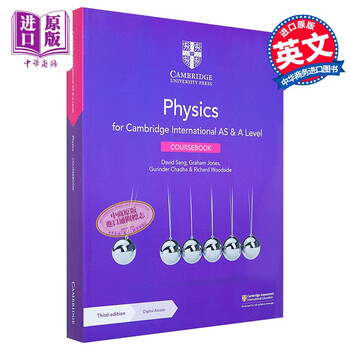
Cambridge International AS ALevel Physics Coursebook 正版剑桥国际AS ALevel考试物理教材带线上账号 英文原版¥557.0📱 去京东购买京东精选
需要一对一辅导?Need One-on-One Tutoring?
A-Level / GCSE / IB / KS2-KS3 全科辅导
16621398022 同微信
Visit aleveler.com
或截图后用「扫一扫 → 相册」选择本图