IB物理 简谐运动 波模型 双缝干涉 驻波
波构成 IB 物理 Theme C 的全部内容,从简谐运动一路排到多普勒效应,五节之间靠几条公式串起来。下面按 C.1 到 C.5 的顺序,把每一节的判据、常见失分点和答题动作写清楚,公式与教学时数都以 IBO 现行考纲和数据手册为准。
Waves occupy all of Theme C in the current IB physics course, and the five subtopics connect through a handful of formulas. What follows works through C.1 to C.5 in order, concentrating on the tests that separate a correct answer from a nearly correct one.
C.1 简谐运动的判据 加速度与位移反向
IBO 的 Physics guide(首次评估 2025)把振动放在 Theme C 的 C.1,第一条要求就是判断一个运动是不是简谐运动。判据只有一句:加速度大小与位移成正比,方向与位移相反,写成 a = -ω²x。公式里的 ω 是角频率,单位 rad/s,不是频率 f。很多学生以为只要物体来回摆动就算简谐运动,其实单摆只有在摆角很小(通常认为小于 10 度)时才近似满足这一条件,摆角一大,回复力不再与位移成正比,图像就弯成一条曲线。判断时要看三张图:x-t 是正弦曲线,v-t 比 x-t 提前四分之一周期,a-t 与 x-t 完全反相。数据手册把 a = -ω²x 与 T = 1/f = 2π/ω 并列给出,说明周期与角频率是同一件事的两种写法。HL 还要会用 x = x0 sin(ωt + φ) 和 v = ±ω√(x0² - x²),后者在已知位移求速度时比求导更快。
Section C.1 of the IBO physics guide opens with a single test that separates true simple harmonic motion from any oscillation that merely repeats. The acceleration has to be proportional to displacement and directed back towards equilibrium, which is exactly what a = -ω²x encodes, and angular frequency ω is measured in rad/s rather than in hertz. A pendulum only passes that test at small angles, roughly under ten degrees, because the restoring force stops being proportional to displacement once the swing grows. Displacement leads acceleration by half a cycle while velocity sits a quarter cycle ahead of displacement, and reaching for v = ±ω√(x0² - x²) from the data booklet saves differentiating by hand.
C.1 弹簧振子与单摆的周期公式及斜率用途
弹簧振子的周期 T = 2π√(m/k) 与单摆的周期 T = 2π√(l/g) 都印在数据手册上,考试不要求推导,要求的是解释变量关系。弹簧振子的周期与振幅无关,只跟质量与劲度系数有关,同一个弹簧挂不同砝码,画 T² 对 m 的图是一条过原点的直线,斜率 4π²/k。学生最常把斜率写成 k/4π²,算出的 k 差了十六个 π 的四次方,量纲看不出问题,数值全错。单摆测 g 的实验同理,用 T² 对 l 作图,斜率 4π²/g,l 要量到摆球球心,漏掉半径会让 g 系统性偏大。常见的错误是只测一个周期,人工反应时间 0.2 s 直接混进结果,正确做法是测 20 个周期再除以 20。IBO 的内部评估看重不确定度处理与变量控制,把这两点交代清楚,比多测十组数据更值分。
Both period formulas appear in the data booklet, so the marks come from reading them rather than deriving them. A spring-mass system is independent of amplitude, which is why a graph of T² against m is a straight line through the origin with gradient 4π²/k, and a pendulum plot of T² against l gives 4π²/g. Measuring the length to the centre of the bob matters, because stopping at the top of the string makes g come out systematically large. Timing twenty swings and dividing is the standard fix for reaction time, and the IBO moderation criteria reward a clear uncertainty statement more than a longer data table.
C.1 简谐运动中的能量 总能量与 x0 的平方关系
简谐运动的能量在 HL 内容里几乎年年出现,数据手册给的是 E_T = ½mω²x0² 与 E_p = ½mω²x²,两条式子放在一起就能看出总能量与瞬时位移无关,只跟振幅与角频率有关。经过平衡位置时势能为零、动能最大,到达端点时动能全转成势能,速度降为零。很多学生把弹簧的弹性势能记成 ½kx² 就以为与 ω 无关,把 k = mω² 代进去两条式子完全一致,这一步在解释「振幅加倍能量变四倍」时最省力。能量随时间变化的图像频率是位移图像的两倍,因为一个周期里动能出现两次极大值。题干如果只给 m、k 与振幅,先算 ω = √(k/m) 再代能量式,比绕回 ½kx0² 少一次换算。
Energy in simple harmonic motion is an HL favourite, and the data booklet gives E_T = ½mω²x0² alongside E_p = ½mω²x². Read together, they show that total energy depends on amplitude and angular frequency rather than on instantaneous displacement. Kinetic energy peaks as the oscillator passes equilibrium and falls to zero at the extremes, where the potential term carries everything. Substituting k = mω² turns ½kx0² into the same expression, the quickest route to seeing why doubling amplitude quadruples the stored energy; when m, k and amplitude are given, compute ω = √(k/m) first.
C.2 波模型 v = fλ 与波前射线的关系
C.2 的核心公式是 v = fλ = λ/T,它把波速、频率与波长绑在一起。波速由介质决定,频率由波源决定,介质变了频率不变、波长跟着改,这一点在折射题里天天用到。波前与射线是同一列波的两种描述:波前垂直于传播方向,射线沿传播方向,画图时两者必须互相垂直。横波的振动方向垂直于传播方向,纵波(声波)的振动方向与传播方向平行。很多学生以为频率会随介质改变,实际上光进入水中之后频率不变、速度变小、波长变短,v = fλ 里只有一个量允许变。Paper 1B 的数据题常给出一组波长与频率的测量值,让你判断波速是否为常数,这时要算相对不确定度,不能只看数值是否接近。
The wave model rests on v = fλ = λ/T, and the useful reading is which quantity belongs to the medium and which belongs to the source. Speed is set by the medium while frequency is set by the source, so a wave crossing a boundary keeps its frequency and adjusts its wavelength. Wavefronts are drawn perpendicular to rays, a convention that decides several marks as soon as a question asks for a sketch of refraction. Data-based questions in Paper 1B often supply measured wavelength and frequency pairs and ask whether speed is constant, which needs a percentage uncertainty comparison rather than a glance at the numbers.
C.2 位移图像与振动图像的读法差异
位移图像和振动图像是两件事,学生最常把 y-x 图当成 y-t 图来读。y-x 图是某一时刻整列波的快照,横轴是位置,相邻两个波峰的距离是波长。y-t 图是某一个质点的振动记录,横轴是时间,相邻两个波峰之间是周期。相位差用 Δφ = 2πΔx/λ 计算,两点相距半个波长就是 π,也就是反相。常见的错误是把波速当成质点速度,横波里质点只在平衡位置附近上下振动,从不随波向前移动,解释「波传播能量而不传播物质」时用的正是这一条。画图题如果给了波速和频率,先算 λ = v/f 再定位波峰位置,比凭感觉落笔更稳。
Two graphs cause most of the confusion here: a snapshot of the whole wave at one instant, and a record of a single particle over time. On the snapshot the horizontal axis is position and one wavelength separates neighbouring crests, whereas on the record the horizontal axis is time and one period separates them. Phase difference follows from the relation Δφ = 2πΔx/λ, so points half a wavelength apart are exactly out of phase. Particles in a transverse wave oscillate about equilibrium and never travel with the wave, which is the point behind the claim that waves transfer energy rather than matter; when speed and frequency are given, work out λ = v/f before drawing anything.
C.3 折射的比值方向与全反射条件
C.3 把反射、折射、衍射与干涉放在一起,起点是边界上的三种去向:反射、折射(透射)与吸收。折射用数据手册里的 n1/n2 = sinθ2/sinθ1 = v2/v1,方向容易写反:光从光密介质进入光疏介质时折射角大于入射角,从水到空气超过临界角就发生全反射,光纤靠的正是这件事。折射率也可以写成 n = c/v,c 取 3.00 × 10⁸ m/s。常见的错误是把比值颠倒,sinθ1/sinθ2 写成 n1/n2 会让答案正好倒过来。稳妥的做法是先标出两侧介质的 n,再按「n 大的角小」复查一遍。考试给的角度有时是相对界面而不是法线,看到 30 度先确认它是不是与法线的夹角,这一步错了后面全错。
Reflection, refraction, diffraction and interference all hang off one starting point: what a wave does when it meets a boundary. The ratio n1/n2 = sinθ2/sinθ1 = v2/v1 in the data booklet is easy to invert by accident, and a quick sanity check settles it, since the ray in the denser medium always lies closer to the normal. Total internal reflection appears once light travels from water or glass into air beyond the critical angle, the principle behind optical fibres. Angles in these questions are frequently measured from the surface rather than the normal, so read the diagram before substituting.
C.3 双缝干涉的光程差与条纹间距 s = λD/d
双缝干涉是 C.3 里最容易被压缩成背公式的部分。两条缝到屏幕上某点的光程差等于 nλ 时相长,等于 (n + 1/2)λ 时相消,这条判据比条纹公式更基础。条纹间距 s = λD/d 里,D 是缝到屏的距离,d 是缝间距,λ 用米。很多学生以为把 d 变大条纹会变宽,实际上缝距变大条纹变密,这正是 d 写在分母上的意思。做实验时量十一根暗纹的总宽度再除以十,比量一根亮纹准得多。红光波长约 700 nm、紫光约 400 nm,同一装置下红光条纹更宽,白光干涉中央为白色、两侧出现彩色带就是这个原因。
Double-slit interference is usually taught as a single formula, yet the underlying condition is simpler: a path difference of nλ gives reinforcement and (n + 1/2)λ gives cancellation. Fringe spacing s = λD/d follows, with D the slit-to-screen distance, d the slit separation and λ in metres. Increasing d narrows the fringes instead of widening them, which is the practical meaning of d sitting in the denominator. In the laboratory, measuring across ten fringe spacings and dividing beats measuring one blurry fringe, and the same setup explains why red light near 700 nm spreads further than violet near 400 nm.
C.4 驻波的节点腹点与弦上 λ = 2L/n
C.4 讲驻波与共振,数据手册在这一节没有给公式,说明考的是图像与边界条件。两列振幅相同、方向相反的波叠加,形成节点与腹点,相邻节点间距是半个波长。弦两端固定时波长满足 λ = 2L/n,n 是整数,只有分立的频率能形成驻波,最低的那个叫基频。管乐器同理,两端开口的管与一端封闭的管节点位置不同,闭管只出现奇次谐波,这一点常被忽略。共振发生在驱动频率接近固有频率时,振幅达到最大,乐器与桥梁的例子都从这里来。学生最常把节点当成振幅最大的位置,其实节点位移为零、腹点位移最大,读图时先看清楚哪条线是零线。
Standing waves carry no equation in that part of the data booklet, a hint that the marks lie in boundary conditions and diagrams. Two identical waves travelling in opposite directions produce nodes and antinodes half a wavelength apart, and a string fixed at both ends only supports λ = 2L/n. That quantisation explains why a string has a fundamental plus discrete overtones while a pipe closed at one end supports odd harmonics only. Resonance occurs when the driving frequency approaches a natural frequency and the amplitude peaks, the same mechanism that explains a musical instrument and a bridge responding to wind. Nodes sit at zero displacement rather than at maximum, a distinction that decides several diagram marks.
C.5 多普勒效应 Δf/f ≈ v/c 与红移
C.5 的多普勒效应在数据手册里只给一条 Δf/f = Δλ/λ ≈ v/c,近似式的前提是 v 远小于 c,用在声波上要把 c 换成声速。波源靠近时观测频率升高、波长变短,远离时反过来。天文上的红移就是星系远离导致波长变长,哈勃当年正是用它推断宇宙在膨胀。很多学生会把公式里 Δλ 的符号弄错,稳妥的顺序是先判断波源靠近还是远离,再决定频率升高还是降低,最后才代数字。救护车驶过时音调由高变低的那一下,就是频率变化最直观的例子。声波的多普勒关系里分母出现 (v ± u),考纲只要求定性判断与简单计算,不必自行扩展到相对论情形。
The Doppler entry in the data booklet is a single approximation, Δf/f = Δλ/λ ≈ v/c, valid only while the relative speed stays far below the speed of light. A source approaching an observer raises the observed frequency and shortens the wavelength, while a receding source does the opposite. Astronomical redshift is the same effect on a cosmic scale, and it is the observation Hubble used to argue that distant galaxies are moving away. Decide the direction of motion first and substitute afterwards, since sign errors here cost marks even when the arithmetic is right; an ambulance siren dropping in pitch as it passes is the everyday version.
C.1 到 C.5 的试卷结构与两轮复习安排
IBO 官网的 Physics guide 写明首次评估 2025 的试卷结构:Paper 1 分 1A 选择题与 1B 数据题,合共占 36%,SL 1 小时 30 分、HL 2 小时;Paper 2 是短答与长答,占 44%,SL 1 小时 30 分、HL 2 小时 30 分;内部评估的科学探究占 20%,满分 24 分。Theme C 的教学时数是 SL 17 小时、HL 29 小时,在五个主题里比重中等,公式密度却最高。可行的复习切法是先把五节的公式与图像一一对应,再单独拿近几年的数据题练单位与有效数字,那类题暴露问题比继续读书快。数据手册允许带进考场,前提是知道它在哪一页,考前翻十分钟的收益通常超过多背一条公式。
The IBO guide sets the current assessment pattern: Paper 1 combines multiple-choice and data-based questions for 36%, Paper 2 carries 44%, and the scientific investigation supplies the remaining 20% with 24 marks. Theme C is allocated 17 teaching hours at SL and 29 at HL, mid-range among the five themes yet unusually dense in formulas. A workable revision split is to map each formula to its graph first, then spend the second pass on data-based questions from recent sessions, which expose unit and significant-figure habits faster than more reading. The data booklet is allowed in the exam, so knowing which page holds what is worth more than memorising an extra equation.
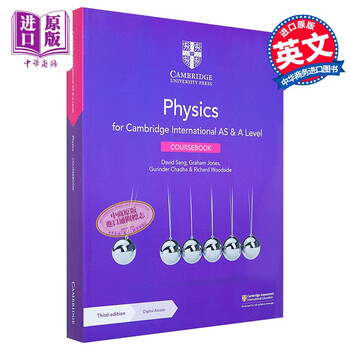
Cambridge International AS ALevel Physics Coursebook 正版剑桥国际AS ALevel考试物理教材带线上账号 英文原版¥557.0📱 去京东购买京东精选


需要一对一辅导?Need One-on-One Tutoring?
A-Level / GCSE / IB / KS2-KS3 全科辅导,IB 物理 Theme C 逐节带练
16621398022 同微信
IB 物理真题与讲义
或截图后用「扫一扫 → 相册」选择本图