AQA GCSE物理 电学计算 串并联 功率 电能
电学计算在 AQA GCSE Physics 8463 的 Paper 1 里分值不算最多,却是失分最集中的地方。很多学生以为公式背下来就能拿分,实际卷面上丢分多半发生在代入和单位换算这两步。这篇按做题的顺序把 Q = It、V = IR、P = VI、E = Pt 几条式子串起来,再用一道 12 V 双电阻题把串联与并联的差别算到底。AQA 考纲 4.2 每个子条目后面都附了算式,考场上要做的只是判断哪一条适用。
Electricity calculations take a modest share of the marks in AQA GCSE Physics 8463 Paper 1, but they account for a large share of the marks lost. Most students can recall the equations; the damage happens when values are substituted or units are converted. This article follows the order in which a calculation is actually done, linking Q = It, V = IR, P = VI and E = Pt, then works one 12 V two-resistor circuit from start to finish so that the difference between series and parallel is settled with numbers rather than description.
先定未知量,再选公式
卷面给出一段描述,第一步是把已知量写成带单位的清单,第二步才是挑公式。题目问电荷量就看 Q = It,问电压就看 V = IR,问功率就看 P = VI 或 P = I^2R,问电能就看 E = Pt 或 E = QV。很多学生以为公式要一个个试过去,实际每道题的未知量只有一个,公式是被未知量决定的。写清单时把 mA、kW、分钟这些单位先换成 A、W、s,后面的错误就少一半。公式表印在试卷首页,翻不翻不影响判断,判断靠的是题目的问法。
The first move on any electricity question is a list of the quantities given, each with its unit, and only then a choice of equation. A question asking for charge needs Q = It, one asking for potential difference needs V = IR, power comes from P = VI or P = I^2R, and energy comes from E = Pt or E = QV. Because each question hides exactly one unknown, the unknown selects the equation for you, and converting milliamps, kilowatts and minutes before substituting removes most of the arithmetic errors.
Q = It 与单位换算
电流是电荷流动的速率,Q = It 里 Q 用库仑、I 用安培、t 用秒,三者不能混着用。一支 0.5 A 的电流通电 4 分钟,电量是 0.5 乘以 240 等于 120 C。把 4 分钟直接代进公式会得到 2 C,这是考场上最常见的单位错误。反过来给电量求电流,同样先统一时间单位再除。另一种错误是看到毫安就当成安培,其实 1 mA 只有 0.001 A,一条 250 mA 的支路在 30 s 内通过 7.5 C。考纲对这一条只要求一个式子和它的变形,题目的难度全落在换算上。
Charge is the rate of flow of current multiplied by the time it flows, and Q = It only works when Q is in coulombs, I in amperes and t in seconds. A current of 0.5 A running for 4 minutes transfers 120 C, whereas substituting 4 straight into the equation gives 2 C, the most frequent slip in the exam hall. Converting milliamps first, so that 250 mA becomes 0.25 A, keeps a 30 s branch calculation at 7.5 C.
V = IR 与电阻的意义
电阻是电压与电流的比值,V = IR 在恒温的欧姆导体上才严格成立。6 V 加在 3 欧姆上电流是 2 A,换成 6 欧姆电流降到 1 A,电阻翻倍电流减半,这条比例关系有时比公式本身更好用。很多学生以为电阻是元件自带的固定数字,实际灯丝灯泡的电阻会随温度升高而变大,所以它的 I-V 图是弯的。做题时先确认元件类型,再用 V = IR 或者读图,两条路不要混用。题目给了额定值又给了实测值,按实测值算。
Resistance is the ratio of potential difference to current, and V = IR holds strictly only for an ohmic conductor kept at constant temperature. A 6 V supply drives 2 A through 3 ohms and 1 A through 6 ohms, so doubling the resistance halves the current, a ratio that is sometimes quicker to use than the equation itself. A filament lamp breaks that pattern because its resistance rises as the filament heats, which is why its I-V graph curves instead of running straight.
串联电路的三个恒定关系
串联只有一条通路,电流处处相同,电源电压被各元件分掉,总电阻等于各电阻相加。两个 4 欧姆与 6 欧姆串在 12 V 上,总电阻 10 欧姆,电流 1.2 A,两只电阻上的电压分别是 4.8 V 和 7.2 V,加起来正好回到 12 V。错得最多的是把串联说成电压相同,卷面上这样写直接零分。串联里电阻大的那只分到的电压也多,可以拿来估算和自查。做题顺序是先加电阻,再算电流,最后逐只求电压,顺序反了容易算错。
A series circuit offers one path, so the current is the same everywhere, the supply voltage is shared between components, and the total resistance is the sum of the parts. With 4 ohms and 6 ohms in series across 12 V the total is 10 ohms, the current is 1.2 A, and the two potential differences are 4.8 V and 7.2 V, adding back to the supply. The larger resistance always takes the larger share of the voltage, which is a fast way to check an answer before writing it down.
并联电路的电流与总电阻
并联的每条支路各自接到电源两端,电压相同,总电流是各支路电流之和。6 欧姆与 3 欧姆并接在 12 V 上,两支路电流分别是 2 A 和 4 A,总电流 6 A,等效电阻 12 除以 6 等于 2 欧姆,比最小的那只 3 欧姆还小。AQA 考纲 4.2.2 明确不要求用公式算两只并联电阻的总阻值,定性说明总电阻变小、小于任一支路电阻就够。很多学生以为并联的支路越多电阻越大,正好相反,多开一条支路等于多给电流一条路。家庭电路里的用电器都接成并联,原因也在这里。
In parallel each branch is connected across the supply, so every branch sees the same potential difference while the total current is the sum of the branch currents. With 6 ohms and 3 ohms across 12 V the branches carry 2 A and 4 A, giving 6 A in total and an equivalent resistance of 2 ohms, below the smallest branch. The AQA specification 4.2.2 asks only for a qualitative statement that the combined resistance is smaller than either branch, which is why domestic appliances are wired in parallel.
一道 12 V 双电阻题的完整解法
题目是 12 V 电源配 4 欧姆与 6 欧姆两只电阻,先串联后并联,分别求电流、电压与功率。串联时总电阻 10 欧姆,电流 1.2 A,总功率 P = 12 乘以 1.2 等于 14.4 W,两只电阻上分别是 5.76 W 与 8.64 W。并联时每只电阻的电压都是 12 V,电流 3 A 与 2 A,总电流 5 A,总功率 60 W,比串联那一次高四倍多。同一组元件只换接法,功率差这么多,原因是等效电阻从 10 欧姆掉到 2.4 欧姆。写答案时把串、并两问分开列式,阅卷时更容易给分。
Take a 12 V supply with 4 ohms and 6 ohms, first in series and then in parallel. In series the total is 10 ohms, the current is 1.2 A and the power is 14.4 W, split into 5.76 W and 8.64 W. In parallel each resistor sees the full 12 V and draws 3 A or 2 A, so the total current is 5 A and the power reaches 60 W, more than four times the series value because the equivalent resistance has fallen to 2.4 ohms.
P = VI 与 P = I^2R 的取舍
两条功率式子等价,选哪条取决于手上有什么。知道电压和电流就用 P = VI,只知道电流和电阻就用 P = I^2R,两条同时能用时答案必须一致,不一致说明中间某一步错了。一只 230 V、8.7 A 的电热水壶功率约 2000 W,换成 P = I^2R 要先算电阻 26.5 欧姆,再代回去得到同一个数。常见的错误是拿额定电压去乘别的支路电流,算出来的功率在物理上没有意义。AQA 考纲 4.2.4.1 把两条式子并列给出,考卷不会提示用哪一条。
The two power equations are interchangeable, so the choice depends on which quantities are already known. Use P = VI when voltage and current are given, and P = I^2R when current and resistance are, making sure both routes agree whenever both are available. A 230 V kettle drawing 8.7 A runs at about 2000 W, and the I^2R route reaches the same figure after finding the 26.5 ohm resistance first.
E = Pt 与 E = QV 求电能
电能转移有两条算法,功率乘时间,或者电荷量乘电压,单位正确时给出同一个结果。2000 W 的电热水壶烧 3 分钟,电能是 2000 乘以 180 等于 360000 J,也就是 360 kJ。同样这段时间通过的电量是 8.7 乘以 180 约 1566 C,再乘 230 V,还是 360 kJ。很多学生以为瓦特已经是能量单位,实际瓦特是功率,焦耳才是能量。题目里出现分钟先换成秒,出现千瓦先换成瓦,这一步不做,答案会差三个数量级。
Energy transferred can be found either as power multiplied by time or as charge multiplied by potential difference, and both routes agree once the units are consistent. A 2000 W kettle running for 3 minutes transfers 360000 J, or 360 kJ, and the same interval passes about 1566 C at 230 V, which returns the same 360 kJ. Watts measure power and joules measure energy, so minutes must become seconds and kilowatts must become watts before anything is substituted.
电费单上的千瓦时怎么算
电费按千瓦时计价,1 kWh 就是 1000 W 用 1 小时,等于 3.6 兆焦。2000 W 的电热水壶每天烧 15 分钟,一个月按 30 天算是 0.5 kW 乘 0.25 h 再乘 30,得 3.75 kWh。若按每千瓦时 0.25 英镑估算,这部分电费约 0.94 英镑,实际单价以当地账单为准。常见的错误是把千瓦时当成千瓦,两个单位差一个时间维度。算家用电费先算 kWh 再乘单价,中途不要换单位。AQA 考纲 4.2.4.2 的算式以焦耳为单位,千瓦时属于账单场景里的换算。
Electricity bills use the kilowatt hour, where 1 kWh is 1000 W sustained for one hour, equal to 3.6 million joules. A 2000 W kettle used for 15 minutes a day for 30 days consumes 0.5 kW times 0.25 h times 30, which is 3.75 kWh, and at an assumed 0.25 pounds per kWh that costs about 0.94 pounds. Keeping kilowatts and kilowatt hours apart matters, because the two units differ by a factor of time.
I-V 图像里读电阻
I-V 图的纵轴是电流、横轴是电压,直线过原点说明电阻恒定,斜率就等于 1/R。取直线上一点,6 V 对应 2 A,电阻是 6 除以 2 等于 3 欧姆,用斜率倒数算结果一样。灯丝灯泡的曲线随电压升高变平,说明电阻在变大;二极管正向导通后电流陡升,反向几乎为零。阅卷时会看到学生在曲线上随便取两点相除,得到的是那一段的平均电阻,不是某个电压下的电阻值。读图题先看清题目问的是哪一点,再动笔。
On an I-V graph the current sits on the vertical axis and the potential difference on the horizontal one, so a straight line through the origin means constant resistance and its gradient equals 1/R. A point at 6 V and 2 A gives 3 ohms, and taking the reciprocal of the gradient returns the same value. A filament lamp flattens as voltage rises because its resistance grows, whereas a diode conducts in one direction and blocks the other.
必做实验 3 与实验 4 的数据处理
AQA 官方必做实验里,实验 3 研究导线长度与串并联组合对电阻的影响,实验 4 测灯丝灯泡、二极管与恒温电阻器的 I-V 特性。实验 3 要在导线不发热的条件下改变长度,每次读数前断开电路,导线一热电阻就跟着漂。实验 4 里直线类元件至少取 5 组数据,弯曲的曲线至少取 6 到 8 组,否则画不出形状。错得最多的是把接触电阻算进导线电阻,夹子松一点读数就偏高。处理数据先画图再取点,不要只挑好看的两点。
Required practical 3 investigates how the resistance of a wire depends on its length and on series and parallel combinations, while practical 4 measures the I-V characteristics of a filament lamp, a diode and a fixed resistor. In practical 3 the wire has to stay cool, so the circuit is switched off between readings, and in practical 4 a straight-line component needs at least five points while a curved characteristic needs six to eight. Loose crocodile clips add contact resistance, which is the usual reason a reading drifts above the expected value.
六分题的写法:公式、代入、单位、结论
六分计算题的给分点是分开的,写出公式一分,正确代入一分,答案带单位一分,解释与结论占剩下的分值。写的时候先抄公式,再把数字代进去,中间不要跳步,最后用一句话回答题目问的东西。很多学生以为答案对就满分,实际漏单位或没有结论句会各扣一分。单位统一在代入之前完成,换算过程留在草稿区,正文只写结果。阅卷时按点给分,排版清楚比字写得漂亮更重要。
A six-mark calculation is marked in pieces, with one mark for the equation, one for the substitution, one for the answer with its unit, and the rest for explanation and conclusion. Copy the equation first, substitute on the next line, avoid skipping steps, and finish with a sentence that answers the question actually asked. A correct number without a unit, or without a concluding sentence, still loses marks, so convert units before substituting and keep the working visible.
单位、有效数字与最后的检查
电学计算里单位错一次,整道题的分数基本就没了。代进去之前把 mA 换成 A、kW 换成 W、分钟换成秒,结果再用常识看一眼:家用电器电流几安到十几安,电阻几欧到几百欧,功率几十瓦到三千瓦。很多学生以为答案带小数就说明算得精确,AQA 一般接受两到三位有效数字,多写几位既不扣分也不加分。最后检查单位有没有跟着数字一起写,结论有没有回答题目问的问题。这一步最容易在时间紧的时候被跳过,丢的分却最多。
One unit error removes the marks for a whole calculation, so convert milliamps, kilowatts and minutes before substituting anything. A sanity check helps: domestic appliances draw a few amps to about thirteen, resistances run from a few ohms to several hundred, and powers sit between tens of watts and three kilowatts. Two or three significant figures are normally enough for AQA, and the final line should state the answer with its unit in the terms the question used.
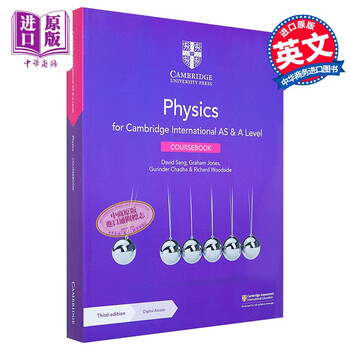
Cambridge International AS ALevel Physics Coursebook 正版剑桥国际AS ALevel考试物理教材带线上账号 英文原版¥557.0📱 去京东购买京东精选

需要一对一辅导?Need One-on-One Tutoring?
A-Level / GCSE / IB / KS2-KS3 全科辅导
16621398022 同微信
Visit aleveler.com
或截图后用「扫一扫 → 相册」选择本图