KS3数学 六大领域 学习路径 官方资源
KS3 数学横跨七、八、九三个年级,是英格兰中学阶段最容易被当成过渡期的一段。它没有全国统考,却决定了 GCSE 能站到哪一档。这篇文章按英国教育部的法定大纲、EEF 的研究指引与 NCETM 的官方材料,把三年拆成可以执行的学习路径,并标出家长能自己检查的节点。
Key stage 3 mathematics spans Years 7 to 9 and is the part of secondary school most often treated as a waiting room. There is no national test at the end of it, yet it sets the ceiling for GCSE. This article follows the statutory programme of study, the EEF guidance report and the NCETM materials to set out a workable path through the three years, with the checkpoints a parent can actually see.
七到九年级的时间轴与考核方式
KS3 指的是英格兰中学的七、八、九年级,学生年龄在 11 到 14 岁之间。数学在国家课程里属于核心科目,法定学习年限覆盖整个三年。英国教育部(DfE)官网上的 KS3 数学学习大纲最早在 2013 年 9 月发布,公立学校自 2016 年 9 月起按这份文件教学。它与 KS4 的 GCSE 不是两套体系,KS4 大纲写着要建立在 KS3 的学习之上。很多学生以为 KS3 没有大考就等于可以松三年,其实这一段的代数与比例基础直接决定 GCSE 能不能上到高阶卷。从 2008 年 10 月 14 日宣布取消 KS3 全国统考之后,这一段只有校内教师评估,节奏由学校自己安排。
Key stage 3 covers Years 7 to 9, when pupils are 11 to 14, and mathematics is a core subject throughout. The statutory programme of study was first published by the Department for Education in September 2013, and maintained schools in England have had to teach it since September 2016; the key stage 4 programme is written to build directly on it. National curriculum tests at 14 were abolished in October 2008, so schools now judge progress through their own assessment rather than a single national exam, which is why two schools can describe the same pupil very differently.
六个内容领域怎么排
KS3 数学大纲把内容分成六个领域:数、代数、比与比例及变化率、几何与测量、概率、统计。六个领域在文件里看起来彼此独立,大纲的引言特意提醒读者它们其实互相连通。比的思路会出现在相似图形的放大里,也会出现在速度与密度这类复合单位里。统计里的散点图要求学生会读斜率与趋势,这已经是代数图像的语言。学校通常按自己的进度把这六块内容分到六个学期甚至九个学期。家长看课表时容易只盯住分数与方程,忽略比例与统计在 GCSE 里的分量。真正拉开差距的往往是比例推理,而不是计算速度。
The key stage 3 programme is organised into six domains: number, algebra, ratio, proportion and rates of change, geometry and measures, probability, and statistics. The introduction warns that these domains only look separate, and pupils are expected to move fluently between numerical, algebraic, graphical and diagrammatic representations. In practice, ratio reasoning turns up inside enlargement and inside compound measures such as speed and density, while scatter graphs ask pupils to read a gradient long before they meet formal algebra; schools usually spread the six domains across six to nine terms at their own pace.
Working mathematically 的三条主线
大纲在每个领域之上还列了一组共同要求,叫做 working mathematically。它分三条线:develop fluency、reason mathematically、solve problems。流利度指的是能熟练调用计算方法,并把算术结构写成代数。推理指的是能提出猜想、找反例、开始做演绎论证。解题指的是能把陌生问题拆成几步,并用正式数学表达结果。这三条线不是额外的章节,而是每个知识点的评分视角。阅卷时能看到同一种失分:学生算对了数,却写不出推理过程。校内评估如果只看答案对错,这三条线就没被真正练到。
Above the six domains, the programme sets out a single strand called working mathematically, split into developing fluency, reasoning mathematically and solving problems. Fluency means choosing a calculation strategy and turning arithmetic structure into algebra, reasoning means conjecturing, testing counter-examples and beginning deductive argument, and problem solving means breaking an unfamiliar question into steps and reporting the result in formal mathematics. None of this is an extra topic; it is the lens teachers are meant to use when marking, and a pupil who gets the right answer with no visible reasoning has not yet met the standard.
数与位值 标准形式与精确根
数这一块从小学的位值往上走,到 KS3 要把小数、分数、幂与根都纳进同一套数系。大纲要求学生会用四则运算处理整数、小数、真分数、假分数与带分数,正负都要覆盖。标准形式的写法是 A 乘 10 的 n 次方,其中 A 大于等于 1 且小于 10。大纲还要求区分根式的精确值与它的十进制近似值,这一点常被忽略。很多学生以为根号只是计算器上的一个键,其实估算的目的是判断数量级。做题时先估上位,再算精确值,错误率会明显下降。计算器卷与非计算器卷的差别也主要落在这一步上。
In the number domain, place value extends from primary school to decimals, fractions, powers and roots, and the statutory text asks pupils to use the four operations on integers, decimals, proper and improper fractions and mixed numbers, including negatives. Standard form is defined as A times 10 to the power n with A at least 1 and less than 10, and exact roots must be distinguished from their decimal approximations. Estimation is what keeps an answer in the right order of magnitude, which matters more once calculators are allowed at key stage 4.
代数 从重复加法到线性与二次图像
代数在 KS3 的起点很朴素,大纲用 3y 代替 y 加 y 加 y,用 a 的平方代替 a 乘 a。接下来是代入、展开、化简、解方程,方向是让学生把算术的结构写成一般形式。图像这一块要求读懂线性函数与简单二次函数,并能在数值、代数、图像三种表示之间来回切换。很多学生以为代数就是背公式,其实第一步是把文字情境翻译成符号。常见的错误是移项时忘了变号,或者把 a 的平方写成 2a。这两类错误在 KS4 的解方程与配方里会连续放大。校内练习里值得刻意留出一段时间,只做翻译与检验,不做计算。
Algebra begins modestly at key stage 3, with the programme asking pupils to read 3y as y plus y plus y and a squared as a times a, before moving on to substitution, expansion, simplification and solving equations. Graphs belong to the same domain: pupils should understand linear and simple quadratic functions and switch between numerical, algebraic and graphical forms. The step that trips most pupils is not the manipulation but the translation from a sentence into symbols, and errors such as dropping a sign when rearranging, or writing a squared as 2a, then repeat all the way through key stage 4.
比与比例 速度单价密度三个复合单位
比、比例与变化率这一块是 KS3 与 GCSE 之间最容易被低估的桥梁。大纲要求学生会用复合单位解题,典型的是速度、单价与密度。速度是距离除以时间,单价是价格除以数量,密度是质量除以体积,三个式子的结构完全一样。比例推理还要求判断一个问题是加法关系还是乘法关系,这一步决定列式对不对。很多学生以为比例题只要交叉相乘,遇到反比例就套错方向。常见的错误是把单位丢掉,答案的数量级是对的,单位却是错的。写题时把单位一起写进算式,一半的错误会自己浮出来。
Ratio, proportion and rates of change is the quiet bridge between key stage 3 and GCSE, and the programme names compound units such as speed, unit pricing and density as the place where it becomes concrete. Structurally the three are identical, a quantity divided by another quantity, so the reasoning transfers directly. The harder judgement is whether a situation is additive or multiplicative, and pupils who reach for cross-multiplication without asking that question tend to invert inverse proportion; writing units into the calculation catches many of these slips before the answer is marked.
几何与测量 全等相似与内角和
几何与测量这一块在 KS3 有几条明确要求:识别与作全等三角形,用放大作相似图形,带坐标网格与不带坐标网格都要会。角度方面要求推出三角形内角和,再用它推出多边形内角和与正多边形性质。勾股定理与三角比要到 KS4 才正式展开,KS3 先建立直角三角形与相似之间的关系。很多学生以为几何靠看图,其实每一条结论都要写清用了哪条性质。常见的错误是把相似与全等混用,或者放大时只放大边长,忘了面积按平方变化。作图题留痕比分步文字更省时间,因为阅卷看的是痕迹。整理错题时把图重画一遍,比抄十行结论有用。
Geometry and measures carries several explicit requirements at key stage 3: identifying and constructing congruent triangles, constructing similar shapes by enlargement, and doing both with and without coordinate grids. Pupils derive the angle sum of a triangle and use it to deduce the angle sum of any polygon, while Pythagoras and trigonometry are held back for key stage 4. Much of the marking here is about evidence rather than the final figure, and the two recurring confusions are treating similar as congruent and enlarging lengths without squaring the effect on area.
概率与统计 双变量数据与散点图
概率与统计在 KS3 的重心是数据素养,不是公式。大纲要求学生会描述两个变量之间的简单关系,也就是双变量数据,并用散点图把它画出来。这一步看起来简单,实际要求判断趋势是正、是负、还是无关。概率这一块要求用列举法、样本空间与频率去估计可能性,并开始区分实验频率与理论概率。很多学生以为散点图只是画点,其实读斜率与离群点才是考点。常见的错误是把相关当成因果,写结论时把话说得太满。校内评估里这类表述题往往是区分档位的地方。
Probability and statistics at key stage 3 are about data literacy rather than formulas: pupils describe simple relationships between two variables, that is bivariate data, and illustrate them with scatter graphs. Probability work moves from listing outcomes and sample spaces to using relative frequency, with an early distinction between experimental frequency and theoretical probability. Reading a trend, a cluster or an outlier is the actual skill, and the commonest error in written answers is turning correlation into causation and overstating the conclusion.
六年级到七年级的衔接落差
从六年级升到七年级的落差在教育研究里被反复记录。EEF 在 2022 年更新的《Improving Mathematics in Key Stages 2 and 3》指引报告把衔接单独列为一条建议,并指出这一段学生的数学成绩与对数学的态度都会出现明显下滑。报告建议中小学对课程与教学建立共同理解,七年级开学初尽快摸清每个学生的强项与漏洞。英国教育部 2021 年 9 月发布的 KS3 数学教学指引也提到,NCETM 提供了七年级 checkpoint 材料,用来评估理解并铺垫 KS3。家长能做的事很具体,开学第一个月看作业里的错误类型,而不是只看分数。常见的错误是七年级一上来就追进度,把六年级的计算漏洞留在原地。漏洞拖到八年级,补起来要花三倍时间。
The dip between Year 6 and Year 7 is one of the best documented transitions in English mathematics, and the EEF guidance report Improving Mathematics in Key Stages 2 and 3, updated in 2022, makes a successful transition its eighth recommendation. It asks primary and secondary schools to build shared expectations of curriculum and teaching, and to establish quickly in Year 7 what each pupil can and cannot do. The DfE guidance published in September 2021 points to the NCETM year 7 checkpoint materials for exactly that purpose, and parents help most by reading the type of error in the first month of homework rather than the mark.
分层编班与结构化干预
分层编班在英国中学很常见,但它不是中性操作。同一份 EEF 指引报告写到,分层更可能拉大弱势学生与其他学生之间的差距,因为前者更容易被编进低组。报告的建议是让评估证据决定分组方式,并在组与组之间保留可以调整的空间。结构化干预是另一条路径,报告要求干预尽早开始、有证据支持、包含明确而系统的教学。干预的内容要与全班教学连上,否则学生看不到两者的关系。很多学生以为补课越多越好,其实干预如果挤掉了他们喜欢的课,效果会反过来。干预疲劳是学校层面真实存在的风险,短而准的支持往往胜过长时间的低效重复。
Setting is common in English secondary schools, but the same EEF report notes that it is likely to widen the attainment gap, because disadvantaged pupils are more often placed in lower groups; its advice is to let assessment guide grouping and to keep movement between groups possible. Structured intervention is the other route, and the report asks for it to start early, be evidence-based and include explicit, systematic instruction that connects back to whole-class teaching. Intervention fatigue is a real risk at school level, and support that displaces lessons pupils enjoy usually does more harm than good.
官方资源 DfE 指引 NCETM 与 Maths Hubs
官方资源不多,但够用,而且免费。英国教育部官网在 2021 年 9 月 28 日发布了《Teaching mathematics at key stage 3》,这是一份非强制指引,用来说明哪些概念是学生后续学习的关键。NCETM 配合这套指引出了中学 mastery 材料、七年级 checkpoint 与专题教学视频。Maths Hubs 是第三条线,全英格兰共 40 个,由 DfE 出资,对公立学校与学院完全免费。在 2026 至 2027 学年,40 个 hub 提供三十多个教师专业发展项目。家长也能用这些材料,看公开资源比买一堆练习册更贴近课标。常见的错误是把资源清单当成书单,买回来却不读官方说明,最后练的方向与考纲要求不一致。
Official support is smaller than the commercial market, but it is free and well targeted. The DfE published Teaching mathematics at key stage 3 on 28 September 2021 as non-statutory guidance identifying the ideas pupils need in order to progress, and the NCETM has built secondary mastery materials, year 7 checkpoints and topic videos alongside it. The Maths Hubs programme, 40 hubs funded by the DfE, offers fully funded professional development to state-funded schools and colleges, with more than 30 projects in the 2026 to 2027 catalogue, and families can use the same public pages instead of buying another workbook.
课程改革的时间表与过渡期
课程与评估评审的最终报告在 2025 年 11 月 5 日公布,政府同日发布回应。政府的安排是 2027 年春季发布修订后的国家课程,2028 年 9 月首次教授。GCSE 的改革分两批推进,第一批 2029 年开始教,第二批 2030 年。A-Level 更晚,第一批 2031 年,第二批 2032 年。对现在读 KS3 的学生来说,真正相关的信息是课标不会中途换掉,九年级结束时的 GCSE 仍按现行大纲准备。很多学生以为改革会马上改考卷,其实过渡期长达数年。看官方时间表比看二手解读省事,也能避免被培训广告带偏。
The Curriculum and Assessment Review published its final report on 5 November 2025, and the government responded the same day. A revised national curriculum is due in spring 2027 for first teaching in September 2028, with GCSEs revised in two phases from 2029 and 2030 and A levels following in 2031 and 2032. For a pupil in key stage 3 now, the practical reading is that nothing changes mid-course: the GCSE they will sit is the current specification, and the transition window is measured in years rather than in terms.
失分点集中在哪里
综合上面的内容,KS3 数学的失分点其实集中在少数几处。计算的速度与准确率是底子,比例推理是分水岭,几何作图与统计表述是容易被忽略的加分位。很多学生以为刷难题能提分,其实先把手算与单位写清,错误率下降得更快。常见的错误是错题只抄答案不看错因,下一次遇到同类题照样错。家长每周抽十分钟看一次错题本,只问一句为什么错,比多报一个班有效。校内评估的分数只说明这一次,错因才说明下一次。
Across all of the sections above, the marks that go missing in key stage 3 cluster in a few places: speed and accuracy of calculation, ratio reasoning, and the written explanation in geometry and statistics. Drilling harder questions rarely fixes them, because most errors are structural rather than conceptual. A ten minute weekly look at the error log, asking only why the step went wrong, is more useful than another course of tutoring.
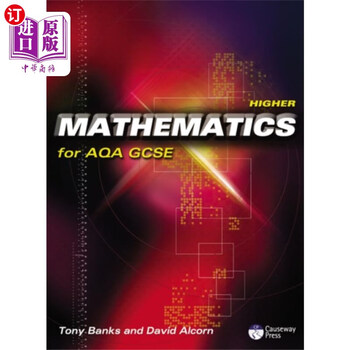
海外直订Higher Mathematics for AQA GCSE 高等数学AQA GCSE¥645.0📱 去京东购买京东精选
需要一对一辅导?Need One-on-One Tutoring?
A-Level / GCSE / IB / KS2-KS3 全科辅导
16621398022 同微信
Visit aleveler.com
或截图后用「扫一扫 → 相册」选择本图