AQA数学 Number 位值 质因数 标准形式 误差
Number 是 AQA GCSE Mathematics 8300 六个内容板块里的第一块,specification 把它拆成三节:结构与应用、分数小数百分数、度量与精度。看起来都是小学就见过的东西,真正拉开分数的却在这里。Paper 1 不允许使用计算器,占 33⅓% 的分值,位值、分数四则、质因数与标准形式全靠手算。很多学生以为 Number 是最容易拿分的模块,刷完一遍真题就过去了,结果每次都在小数点、约分和误差区间上丢分。这篇文章按 AQA 官网 8300 的条目标号逐条讲,配上常见错误与阅卷时看到的现象。
Number is the first of the six content areas in the AQA GCSE Mathematics 8300 specification, and it splits into structure and calculation, fractions decimals and percentages, and measures and accuracy. Paper 1 forbids calculators and carries a third of the marks, so place value, fraction arithmetic and standard form all have to be done by hand. Many students treat the topic as revision they finished in Year 7; the marks they lose are almost always in the decimal point, the cancelled fraction or the error interval.
位值与四则运算:小数点错一位,答案就换量级
N2 要求用正式笔算方法处理整数、小数、真分数、假分数与带分数,正负都要会。这条要求里藏着 GCSE 最容易失分的地方:量级。0.3 乘 0.4 得 0.12,两个都比 1 小的数相乘,结果比两个数都小。很多学生以为乘法一定让数变大,凭这条直觉估答案就会错。除法的方向也一样,除以 0.5 等于乘 2,答案反而变大。小数乘以 10 的整数次幂时,小数点右移的位数等于零的个数,位数不够就在末尾补零。AQA 在 notes 里还要求掌握家庭财务词汇,利润、亏损、成本价、售价、借贷、余额、所得税、增值税与利率,题目常把这些词直接放进小数点问题里。常见的错误是算完不回头检查量级,写下一个看起来合理的数字就交卷。
N2 asks for formal written methods across integers, decimals, proper and improper fractions and mixed numbers, with both signs handled. The trap sitting inside it is magnitude: 0.3 multiplied by 0.4 gives 0.12, smaller than either factor, which breaks the instinct that multiplying always makes a number bigger. Division reverses the same intuition because dividing by 0.5 doubles the value; checking the size of an answer before writing it down is the cheapest mark in the paper.
运算优先级与逆运算:括号、幂、根号、倒数
N3 要求识别运算之间的关系,包括逆运算与约分,并按惯例处理优先级。顺序是括号、幂与根、乘除、加减,同一级别从左往右。手算卷里最常见的错误是减号后面的负号没有跟着括号一起变号,5 减 2 乘 3 写成 9 而不是负 1。逆运算在解方程和检查答案时都能用,算出 7 乘 8 得 56,就用 56 除以 8 复核一遍。倒数是另一个常被忽略的点,2 的倒数是二分之一,负二分之一的倒数还是负二,符号不变。阅卷时看到大量答案只错一个符号,过程其实都对,分全丢在这里。
N3 covers relationships between operations, inverse operations and conventional priority of operations. Working left to right within a level matters: brackets first, then powers and roots, then multiplication and division, and addition last. Inverse operations are the free check built into every page, and a reciprocal keeps the sign of the number it belongs to, so minus one half has reciprocal minus two.
质因数分解与 HCF、LCM
N4 明确要求掌握质数、因数、倍数、公因数、公倍数、最大公因数、最小公倍数与质因数分解,还要会用乘积形式与唯一分解定理。做法是把每个数拆成质数的乘积并写成指数形式,例如 84 等于 2 的平方乘 3 乘 7,120 等于 2 的立方乘 3 乘 5。求 HCF 取两边都出现的最小指数,求 LCM 取所有出现过的质数的最大指数。很多学生以为把两个数相乘再除以 HCF 才保险,其实 HCF 乘 LCM 恰好等于两数之积,这条关系更适合当检查工具。2 是唯一的偶质数,1 不是质数,这两个判断每次考试都有人写错。
N4 names primes, factors, multiples, common factors and multiples, highest common factor, lowest common multiple and prime factorisation, with index notation and the unique factorisation theorem. Writing each number as a product of primes makes both values mechanical: the highest common factor takes the smaller power of every shared prime, and the lowest common multiple takes the largest power of every prime that appears. The identity linking the two values is more useful as a check than as a method.
系统列举策略与计数乘积法则
N5 要求用有系统的方式列出所有可能,Higher 还要用计数乘积法则。系统意味着有固定顺序:按第一个位置从小到大排,固定第一个再排第二个,这样既不重复也不遗漏。题目给了开头几个例子时,照它的格式继续写就行,换一种写法反而容易漏。很多学生以为只要答案数量对就够,阅卷时看的是列举过程是否完整,中间缺一行就少一个结果。乘积法则用在选项互相独立的场合,三件上衣配四条裤子得 12 种搭配,一旦有不能同时选的条件,就要减掉那部分。
N5 requires systematic listing strategies, with the product rule for counting on the Higher tier. Systematic means a fixed order: hold the first entry steady, run through the second, then move on, so nothing repeats and nothing disappears. Where a question starts the list for you, continue in exactly that format, since a tidier-looking method usually loses an entry.
幂与根:15×15 以内要背到什么程度
N6 要求掌握正整数幂与对应实根,认识 2、3、4、5 的幂,并知道 15 乘 15 以内的平方数。specification 的 notes 专门写了两条:1000 等于 10 的立方,一百万等于 10 的 6 次方。这两条在标准形式与单位换算里反复出现,写错就是整题连锁错。Higher 还要估算任意正数的幂与根,估算根号 50 落在 7 与 8 之间,因为 49 是 7 的平方。常见的错误是把负数的平方根当成负数,负 3 的平方是 9,根号 9 只取 3。立方根则可以取负数,负 8 的立方根是负 2。
N6 covers positive integer powers and their real roots, the powers of 2, 3, 4 and 5, and squares up to 15 times 15. The specification notes two facts worth memorising because they recur in standard form and unit conversion: 1000 is 10 cubed and one million is 10 to the sixth power. Higher tier adds estimating powers and roots, which is really about bracketing a value between two known squares.
指数法则与分数指数
N7 在 Foundation 之外要求用整数指数计算,Higher 再加分数指数。同底数相乘指数相加,相除指数相减,幂的幂指数相乘,任何非零数的零次幂都是 1。负指数表示取倒数,2 的负 3 次幂等于八分之一。分数指数的分母是根的次数,分子是幂的次数,8 的三分之二次幂先开立方得 2 再平方得 4。很多学生以为负指数会让结果变成负数,其实结果仍是正数,只是小于 1。写出中间步骤比直接跳到答案安全,指数题一步错整题错。
N7 extends to calculating with roots and integer indices, and the Higher tier adds fractional indices. Same base multiplication adds the indices, division subtracts them, a power of a power multiplies them, and any non-zero number to the power zero is one. A negative index means a reciprocal, and the denominator of a fractional index is the order of the root, so the fraction tells you which operation comes first.
精确值:分数、π 的倍数与根式化简
N8 要求用分数做精确计算,Additional Foundation 还要求用 π 的倍数表示,Higher 要化简根式并分母有理化。题目里出现 exact value 这个词,就不要写小数近似。根号 12 化成 2 根号 3,因为 12 等于 4 乘 3,4 开出来是 2。分母有根号时上下同乘这个根号,根号 3 分之一变成三分之根号 3。合并同类根式就像合并同类项,2 根号 5 加 3 根号 5 得 5 根号 5,根号 2 加根号 3 不能合并。常见的错误是把根号内的加法当成分开开根,根号 9 加 16 是 5,不是 3 加 4。
N8 asks for exact calculation with fractions, with multiples of pi on the additional foundation tier, and with surds plus rationalised denominators on the Higher tier. A surd simplifies by pulling out square factors, so root twelve becomes two root three because four is a square. Surds add only when the number inside the root matches, and the root of a sum is not the sum of the roots.
标准形式 A × 10^n 与计算器显示
N9 要求计算并解释标准形式,条件是 A 大于等于 1 且小于 10,n 是整数,有没有计算器都要会。0.00042 写成 4.2 乘 10 的负 4 次方,小数点右移四位,指数就是负 4。相乘时前面的数相乘、指数相加,相除时指数相减,最后检查 A 是否还落在 1 到 10 之间。很多学生在答案里留下 12 乘 10 的 5 次方,这不是标准形式,要改成 1.2 乘 10 的 6 次方。notes 还要求会读计算器显示,屏幕上出现 3.5 负 06 这类写法就是在说 3.5 乘 10 的负 6 次方。
N9 requires calculating and interpreting standard form written as A times ten to the n, where A lies between one and ten and n is an integer, with and without a calculator. Multiplication adds the indices and division subtracts them, then A is adjusted back into range. Reading a calculator display is part of the same requirement, since a small screen value still has to be written in proper standard form.
循环小数化分数
N10 在 Foundation 要求小数与分数互换并比较大小,Higher 要求把循环小数化成分数。方法是用位值构造两个式子再相减,0.7777 循环乘以 10 得 7.7777 循环,两式相减得 9 倍的 x 等于 7,所以 x 等于九分之七。两位循环就乘 100,三位乘 1000,循环节长度决定乘多少。带整数部分时先拆出整数,只处理小数部分再合并回去。常见的错误是减完之后忘记除以系数,得到 7 就直接当答案。这类题在 Paper 1 出现过多次,没有计算器反而更好做。
N10 covers working interchangeably between terminating decimals and fractions, and converts recurring decimals on the Higher tier. The method builds two versions of the same value, multiplies by a power of ten matching the length of the repeating block, then subtracts to leave a whole number over a difference of powers of ten. Forgetting to divide by the coefficient afterwards produces a plausible but wrong fraction.
百分比变化、原始值与单利
N12 要求把百分数理解成每一百中的份数,把百分数变化当作乘数来用,并解决百分比增减、求原始值与单利的问题。增加 15% 就是乘 1.15,减少 15% 是乘 0.85,连续两次变化把乘数相乘,先加价再打折不能简单相减。求原始值要逆着除回去,折后价 68 英镑对应八折,原价是 68 除以 0.8 得 85 英镑。单利用本金乘利率乘年数,和复利不是一回事,题目写 simple interest 就不要套复利公式。很多学生以为百分比只能加不能乘,一旦涉及连续变化就乱套。
N12 treats percentages as parts per hundred and percentage change as a multiplier, which is the single idea that makes increase, decrease, reverse and simple interest questions one family. An increase of fifteen per cent is a multiplier of 1.15, a decrease is 0.85, and successive changes multiply rather than add. Working backwards to an original value means dividing by the multiplier, not adding the percentage back.
估算与近似复核
N14 要求估算答案,并用近似与估算复核计算结果,包括用技术手段得到的答案。做法是把每个数四舍五入到一位有效数字再算,49.7 乘 3.1 估成 50 乘 3 得 150,实际答案必须落在同一量级。这道工序在 Paper 2 与 Paper 3 尤其值钱,计算器按错一位数时,估算能立刻发现。常见的错误是估算完不写比较,只说大约是多少,阅卷时要求写清估算值与精确值的关系。notes 还特别提醒中途步骤不要四舍五入,把精度留到最后一步。
N14 asks for estimating answers and checking calculations by approximation, including values produced by technology. Rounding every number to one significant figure gives a benchmark the exact answer has to sit near, which catches a misplaced decimal on a calculator paper within seconds. The specification note about not rounding during intermediate steps is worth repeating in every lesson on this topic.
四舍五入、误差区间与上下界
N15 要求按指定的位数或有效数字四舍五入,Additional Foundation 要求用不等式表示截断或舍入造成的误差区间,Higher 再要求上下界。一个数四舍五入到最近的整数得 7,真实值落在 6.5 到 7.5 之间,写法是 6.5 小于等于 x 小于 7.5,下界取得到、上界取不到。求上下界时,加法用两个上界相加,减法用上界减下界,乘法用最大的两个数与最小的两个数分别相乘。很多学生以为误差区间只是写个加减,遇到复合运算就全错。阅卷时看的是不等号方向与端点是否取到,写反一个符号就扣分。
N15 covers rounding to a given number of decimal places or significant figures, with error intervals written as inequalities on the additional foundation tier and upper and lower bounds on the Higher tier. A value rounded to seven lies from 6.5 up to but not including 7.5, so the endpoint convention carries marks. Bounds combine by taking the extreme pair for each operation, which is why subtraction uses an upper bound minus a lower bound.
Number 的复习顺序建议按 specification 的条目走,先把 N2 到 N5 的手算基本功练到不出错,再处理 N6 到 N9 的幂、根、精确值与标准形式,最后集中攻 N12、N14、N15 与 N16 的百分数、估算与上下界。AQA 官网的 specification 与历年真题是唯一可靠的口径,别用来源不明的二手总结替代。错题按条目归类,同一标号错三次以上就回到定义重读一遍。
A sensible order follows the specification itself: get the handwritten arithmetic in N2 to N5 reliable, then work through powers, roots, exact values and standard form in N6 to N9, and finish with percentages, estimation and bounds in N12 to N16. Grouping wrong answers by specification reference shows quickly which single requirement is costing the most marks.
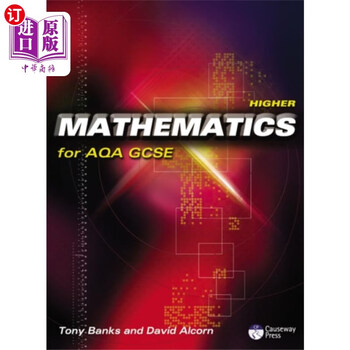
海外直订Higher Mathematics for AQA GCSE 高等数学AQA GCSE¥645.0📱 去京东购买京东精选
需要一对一辅导?Need One-on-One Tutoring?
A-Level / GCSE / IB / KS2-KS3 全科辅导,按考试局 specification 逐条梳理
16621398022 同微信
Visit aleveler.com
或截图后用「扫一扫 → 相册」选择本图