Edexcel IGCSE科学双证备考攻略
Edexcel IGCSE 科学(Double Award)是一门同时覆盖生物、化学、物理三大学科的综合课程,考试合格可获得两门 IGCSE 成绩。很多同学在备考时容易陷入"内容太多、不知从何下手"的困境。本文按照 Pearson 官方大纲整理了一份完整的备考攻略:先讲清考试结构,再梳理三大科目的核心考点,最后给出计算题、实验题、真题训练和考前冲刺的具体方法,帮助你在有限时间内把每一分都拿到手。
Edexcel IGCSE Science (Double Award) is a combined course covering Biology, Chemistry and Physics, and it leads to two IGCSE qualifications. Many students feel overwhelmed because the syllabus is huge and they do not know where to start. This guide follows the official Pearson specification: it explains the exam structure first, then maps out the core topics of all three sciences, and finally gives concrete strategies for calculation questions, experimental design, past paper practice and final-week revision, so that you can secure every mark available in the time you have left.
一、三张试卷的考试结构与计分方式 | Exam Structure and Marking of the Three Papers
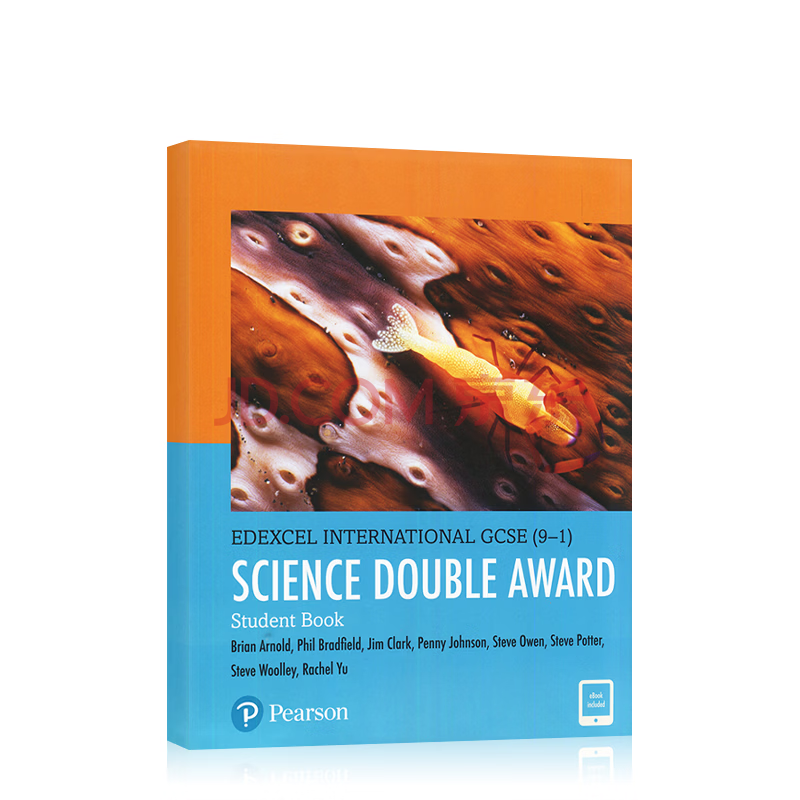
Edexcel IGCSE 科学双证课程是线性的(linear),所有考试在课程结束时一次性参加。整套资格由三张外部考试试卷构成:生物 Paper 1(代码 4BI1/1B)、化学 Paper 1(4CH1/1C)和物理 Paper 1(4PH1/1P)。每张试卷时长 2 小时,满分 110 分,各占总成绩的 33.3%,三张试卷权重完全相等。考试每年有 6 月和 11 月两个考季,允许使用计算器和直尺。试卷不分基础卷和进阶卷(untiered),所有考生面对同一套题,成绩按 9 到 1 等级评定。
The Edexcel IGCSE Science Double Award is a linear qualification, so you take all of your exams at the end of the course in one sitting. The whole award is built from three externally assessed papers: Biology Paper 1 (code 4BI1/1B), Chemistry Paper 1 (4CH1/1C) and Physics Paper 1 (4PH1/1P). Each paper lasts two hours, carries 110 marks and contributes exactly 33.3 percent of the total grade, so the three papers are equally weighted. Exams are available in June and November, and calculators and rulers are allowed. The qualification is untiered: every candidate sits the same papers, and grades run from 9 down to 1.
二、生物学五大板块:从细胞到生态 | The Five Biology Topics: From Cells to Ecology
生物部分共有五个知识板块。第一板块是生物体的性质与多样性,重点包括生命特征、生物分类、动物细胞与植物细胞的区别,以及扩散、渗透和主动运输三种跨膜运输方式。第二板块是生物体的结构与功能,涵盖光合作用、有氧与无氧呼吸、气体交换、血液循环、排泄以及神经系统和激素协调,这部分是考试中分值最重的区域。第三板块是繁殖与遗传,需要掌握有丝分裂与减数分裂的区别、DNA 与基因的关系,以及用遗传图解(Punnett square)推算单基因性状的遗传概率。第四板块是生态与环境,包括食物链、碳循环和氮循环。第五板块是生物资源利用,涉及提高农作物产量的方法、选择性育种和基因改造。
The Biology content is organised into five topic areas. Topic 1 covers the nature and variety of living organisms: the characteristics of life, classification, differences between animal and plant cells, and the three membrane transport mechanisms of diffusion, osmosis and active transport. Topic 2 covers structures and functions in living organisms, including photosynthesis, aerobic and anaerobic respiration, gas exchange, the circulatory system, excretion, and coordination through the nervous system and hormones; this is the highest-value area of the paper. Topic 3 is reproduction and inheritance: the difference between mitosis and meiosis, DNA and genes, and using Punnett square genetic diagrams to predict the probability of single-gene traits. Topic 4 deals with ecology and the environment, including food chains and the carbon and nitrogen cycles. Topic 5 is the use of biological resources, covering ways to increase crop yield, selective breeding and genetic modification.
三、化学四大板块:从原子结构到有机化学 | The Four Chemistry Topics: From Atomic Structure to Organic Chemistry
化学部分分为四个板块。第一板块是化学原理,这是整张试卷的基础:物质三态、原子结构与同位素、元素周期表的基本规律、离子键与共价键、化学式和化学方程式,以及摩尔(mole)计算和电解。第二板块是元素化学,重点考察第一族元素(锂、钠、钾)与第七族元素(氟、氯、溴、碘)的性质规律、金属活动性顺序、金属的提取方法,以及酸、碱、盐之间的中和反应和常见离子、气体的检验方法。第三板块是物理化学,包括放热与吸热反应、影响反应速率的因素(温度、浓度、表面积、催化剂)和碰撞理论。第四板块是有机化学,需要认识烷烃、烯烃、醇、羧酸的结构与性质,理解石油的分馏过程以及燃烧反应。
The Chemistry content is split into four topic areas. Topic 1, principles of chemistry, is the foundation of the whole paper: the three states of matter, atomic structure and isotopes, basic patterns of the Periodic Table, ionic and covalent bonding, chemical formulae and equations, mole calculations and electrolysis. Topic 2, inorganic chemistry, focuses on the trends of Group 1 metals such as lithium, sodium and potassium, the halogens of Group 7, the reactivity series, metal extraction, neutralisation reactions between acids, alkalis and salts, plus tests for common ions and gases. Topic 3, physical chemistry, covers exothermic and endothermic reactions, the factors affecting rate of reaction (temperature, concentration, surface area and catalysts) and collision theory. Topic 4, organic chemistry, requires you to know the structures and properties of alkanes, alkenes, alcohols and carboxylic acids, the fractional distillation of crude oil, and combustion reactions.
四、物理学八大板块:从力与运动到天体物理 | The Eight Physics Topics: From Forces to Astrophysics
物理部分共八个板块,是三大科目中内容最分散的一科。力与运动板块要求掌握速度与加速度的计算、距离-时间图和速度-时间图的解读、牛顿三定律以及动量概念。电学板块需要熟练运用欧姆定律,会分析串联和并联电路,理解电流、电压、电阻、电功率以及家用电的安全知识。波动板块要能区分横波与纵波,解释反射、折射和衍射现象,认识声波与整个电磁波谱。能量板块包括能量转换、效率计算和可再生能源。固液气板块涉及密度、压力与气体定律。磁与电磁板块考察磁场、电磁铁、电动机、发电机和变压器的工作原理。放射性与粒子板块需要掌握三种射线的性质、半衰期计算及辐射防护。天体物理板块介绍太阳系、恒星演化、星系和宇宙膨胀的红移证据。
The Physics content has eight topics, making it the most spread-out of the three sciences. Forces and motion requires you to calculate speed and acceleration, interpret distance-time and velocity-time graphs, and understand Newton's three laws and momentum. Electricity demands fluency with Ohm's law, analysis of series and parallel circuits, and knowledge of current, voltage, resistance, power and mains electricity safety. Waves asks you to distinguish transverse from longitudinal waves, explain reflection, refraction and diffraction, and recognise sound and the whole electromagnetic spectrum. Energy covers energy transfers, efficiency calculations and renewable resources. Solids, liquids and gases covers density, pressure and the gas laws. Magnetism and electromagnetism deals with magnetic fields, electromagnets, motors, generators and transformers. Radioactivity and particles requires knowledge of the three types of radiation, half-life calculations and radiation safety. Astrophysics introduces the solar system, stellar evolution, galaxies and the red-shift evidence for an expanding universe.
五、计算题拿满分的四个步骤 | Four Steps to Full Marks on Calculation Questions
三张试卷都包含计算题,化学和物理尤其明显,而计算题恰恰是很多同学的失分重灾区。第一步,先写出所用公式再代入数据,评分标准通常会给方法分(method marks),即使最终答案算错也能保住过程分。第二步,代入前统一单位,例如把千米换算成米、把小时换算成秒,单位错误是计算题最常见的扣分原因。第三步,注意有效数字,最终答案一般保留 2 到 3 位有效数字即可,不要机械照抄计算器上的一长串数字。第四步,写出答案的单位。化学的摩尔计算要熟记 n 等于质量除以相对分子质量、气体体积 24 立方分米每摩尔等核心关系,物理则要背熟速度、加速度、欧姆定律和功率等公式。
All three papers contain calculation questions, especially Chemistry and Physics, and these are where many students lose the most marks. Step one: write down the formula you are using before substituting values, because mark schemes award method marks and you keep those even if the final answer is wrong. Step two: convert units before substituting, for example kilometres to metres and hours to seconds; unit errors are the most common reason for lost marks. Step three: pay attention to significant figures, normally two or three is enough, and never copy the long string of digits straight from your calculator. Step four: always include the unit in your final answer. For Chemistry, memorise the core relationships such as moles equals mass divided by relative formula mass and the molar gas volume of 24 cubic decimetres per mole; for Physics, learn the formulas for speed, acceleration, Ohm's law and power by heart.
六、实验设计与描述题的答题模板 | A Template for Experimental Design and Description Questions
试卷中常出现实验设计题,要求你写出完整的实验方案或分析实验结果。回答"如何设计实验"这类题目时,按固定结构作答最稳妥:先写出自变量(你要改变的量)和因变量(你要测量的量),再列出需要控制不变的变量;接着分步描述操作过程,说明用哪种仪器测量、测量几次取平均值;最后补充安全注意事项和重复实验以提高结果的可靠性。回答"如何改进实验"时,要从提高精度(用更精密的仪器)、增加重复次数、控制更多变量三个方向展开。记住考官阅卷按要点给分,把步骤写成编号列表而不是一段长文字,得分更稳定。
Experimental design questions ask you to write a full method or analyse results, and a fixed structure is the safest approach. For "plan an experiment" questions, state the independent variable (what you change) and the dependent variable (what you measure), then list the variables you must keep constant. Next, describe the procedure step by step, naming the equipment, and say that you repeat measurements and take an average. Finish with safety precautions and note that repeating the experiment improves reliability. For "how would you improve the experiment" questions, expand in three directions: use more precise instruments, increase the number of repeats, and control more variables. Examiners award marks against points in the mark scheme, so numbered steps are much safer than one long paragraph.
七、十周备考时间表的三个阶段 | A Ten-Week Revision Timetable in Three Phases
科学双证内容量大,建议把备考分成三个阶段。第一阶段(第 1 到 4 周)按大纲逐板块过知识点:每天固定复习两个板块,生物、化学、物理交替进行,每复习完一个板块就做对应的小测验,并把自己记不牢的公式和概念写进错题本。第二阶段(第 5 到 7 周)转入专题真题训练:按题型刷题,例如集中练习计算题和实验题,做完立刻对照评分标准订正,搞清楚每一分为什么扣。第三阶段(第 8 到 10 周)做整套限时模拟:每周至少完整做一套生物、一套化学、一套物理,严格按 2 小时计时,模拟真实考试节奏。每周结束时留出半天复盘本周错题,避免同样的错误重复出现。
Because the Double Award covers so much content, split your revision into three phases. Phase one, weeks one to four, works through the syllabus topic by topic: fix two topics per day, alternate between Biology, Chemistry and Physics, test yourself after each topic, and record formulas and concepts you cannot remember in an error log. Phase two, weeks five to seven, moves to topic-based past paper questions: practise by question type, for example a block of calculation questions followed by a block of experimental design questions, and mark each attempt against the official mark scheme immediately so you understand exactly where every mark was lost. Phase three, weeks eight to ten, is full timed papers: complete at least one Biology, one Chemistry and one Physics paper per week, strictly timed at two hours each, to build exam stamina. At the end of every week, set aside half a day to review the week's errors so that the same mistakes do not repeat.
八、真题训练与错题本的正确用法 | Using Past Papers and an Error Log Effectively
真题是备考中最有价值的资源,但刷题方法比刷题数量更重要。每套真题做两遍:第一遍限时完成并严格对照评分标准批改,把每道错题按原因分类,是知识点不会、计算粗心、还是审题不清,分类记录在错题本中;第二遍在一周后重做错题,检验自己是否真正掌握。错题本的每一页只记一个知识点,左边写题目和错误答案,右边写正确答案和错误原因,考前一周反复翻看。另外要重视评分标准的表述方式,比如"解释"(explain)类题目需要给出原因,不能只复述现象;"比较"(compare)类题目要同时写出相同点和不同点,这些细节直接影响得分。
Past papers are the most valuable revision resource, but how you use them matters more than how many you complete. Do each paper twice. On the first attempt, work under timed conditions and mark yourself strictly against the official mark scheme, then classify every wrong answer by cause: a gap in knowledge, a careless calculation error, or a misread question, and record it in your error log. One week later, redo only the questions you got wrong to check that you have truly mastered them. Dedicate each error log page to one topic, with the question and your wrong answer on the left and the correct answer plus the reason for the error on the right, and review it repeatedly in the final week. Also study how the mark scheme uses command words: explain questions need reasons, not just a restatement of what happens, and compare questions need both similarities and differences. These small details decide real marks.
九、考前一周的冲刺策略 | The Final-Week Sprint Strategy
考前最后一周不要再学新知识,重点做三件事。第一,通读错题本和公式清单,把半衰期公式、摩尔计算关系、效率计算公式等高频考点再默写一遍。第二,每天做一套往年真题中的部分题目保持手感,但不要追求题量,重点是对答案时把每一分得失都看明白。第三,调整作息,保证考试前有充足的睡眠。考试当天按 2 小时试卷 110 分来分配时间,平均每分钟约拿 1 分,建议先做自己有把握的题目,把开放式的长答题留到最后;遇到不会的题先跳过,避免在一道题上消耗太多时间。检查阶段优先检查计算题的单位和符号。
In the final week, stop learning new content and focus on three things. First, read through your error log and formula list, and rewrite from memory the highest-frequency items such as half-life, mole relationships and efficiency formulas. Second, complete part of a past paper every day to keep your exam sense sharp, but do not chase volume; the key is understanding every mark gained and lost when you mark your answers. Third, fix your sleep schedule so you are well rested. During each two-hour, 110-mark paper, spend roughly one minute per mark on average: attempt the questions you are confident about first, leave extended open-response questions until the end, and skip anything that blocks you instead of burning time on a single question. In the checking phase, prioritise units and signs in calculation questions.
十、十大高频失分点与避坑清单 | Ten Common Mark-Losing Mistakes to Avoid
根据历年考官报告,以下错误在考生中最常见:一是忘记写单位或换算单位,比如速度算出来不写米每秒;二是混淆扩散与渗透、有丝分裂与减数分裂、放热与吸热等成对概念;三是在遗传题中不写亲代基因型直接写概率;四是化学方程式没有配平或漏写状态符号;五是物理题不画受力图直接列公式;六是实验题只写步骤不提变量控制;七是长答题写得太短,没有用足题目给的分值线索;八是审题时忽略"describe、explain、compare"等指令词;九是选择题改答案时凭感觉反复涂改;十是考前只看书不刷题,导致考场上时间分配失衡。对照这份清单逐项自查,能把非知识性失分降到最低。
According to examiner reports over recent years, these errors appear most often: forgetting to write units or failing to convert them, such as giving a speed without metres per second; confusing paired concepts like diffusion with osmosis, mitosis with meiosis, or exothermic with endothermic; writing inheritance probabilities without first showing the parental genotypes; leaving chemical equations unbalanced or omitting state symbols; drawing no force diagram before applying a physics formula; describing experimental steps without mentioning variable control; writing open-response answers far too short for the marks available; ignoring command words such as describe, explain and compare; changing multiple-choice answers repeatedly on a whim; and reading notes all week without doing questions, which ruins time management in the real exam. Work through this checklist item by item and you can cut non-knowledge marks lost to almost zero.
需要IGCSE科学辅导?
16621398022
同微信 | 免费咨询课程规划
访问 aleveler.com 了解更多
更多咨询请联系16621398022(同微信)

或截图后用「扫一扫 → 相册」选择本图