Edexcel IGCSE科学备考全攻略
一、Edexcel IGCSE科学的课程结构与考试设置 | Course Structure and Exam Format
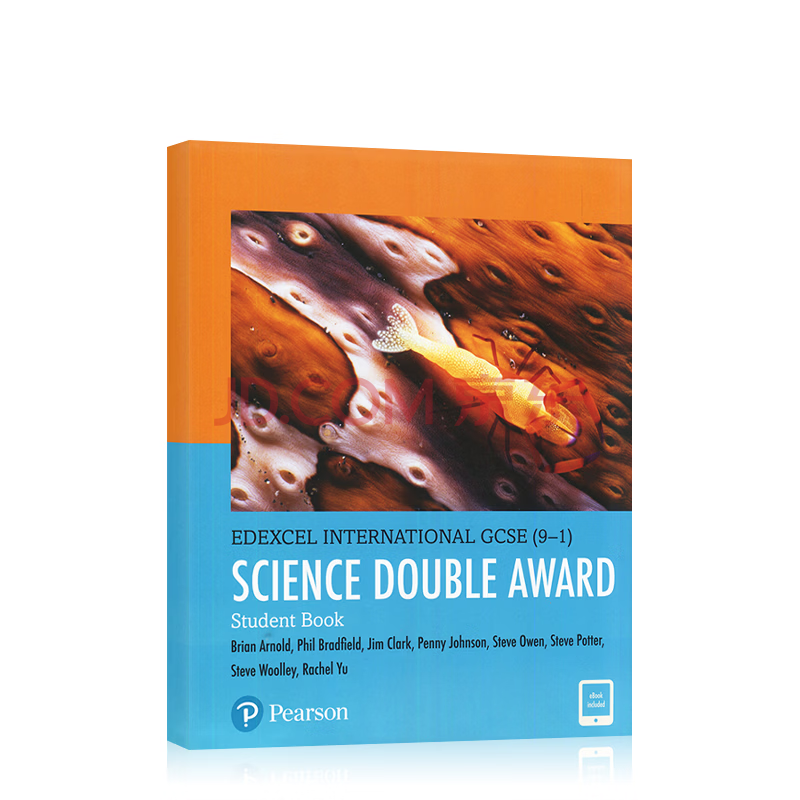
Edexcel IGCSE科学有两条路径:双奖科学(Double Award)与单科科学。双奖科学(代码4SD0)把生物、化学、物理三门学科整合为一门课程,成绩相当于两门IGCSE,是国际学校最常见的选择。考试共两张笔试:Paper 1考生物与化学,Paper 2考物理,每卷2小时,各占总成绩的50%。题型包括选择题、简答题、计算题与拓展写作题,成绩等级从9到1。了解试卷结构是备考的第一步,它能帮你合理分配每个单元的复习时间。
Edexcel IGCSE Science offers two routes: the Double Award and the separate single sciences. The Double Award (code 4SD0) combines Biology, Chemistry and Physics into one course and is worth two IGCSE qualifications, which makes it the most common choice in international schools. Assessment consists of two written papers: Paper 1 covers Biology and Chemistry while Paper 2 covers Physics, with each paper lasting two hours and contributing 50 percent of the final grade. Question types include multiple choice, short answer, calculation and extended writing, with grades running from 9 down to 1. Understanding the paper structure is the first step in revision because it helps you allocate study time across units proportionally.
二、生物学核心考点:细胞、遗传与生态系统 | Biology Core Topics: Cells, Inheritance and Ecosystems
生物部分围绕三大板块:细胞与生命过程、生物体与遗传、生态与环境。细胞部分要掌握细胞器功能、扩散(diffusion)、渗透(osmosis)与主动运输(active transport)的区别,Edexcel常考渗透实验与结果解释;遗传部分要理解DNA结构、基因与等位基因、孟德尔杂交与家族系谱图的读法;生态部分要熟悉食物链、碳循环、种群增长曲线与人为因素对环境的影响。植物部分还会考察木质部(xylem)与韧皮部(phloem)的运输功能:木质部向上运输水分与矿物质,韧皮部运输蔗糖与氨基酸。建议把每个板块的术语做成中英对照卡片,考试时直接调用。
The Biology component is built around three blocks: cells and life processes, organisms and inheritance, and ecology and the environment. For cells, you must know the functions of organelles and the differences between diffusion, osmosis and active transport; Edexcel frequently sets osmosis experiments and asks you to interpret the results. For inheritance, you need DNA structure, genes and alleles, Mendelian crosses and pedigree chart reading. For ecology, food chains, the carbon cycle, population growth curves and human impacts on the environment are all staples. Plant transport is also examined: xylem carries water and mineral ions upwards while phloem transports sucrose and amino acids around the plant. A useful habit is to build bilingual flashcards of key terms for each block so that you can recall them instantly in the exam.
三、化学核心考点:原子结构、化学键与反应类型 | Chemistry Core Topics: Atomic Structure, Bonding and Reaction Types
化学部分的重点主题是原子结构、元素周期表、化学键与定量化学。你要能写出电子排布(如钠2,8,1)、判断离子键与共价键、区分金属与非金属的氧化物性质。酸碱盐、电解与金属反应活性是简答题高频考点:例如电解氯化铜溶液时,阴极析出红色铜,阳极产生黄绿色氯气。配平方程式是基本功,因为几乎所有摩尔计算题都建立在正确的方程式系数之上,写错系数会导致全题丢分。
The key Chemistry themes are atomic structure, the periodic table, chemical bonding and quantitative chemistry. You should be able to write electron configurations such as sodium 2,8,1, identify ionic versus covalent bonding, and compare the properties of metal and non-metal oxides. Acids, bases, salts, electrolysis and the reactivity series are constant sources of short-answer questions: in the electrolysis of copper chloride solution, for example, red copper forms at the cathode while yellow-green chlorine gas is released at the anode. Balancing equations is a basic skill because almost every mole calculation depends on the correct coefficients; one wrong coefficient can cost the whole question.
四、物理核心考点:力、能量、波与电学 | Physics Core Topics: Forces, Energy, Waves and Electricity
物理部分的核心是力学、能量、波与电学。力学要会用运动方程v = u + at并画出速度-时间图像,注意正负方向与单位换算;能量部分要掌握动能Ek = 1/2mv²与重力势能Ep = mgh公式,理解能量守恒与能量转移效率;波的部分重点在反射、折射、波速公式v = fλ与电磁波谱排序;电学要理解欧姆定律V = IR、串并联电路规律与功率P = VI。注意波速公式中频率由波源决定、波速由介质决定,波长会随介质改变,这是高频选择题陷阱。绘图题常考力矢量图与电路图,务必标清方向、数值与单位。
The Physics core covers mechanics, energy, waves and electricity. In mechanics you must use the equations of motion such as v = u + at and draw velocity-time graphs, paying attention to direction signs and unit conversion. In energy, the kinetic energy formula Ek = 1/2 mv squared and gravitational potential energy Ep = mgh are essential, together with the ideas of energy conservation and transfer efficiency. For waves, focus on reflection, refraction, the wave equation v = f lambda and the order of the electromagnetic spectrum. In electricity you need Ohm's law V = IR, series and parallel circuit rules and power P = VI. Drawing questions often ask for force vector diagrams and circuit diagrams, so always label directions, values and units clearly.
五、双奖与单科证书怎么选 | Double Award vs Single Award: Which to Choose
选双奖还是单科,取决于你的升学目标。双奖科学覆盖面广、时间效率高,适合大多数学生,但每门学科的深度较浅;如果未来想读医学、生物工程、化学或物理等专业,建议在IGCSE阶段选单科生物、化学或物理,为A-Level打下扎实基础。大学申请时,双奖科学通常被视作两门IGCSE成绩,但部分顶尖大学更看重单科的高分与深度。选课前建议先查阅目标大学官网的入学要求。
Whether to take the Double Award or single sciences depends on your university goals. The Double Award covers all three subjects with high time efficiency, making it suitable for most students, although each subject has less depth. If you plan to study medicine, bioengineering, chemistry or physics, it is wiser to take single-award Biology, Chemistry or Physics at IGCSE to build a solid foundation for A-Level. In university applications the Double Award is generally treated as two IGCSE passes, but some competitive courses look more favourably on deep single-science grades. Check the entry requirements on your target universities' websites before choosing.
六、实验题与操作技能的答题框架 | Answering Framework for Practical Questions
实验题约占双奖试卷15%的分数,答题有固定套路。第一步写变量:自变量、因变量与控制变量要逐一说明;第二步写方法:按顺序描述如何改变自变量、测量因变量,并说明重复实验;第三步写安全措施,例如加热时佩戴护目镜;第四步用表格呈现原始数据并计算平均值。Edexcel评分标准对repeats、averages、control variables这类关键词特别慷慨,写全这些词就能稳拿步骤分。
Practical questions carry about 15 percent of the Double Award marks and follow a fixed structure. First, state the variables: the independent, dependent and control variables must each be named. Second, describe the method in order, explaining how the independent variable is changed and the dependent variable measured, and include repeated trials. Third, add safety precautions, such as wearing goggles when heating. Fourth, present the raw data in a table and calculate means. The Edexcel mark scheme is generous with keywords such as repeats, averages and control variables, so writing these words in full is a reliable way to secure method marks.
七、数据与图表题的六步解题法 | Six Steps for Data and Graph Questions
图表题是双奖科学拉开分数差距的关键题型。六步法:一读题,找出两个变量之间的关系;二看坐标轴,核对单位、刻度与起始值;三描点,用细铅笔把每个数据点标清楚;四判断趋势,画出最合适的直线或平滑曲线;五计算,求斜率或变化率并用数据支持结论;六检查,补上单位与有效数字。注意折线图的标题必须包含两个变量的名称,例如温度和溶解度的关系。
Graph and data questions are where high scorers separate themselves in the Double Award. Follow six steps: read the question to identify the relationship between the two variables; check the axes for units, scales and starting values; plot each data point clearly with a sharp pencil; judge the trend and draw the best-fit straight line or smooth curve; calculate the gradient or rate of change and support your conclusion with data; finally check units and significant figures. For example, when investigating how different salt concentrations affect the mass change of potato strips, put salt concentration on the x-axis and percentage mass change on the y-axis. Remember that a line graph needs a title that names both variables, such as the relationship between temperature and solubility.
八、历年高频失分点与易混淆概念 | High-Frequency Mistakes and Confusing Concepts
最常见的失分原因有五类:一是单位错误,例如把厘米直接代入需要米的公式;二是混淆diffusion与osmosis,忘记osmosis必须依赖半透膜;三是图表题漏写单位或标题;四是计算题只写答案不写过程,Edexcel按步骤给分,过程分往往比结果分多;五是实验方法描述使用将来时,规范写法是一般现在时。把这些易错点整理成一页清单,每次模考前后各看一遍,失分率会明显下降。
The five most common reasons for lost marks are: unit errors, such as substituting centimetres into formulas that require metres; confusing diffusion with osmosis and forgetting that osmosis needs a partially permeable membrane; omitting units or titles in graph questions; writing only the final answer without working in calculations, because Edexcel awards method marks and these often exceed the answer mark; and describing experimental procedures in the future tense when the present tense is required. Turn these pitfalls into a single-page checklist and review it before and after every mock exam, and your mark loss will drop noticeably.
九、真题训练的四个阶段 | Four Stages of Past Paper Training
真题是Edexcel备考性价比最高的资源。建议分四个阶段:第一阶段按主题刷题,把每章错题归类并回到课本补漏;第二阶段限时完成整卷,模拟真实考场节奏,训练时间分配;第三阶段对照评分方案(mark scheme)逐题分析,学习高分答案的句式与关键词;第四阶段重做错题,直到不看答案也能完整写出。官方past papers与mark schemes可在考试局官网免费下载,按年份从新到旧使用。
Past papers are the highest-value Edexcel revision resource. Work through four stages: first, practise by topic and group your mistakes by chapter before returning to the textbook to fill gaps; second, complete whole papers under timed conditions to simulate the real exam and train time allocation; third, analyse every answer against the mark scheme to learn the sentence patterns and keywords of top responses; fourth, redo the questions you got wrong until you can write complete answers without looking. Official past papers and mark schemes are free on the exam board website; use them from the most recent year backwards.
十、三个月冲刺复习计划 | Three-Month Revision Plan
三个月是双奖科学备考的黄金周期。第一个月按单元过知识点,每天45分钟,配合课本例题与课后题;第二个月转入主题刷题,每周完成一套真题并整理错题本;第三个月做全真模拟,每周两套整卷,考前两周集中攻克薄弱主题。全程坚持每天30分钟公式与定义默写,例如运动方程、波速公式、光合作用方程式与常见离子颜色,这些记忆点直接决定选择题与简答题的得分。
Three months is the ideal window for Double Award preparation. In month one, work through the syllabus unit by unit with 45 minutes a day, using textbook examples and end-of-chapter questions. In month two, switch to topic-based practice, completing one past paper each week and maintaining an error notebook. In month three, run full mock exams at two papers per week and focus on weak topics in the final fortnight. Throughout, reserve 30 minutes daily for writing out formulas and definitions from memory, such as the equations of motion, the wave equation, the photosynthesis equation and common ion colours; these recall points decide many multiple-choice and short-answer marks.
十一、考前一周的临场策略 | Final Week and Exam-Day Strategies
考前一周不要再接触新内容。第一天到第三天重看错题本与易混淆概念对照表;第四天做一套近年真题保持手感;第五天背诵实验关键词与公式清单;最后两天保证充足睡眠,提前准备好准考证、计算器与黑色签字笔。考场上先做有把握的题,选择题不要留空,计算题先写公式再代入数值,实验题把关键词写完整,确保每一分都稳稳拿到。
In the final week, stop learning new content. Use days one to three to review your error notebook and the confusing-concepts comparison list. On day four, complete one recent past paper to keep your exam instincts sharp. On day five, memorise the experimental keywords and formula list. In the last two days, prioritise sleep and prepare your admission ticket, calculator and black pens. In the exam hall, answer confident questions first, never leave multiple-choice questions blank, always write the formula before substituting numbers, and write experimental keywords in full so that you collect every available mark.
需要一对一辅导?
16621398022
同微信 | 免费咨询课程规划
访问 aleveler.com 了解更多
更多咨询请联系16621398022(同微信)

或截图后用「扫一扫 → 相册」选择本图