Edexcel IGCSE 科学全面解析与备考指南
IGCSE科学课程概述 / Course Overview
Edexcel IGCSE科学课程是国际公认的中学科学资格证书,广泛被英国及全球学校采用。该课程涵盖生物、化学、物理三大核心学科,学生可选择Double Award(双奖,获得两个IGCSE成绩)或Separate Sciences(独立科学,三门各获独立成绩)。IGCSE科学强调概念理解、实验技能和科学探究能力,其评估模式注重知识应用而非简单记忆。相比GCSE,IGCSE的国际化视角使其更适合海外学生,考试内容更具全球普适性。教材通常使用Edexcel官方出版的Student Book,配合Pearson ActiveLearn在线资源。课程设计遵循螺旋式学习原则,核心概念在不同阶段反复出现并逐步深化。
Edexcel IGCSE Science is an internationally recognized secondary science qualification widely adopted by schools in the UK and worldwide. The course covers three core disciplines: Biology, Chemistry, and Physics. Students can choose between Double Award, earning two IGCSE grades covering all three sciences, or Separate Sciences, earning three independent grades with deeper content in each subject. IGCSE Science emphasizes conceptual understanding, practical skills, and scientific inquiry, assessing knowledge application rather than rote memorization. Compared to GCSE, IGCSE offers a more international perspective suitable for overseas students, with globally relevant examination content. The curriculum follows a spiral learning approach where core concepts recur and deepen across different stages.
生物学科核心内容 / Biology Core Topics
Edexcel IGCSE生物涵盖生命科学的基础领域。核心内容包括:细胞生物学(动植物细胞结构、物质运输、有丝分裂)、生物分子(碳水化合物、蛋白质、脂质、酶的作用机制与影响因素)、人体生理学(消化系统、循环系统、呼吸系统、排泄系统与稳态调节)、植物生理学(光合作用、蒸腾作用、矿物质吸收)、遗传与进化(DNA结构、有性/无性繁殖、孟德尔遗传规律、自然选择)、生态学(食物链与食物网、碳循环与氮循环、人口增长对环境的影响)。其中酶学实验(探究温度/pH对酶活性的影响)和光合作用实验(检验淀粉生成、光照强度的影响)是核心实验技能考核的重点。人体稳态(体温调节、血糖调节)是学生常见的失分领域,需要理解负反馈机制的逻辑链条。
Edexcel IGCSE Biology covers foundational life science topics. The core content includes: cell biology featuring plant and animal cell structures, transport mechanisms, and mitosis; biological molecules including carbohydrates, proteins, lipids, and enzyme action with factors affecting activity; human physiology covering the digestive system, circulatory system, respiratory system, excretory system, and homeostasis; plant physiology including photosynthesis, transpiration, and mineral uptake; genetics and evolution exploring DNA structure, sexual and asexual reproduction, Mendelian inheritance, and natural selection; and ecology examining food chains and webs, carbon and nitrogen cycles, and human population impact. Enzyme practicals investigating temperature and pH effects, along with photosynthesis experiments testing starch production and light intensity, are key assessed practical skills. Homeostasis, particularly thermoregulation and blood glucose regulation, is a common area where students lose marks and requires understanding the logical chain of negative feedback mechanisms.
化学学科核心内容 / Chemistry Core Topics
Edexcel IGCSE化学覆盖物质科学的基础原理。核心内容包括:物质状态与粒子理论(固体、液体、气体的粒子模型,状态变化与能量)、原子结构与元素周期表(原子模型发展史、电子排布、周期表分组与周期性趋势)、化学键与结构(离子键、共价键、金属键,巨型结构与简单分子的性质差异)、化学计量学(摩尔概念、经验式与分子式、化学方程式的配平与计算)、化学反应类型(酸碱中和、氧化还原、沉淀反应)、电化学(电解原理与应用、电镀、铝的提取)、能量变化(放热与吸热反应、键能计算)、有机化学入门(烷烃、烯烃、醇类、羧酸、聚合反应)。摩尔计算是整门课程中最具区分度的能力要求,学生需要从质量、气体体积和溶液浓度三个维度熟练掌握摩尔转换。
Edexcel IGCSE Chemistry covers the fundamental principles of material science. Core topics include: states of matter and particle theory exploring solid, liquid, and gas particle models, state changes, and energy transfers; atomic structure and the periodic table covering atomic model development, electron configuration, group properties, and periodic trends; chemical bonding and structure examining ionic, covalent, and metallic bonding alongside the contrasting properties of giant structures versus simple molecules; stoichiometry introducing the mole concept, empirical and molecular formulae, and equation balancing with calculations; reaction types including acid-base neutralization, redox processes, and precipitation; electrochemistry exploring electrolysis principles, electroplating, and aluminium extraction; energy changes covering exothermic and endothermic reactions with bond energy calculations; and introductory organic chemistry including alkanes, alkenes, alcohols, carboxylic acids, and polymerization. Mole calculations represent the most discriminating skill in the entire course, requiring students to master mole conversions fluently across mass, gas volume, and solution concentration dimensions.
物理学科核心内容 / Physics Core Topics
Edexcel IGCSE物理聚焦自然世界的力学与能量原理。核心内容包括:力学与运动学(速度、加速度、牛顿三定律、动量守恒)、能量与能量转换(能量形式、能量守恒定律、功与功率、效率计算)、波与波动(横波与纵波、反射折射衍射、电磁波谱、声波特性)、电学(电流电压电阻、欧姆定律、串并联电路分析、电功率与电能)、磁学与电磁感应(磁场、电动机效应、发电机效应、变压器原理)、热物理学(热传递方式、比热容与潜热、气体定律)、核物理入门(放射性衰变类型、半衰期、核辐射的应用与安全)、空间物理学(太阳系结构、恒星生命周期、宇宙学基础)。电路分析和能量计算是物理部分计算量最大的两个模块,学生需要熟练运用V=IR、P=IV和E=Pt等核心公式进行多步推演。
Edexcel IGCSE Physics focuses on mechanics and energy principles governing the natural world. Core topics include: mechanics and kinematics exploring speed, acceleration, Newton's three laws, and conservation of momentum; energy and energy transfers covering energy forms, the conservation law, work and power, and efficiency calculations; waves examining transverse and longitudinal waves, reflection, refraction, diffraction, the electromagnetic spectrum, and sound wave properties; electricity covering current, voltage, resistance, Ohm's Law, series and parallel circuit analysis, and electrical power and energy; magnetism and electromagnetic induction exploring magnetic fields, the motor effect, the generator effect, and transformer principles; thermal physics covering heat transfer methods, specific heat capacity and latent heat, and gas laws; introductory nuclear physics exploring radioactive decay types, half-life, and applications and safety of nuclear radiation; and space physics covering solar system structure, stellar life cycles, and cosmological fundamentals. Circuit analysis and energy calculations are the two most calculation-intensive modules in the Physics component, requiring students to fluently apply core equations including V=IR, P=IV, and E=Pt in multi-step derivations.
考试结构与评分体系 / Exam Structure and Assessment
Edexcel IGCSE科学采用线性评估模式,所有考试在课程结束时统一进行。Double Award路径包含三份试卷:生物卷(Paper 1,120分,2小时)、化学卷(Paper 2,120分,2小时)和物理卷(Paper 3,120分,2小时),三科均分后映射为两个9-1等级。Separate Sciences路径每科各有两份试卷,每科总分180分,各自独立评级。所有试卷均包含选择题、简答题、计算题和开放性长答题四种题型。选择题占比约20%,考察基础知识掌握的广度;简答题和计算题占比约50%,考察概念应用和数学能力;开放性长答题占比约30%,要求学生进行连贯的科学推理和论证。评分标准中,AO1(知识记忆)占40%,AO2(知识应用)占40%,AO3(实验技能与分析评估)占20%。2025年起,Edexcel更新了部分考纲内容,引入了更强调科学探究和数据分析的评估模式。
Edexcel IGCSE Science uses a linear assessment model with all examinations taken at the end of the course. The Double Award pathway includes three papers: Biology Paper 1 with 120 marks over 2 hours, Chemistry Paper 2 with 120 marks over 2 hours, and Physics Paper 3 with 120 marks over 2 hours. The three subjects are averaged and mapped to two 9-1 grades. The Separate Sciences pathway features two papers per subject, each subject totaling 180 marks with independent grading. All papers include four question types: multiple-choice, short-answer, calculation, and extended open-response questions. Multiple-choice accounts for approximately 20%, testing breadth of foundational knowledge; short-answer and calculation questions form about 50%, assessing conceptual application and mathematical skills; and extended open-response questions constitute roughly 30%, requiring coherent scientific reasoning and argumentation. In the marking criteria, AO1 for knowledge recall accounts for 40%, AO2 for knowledge application accounts for 40%, and AO3 for practical skills and analytical evaluation accounts for 20%. From 2025, Edexcel updated elements of the specification, introducing assessment modes with greater emphasis on scientific inquiry and data analysis.
核心实验技能要求 / Core Practical Skills
实验技能是IGCSE科学的重要评估维度,也是AO3评分的主要依据。核心实验覆盖三个学科:生物方面包括显微镜使用与生物绘图、食物测试实验(蛋白质、淀粉、葡萄糖、脂肪的定性检验)、酶活性变量控制实验、光合作用变量探究;化学方面包括滴定分析、盐的制备与纯化、化学反应速率的影响因素探究、阳离子与阴离子的定性分析;物理方面包括运动学数据采集与图表分析、电路特性研究、光的折射与反射实验、比热容测定。学生需要掌握的通用实验技能包括:变量的识别与控制(自变量、因变量、控制变量)、实验设计的可信度与可重复性原则、数据记录与表格绘制规范、图表绘制技巧(坐标轴标注、最佳拟合线、异常值识别)、误差来源分析与实验改进建议。AO3答题中,学生常常在描述实验步骤时遗漏关键控制变量,或未能区分随机误差与系统误差。
Practical skills form a critical assessment dimension in IGCSE Science and are the primary basis for AO3 evaluation. Core practicals span all three disciplines: Biology includes microscopy with biological drawing, food tests qualitatively detecting proteins, starch, glucose, and lipids, enzyme activity variable-control experiments, and photosynthesis variable investigations. Chemistry includes titration analysis, salt preparation and purification, investigation of factors affecting reaction rates, and qualitative analysis of cations and anions. Physics includes kinematics data collection with graphical analysis, circuit characteristic investigations, light reflection and refraction experiments, and specific heat capacity determination. Students must master general practical competencies including: identification and control of variables across independent, dependent, and control categories, principles of reliability and reproducibility in experimental design, data recording and table construction standards, graphing skills covering axis labeling, lines of best fit, and anomaly identification, and error source analysis with experimental improvement proposals. In AO3 responses, students commonly omit key control variables when describing procedures or fail to distinguish between random and systematic errors.
高效学习策略 / Effective Study Strategies
针对IGCSE科学的特点,建议采用分层学习法。第一层为基础知识构建:使用Edexcel官方教材建立系统的知识框架,配合CGP Revision Guide进行知识点浓缩。建议以思维导图形式整理每个章节的核心概念及其联系,特别是生物和化学中概念关联性强的模块。第二层为计算能力强化:化学的摩尔计算和物理的电路/能量计算需要大量练习,建议建立错题本专项突破。数学基础较弱的学生应重点练习单位换算、科学计数法和有效数字规则。第三层为真题实战:至少完成近五年真题的三轮练习:第一轮不限时熟悉题型,第二轮限时模拟考场条件,第三轮针对性攻克薄弱环节。第四层为实验题专训:独立整理核心实验的实验设计、变量表、预期结果和误差分析,用表格比对不同实验的评价要点。建议每周安排2-3小时专项实验题训练,配合Edexcel官方实验手册进行系统性复习。
For IGCSE Science, a layered study approach is recommended. The first layer focuses on foundational knowledge construction: use the official Edexcel textbook to build a systematic knowledge framework, supplemented by the CGP Revision Guide for concept consolidation. Consider organizing core concepts and their interconnections through mind maps for each chapter, particularly in Biology and Chemistry modules with strong conceptual linkages. The second layer targets calculation skill reinforcement: Chemistry mole calculations and Physics circuit and energy calculations demand extensive practice, so maintain a dedicated error log for targeted improvement. Students with weaker mathematical foundations should prioritize unit conversion, scientific notation, and significant figure rules. The third layer involves past paper practice: complete at least three rounds of the most recent five years of past papers, with the first round untimed for question-type familiarization, the second round timed under exam conditions, and the third round focusing on identified weak areas. The fourth layer focuses on practical question specialization: independently compile core practicals with experimental design, variable tables, expected results, and error analysis, using comparison tables to contrast evaluation points across experiments. Allocate 2-3 hours weekly for dedicated practical question training, supported by the Edexcel official practical handbook for systematic review.
常见误区与失分陷阱 / Common Misconceptions and Pitfalls
基于历年考情分析,以下为高频失分领域。生物方面:混淆有丝分裂与减数分裂的细胞类型和染色体数目变化;错误理解酶"变性"与"未激活"的区别;在光合作用方程式中遗漏光能和叶绿体条件;将蒸腾作用等同于蒸发。化学方面:混淆离子化合物与共价化合物的物理性质成因;摩尔计算中单位不一致导致的计算错误;电解产物判断错误(特别是水溶液电解时优先放电顺序的混淆);平衡化学方程式时只调整化学式下标而非系数。物理方面:混淆速度-时间图与距离-时间图的面积和梯度含义;串并联电路中错误推导电流和电压分配;错误使用能量效率公式导致效率值超过100%;混淆热传递三种方式的机制差异。应对策略:对每个误区建立正误对比笔记,用"为什么错-正确是什么-如何避免"三段式模板进行分析。定期重做标记过的真题错题,确保概念纠偏后形成正确的科学直觉。
Based on historical examination analysis, the following represent high-frequency mark-loss areas. In Biology: confusing cell types and chromosome number changes between mitosis and meiosis; misunderstanding the distinction between enzyme denaturation and inactivation; omitting light energy and chlorophyll conditions in photosynthesis equations; conflating transpiration with evaporation. In Chemistry: confusing the physical property origins of ionic versus covalent compounds; calculation errors from inconsistent units in mole calculations; incorrect electrolysis product identification, particularly confusing the preferential discharge order during aqueous electrolysis; adjusting chemical formula subscripts instead of coefficients when balancing equations. In Physics: confusing the area and gradient meanings between velocity-time and distance-time graphs; incorrectly deriving current and voltage distribution in series and parallel circuits; misapplying the energy efficiency formula leading to efficiency values exceeding 100%; confusing the mechanistic differences among the three heat transfer methods. Response strategy: for each misconception, create comparison notes using a three-part template covering why it is wrong, what the correct understanding is, and how to avoid the error. Regularly reattempt marked past-paper errors to ensure corrected conceptual understanding forms accurate scientific intuition.
推荐学习资源 / Recommended Resources
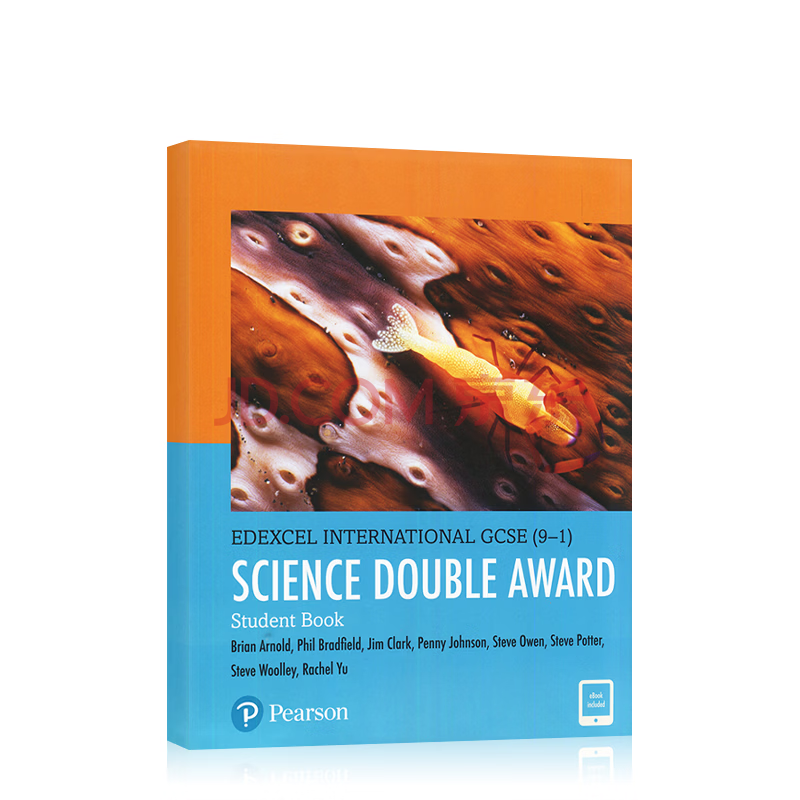
有效的资源组合可以显著提升备考效率。核心教材方面推荐使用Edexcel IGCSE Science Student Book(Pearson出版),配合对应学科的CGP Complete Revision and Practice Guide。在线资源中,Pearson ActiveLearn平台提供互动式知识点练习和进度追踪,Physics and Maths Tutor网站免费提供按主题分类的真题和详细解题方案,Seneca Learning提供结构化的在线课程配合间隔重复算法。视频资源推荐FreeScienceLessons(YouTube频道,覆盖三科核心实验和复杂概念讲解)、Cognito(高品质动画讲解,适合视觉型学习者)和Science with Hazel(IGCSE专项内容,紧密围绕考纲要求)。历年真题和评分方案可从Edexcel官方网站或PapaCambridge免费下载。建议建立个人学习档案,按学科和主题分类整理核心笔记、实验总结和错题分析,这将成为考前冲刺阶段最高效的复习工具。
An effective resource combination can significantly enhance exam preparation efficiency. For core textbooks, the Edexcel IGCSE Science Student Book published by Pearson is recommended, supplemented by subject-specific CGP Complete Revision and Practice Guides. Among online resources, the Pearson ActiveLearn platform offers interactive knowledge-point practice with progress tracking, Physics and Maths Tutor provides free topic-sorted past papers with detailed solutions, and Seneca Learning delivers structured online courses with spaced repetition algorithms. For video resources, FreeScienceLessons on YouTube covers core practicals and complex concept explanations across all three subjects, Cognito offers high-quality animated explanations ideal for visual learners, and Science with Hazel provides IGCSE-specific content closely aligned with specification requirements. Past papers and mark schemes are freely downloadable from the Edexcel official website or PapaCambridge. Consider building a personal study archive organizing core notes, practical summaries, and error analyses by subject and topic, which will serve as the most efficient revision tool during the final pre-exam sprint phase.
考前准备与考试技巧 / Exam Preparation and Technique
考前冲刺阶段(最后4-6周)应聚焦于查漏补缺和状态调整。建议制定倒计时复习计划,将剩余时间按学科比例分配,每个学科预留最后一周用于综合模拟。每日学习节奏为:上午完成一套限时真题并自我批改,下午针对暴露的薄弱知识点进行专题复习,晚上整理错题并更新学习档案。考前最后一周停止刷新题,专注回顾个人学习档案中的核心笔记和错题集。考试技巧方面:选择题使用排除法优先剔除明显错误选项;计算题务必写出完整推导过程(过程分占总分的30-50%),最终答案关注有效数字和单位;长答题按"定义-解释-例子-评价"四步框架组织,确保覆盖评分方案的所有层级要求。时间管理上,按题目的分值比例分配答题时间,为每道长答题预留至少2分钟的检查时间。考试当天保持正常饮食,携带已校准的科学计算器(推荐Casio fx-991EX或同等级别),提前30分钟到达考场。
The final sprint phase covering the last 4-6 weeks should focus on gap identification and condition optimization. Develop a countdown revision plan allocating remaining time proportionally by subject, reserving the final week per subject for comprehensive mock exams. The daily study rhythm involves completing one timed past paper with self-marking in the morning, targeted revision on exposed weak knowledge areas in the afternoon, and error-log consolidation with study-archive updating in the evening. During the final week before exams, stop attempting new questions and focus exclusively on reviewing core notes and error collections from your personal study archive. Regarding exam technique: for multiple-choice questions, use elimination method to first exclude clearly incorrect options; for calculation questions, always write out complete working steps since process marks account for 30-50% of total marks, and pay attention to significant figures and units in final answers; for extended response questions, organize answers using a four-step framework of definition, explanation, example, and evaluation to ensure coverage of all hierarchical requirements in the mark scheme. For time management, allocate response time proportional to question mark values and reserve at least 2 minutes of checking time per extended response question. On exam day, maintain normal diet, bring a calibrated scientific calculator such as the Casio fx-991EX or equivalent model, and arrive at the examination venue 30 minutes early.
需要IGCSE科学一对一辅导?
16621398022
同微信 | 免费咨询课程规划
访问 aleveler.com 了解更多
更多咨询请联系16621398022(同微信)

或截图后用「扫一扫 → 相册」选择本图