Edexcel IGCSE科学高效备考全攻略
Edexcel IGCSE Science(科学)是国际学生最常选的理科课程之一,涵盖Biology(生物)、Chemistry(化学)和Physics(物理)三大核心学科。无论是Double Award(双奖)还是Triple Award(三奖),取得高分都需要系统的方法和持续的努力。本文将从考试结构、核心知识点、备考策略和常见误区四个维度,为你梳理一份完整的IGCSE Edexcel科学备考指南。
Edexcel IGCSE Science is one of the most popular science qualifications for international students, covering Biology, Chemistry, and Physics. Whether you are taking Double Award or Triple Award, achieving top grades requires systematic methods and consistent effort. This guide provides a complete overview of exam structure, core topics, revision strategies, and common pitfalls to help you prepare effectively.
一、Edexcel IGCSE科学考试结构解析
Edexcel IGCSE科学考试分为两个Paper。Paper 1为选择题(Multiple Choice),共40题,时长45分钟,占总分的30%。Paper 2为结构化问答题(Structured Questions),时长1小时15分钟(Double Award)或1小时45分钟(Triple Award),占总分的70%。对于Triple Award同学,每门科学单独计分,最终获得三个独立的IGCSE成绩;而Double Award同学则获得两个合并的科学成绩。了解考试结构是制定复习计划的第一步:根据各Paper的权重合理分配时间,选择题部分注重速度和准确率,问答题部分则需要强化解释性写作和计算能力。
The Edexcel IGCSE Science exam consists of two papers. Paper 1 is Multiple Choice with 40 questions and a 45-minute time limit, contributing 30% of the total marks. Paper 2 features Structured Questions lasting 1 hour 15 minutes for Double Award or 1 hour 45 minutes for Triple Award, making up 70% of the marks. Triple Award students receive three separate IGCSE grades, while Double Award students receive two combined science grades. Understanding the exam structure is the first step in planning your revision: allocate time proportionally to each paper, focus on speed and accuracy for multiple choice, and strengthen explanatory writing and calculation skills for structured questions.
二、三大核心学科的知识框架
生物学(Biology)的核心内容包括细胞结构与功能、生物分子(酶、DNA)、遗传与进化、人体系统(循环、呼吸、消化)以及生态学。其中,酶学(Enzymes)和遗传学(Genetics)是高频考点,常以实验设计和数据分析题出现。化学(Chemistry)的重点包括原子结构、化学键与结构、化学计量学(Mole Calculations)、有机化学入门以及化学分析。摩尔计算(Mole Calculations)是许多同学的薄弱环节,需要反复练习才能形成肌肉记忆。物理学(Physics)涵盖力学、热学、波动、电学和核物理,公式应用题占比很高,熟练运用公式并进行单位换算至关重要。
The core content areas for Biology include cell structure and function, biological molecules such as enzymes and DNA, genetics and evolution, human body systems including circulation, respiration, and digestion, and ecology. Enzymes and Genetics are high-frequency exam topics, often appearing in experimental design and data analysis questions. Chemistry focuses on atomic structure, chemical bonding and structure, stoichiometry including mole calculations, introductory organic chemistry, and chemical analysis. Mole Calculations are a common weak point for many students and require repeated practice to build proficiency. Physics covers mechanics, thermal physics, waves, electricity, and nuclear physics, with a high proportion of formula-based questions where mastering equations and unit conversions is critical.
三、实验技能与Practical Assessment
IGCSE Edexcel科学课程不设独立的实验考试,但Paper 2中约有15%-20%的题目涉及实验技能考核。你需要熟悉常见的实验仪器(如量筒、移液管、温度计)及其精确度,掌握实验设计的基本原则(包括自变量、因变量和控制变量的识别),理解安全风险评估(Hazard and Risk Assessment),并能对实验数据进行图表绘制和误差分析。尤其要注意:Edexcel常考的Required Practicals包括生物中的食物测试和光合作用实验、化学中的滴定和制备盐类实验、以及物理中的弹簧常数和电阻测量实验。建议同学们在复习时,将每个Required Practical的实验目的、步骤、变量控制和预期结果整理成一张复习卡。
IGCSE Edexcel Science does not have a standalone practical exam, but approximately 15-20% of Paper 2 questions assess practical skills. You need to be familiar with common laboratory equipment such as measuring cylinders, pipettes, and thermometers, and their precision. You must master the principles of experimental design, including identifying independent, dependent, and control variables, understanding hazard and risk assessment, and performing graph plotting and error analysis on experimental data. Key Required Practicals frequently tested by Edexcel include food tests and photosynthesis experiments in Biology, titrations and salt preparation in Chemistry, and spring constant and resistance measurement experiments in Physics. It is recommended to compile each Required Practical's aim, procedure, variables, and expected results onto a single revision card during your review.
四、高效复习的四阶段策略
第一阶段(基础巩固,考前8-10周):通读Edexcel官方教材和Specification,用荧光笔标注每个章节的关键定义和公式。每天至少投入45分钟复习一门科学,周末进行知识图谱整理。第二阶段(专题强化,考前5-7周):对照Specification中的Checklist逐条检查掌握程度,针对弱项进行专题训练。建议采用"3-2-1"原则:每复习3个知识点,做2道相关真题,总结1个易错点。第三阶段(真题实战,考前2-4周):完成近5年的全套真题,严格计时模拟考试环境。做完后不要只对答案,要仔细研读Mark Scheme中的得分点描述。第四阶段(查漏补缺,考前1周):回顾所有错题,重点记忆高频公式和定义,调整作息保持最佳考试状态。
Phase One, Foundation Consolidation, takes place 8-10 weeks before the exam. Read through the Edexcel official textbook and Specification, highlighting key definitions and formulas in each chapter. Dedicate at least 45 minutes daily to one science subject and consolidate your knowledge map on weekends. Phase Two, Targeted Strengthening, occurs 5-7 weeks before the exam. Use the Specification Checklist to assess your mastery of each point and conduct focused practice on weak areas. Adopt the "3-2-1" principle: for every 3 concepts reviewed, complete 2 related past-paper questions and summarise 1 common mistake. Phase Three, Past Paper Practice, takes place 2-4 weeks before the exam. Complete full past papers from the last five years under strict timed conditions. Do not just check answers; study the Mark Scheme closely to understand how marks are awarded. Phase Four, Final Review, occurs in the week before the exam. Review all incorrect answers, memorise high-frequency formulas and definitions, and adjust your routine to maintain peak exam condition.
五、计算题的得分秘诀
化学和物理中的计算题是拉开分数差距的关键。以下是三类最常见的计算题型及应对方法。摩尔计算(Mole Calculations):记住核心公式 n = m/Mr(摩尔数 = 质量除以相对分子质量),解题时分三步走:先找出已知量,再套用公式计算摩尔数,最后根据化学方程式中的摩尔比求目标量。物理公式应用:如速度 v = s/t、密度 ρ = m/V、功率 P = E/t 等。建议将所有公式整理在一张A4纸上,反复默写直到烂熟于心。单位换算陷阱:检查题目给出的单位是否一致,如cm³需转换为dm³(1 dm³ = 1000 cm³),kJ需转换为J,mm需转换为m。很多同学在计算题失分不是因为不会做,而是因为单位换算错误导致整道题前功尽弃。
Calculation questions in Chemistry and Physics are the key differentiators for top grades. Here are the three most common calculation types and how to approach them. Mole Calculations require remembering the core formula n = m/Mr, where moles equal mass divided by relative molecular mass. Follow a three-step approach: identify the known quantities, apply the formula to calculate moles, and use the mole ratio from the balanced equation to find the target quantity. Physics formula application involves equations such as speed v = s/t, density ρ = m/V, and power P = E/t. Compile all formulas onto a single sheet of A4 paper and practise writing them from memory until they become second nature. Unit conversion traps are common: check whether the units given in the question are consistent. For example, cm³ must be converted to dm³ where 1 dm³ equals 1000 cm³, kJ must be converted to J, and mm to m. Many students lose marks on calculation questions not because they cannot solve them, but because unit conversion errors undo their entire working.
六、简答题与解释性写作技巧
Paper 2中的简答题(包括"Describe"、"Explain"、"Suggest"三种指令词)常常让同学感到头疼。Describe类题目要求客观描述现象或趋势,不需要解释原因。例如:"Describe the trend shown in the graph"只需描述图中数据的变化趋势。Explain类题目要求用科学原理来解释为什么,关键词是"because"或"due to"。例如:"Explain why the rate of reaction decreases over time"需要提及反应物浓度降低和有效碰撞频率减少。Suggest类题目要求基于科学知识提出合理的推测或改进方案,这类题目分值最高,需要展示你运用科学原理解决实际问题的能力。每道简答题至少写出2-3个得分点,用段落形式而非列表形式呈现,确保逻辑连贯。
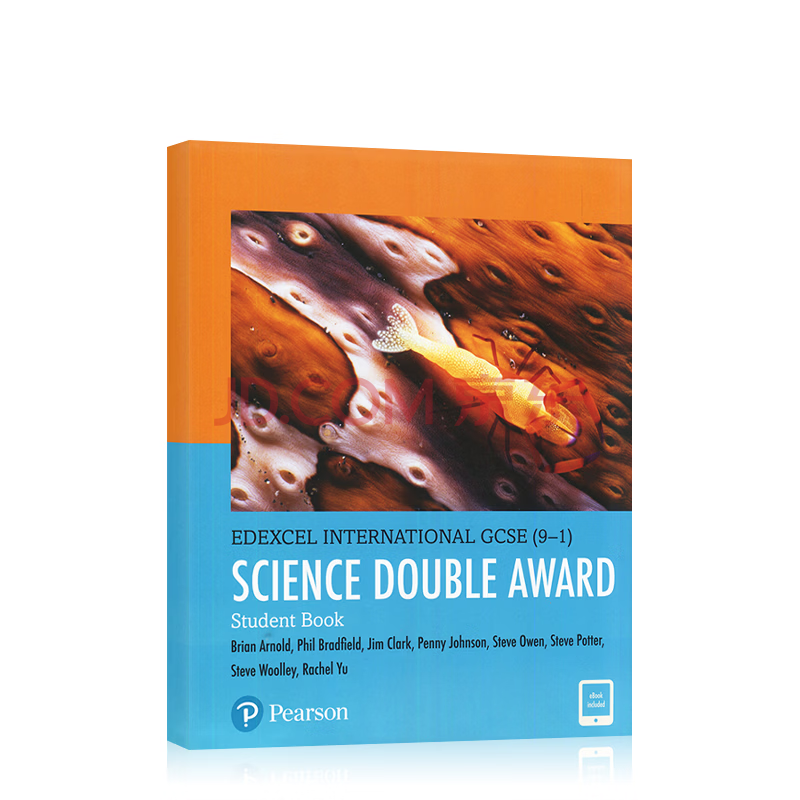
Structured questions in Paper 2, which include "Describe," "Explain," and "Suggest" command words, often cause difficulties for students. "Describe" questions require an objective account of a phenomenon or trend without explaining the cause. For example, "Describe the trend shown in the graph" only requires you to state how the data changes. "Explain" questions ask you to use scientific principles to justify why something happens, with keywords being "because" or "due to." For instance, "Explain why the rate of reaction decreases over time" requires mentioning the decreasing reactant concentration and reduced frequency of effective collisions. "Suggest" questions require you to propose reasonable inferences or improvements based on scientific knowledge, and these carry the highest marks, testing your ability to apply scientific principles to solve practical problems. Each structured answer should contain at least 2-3 marking points, presented in paragraph form rather than as a list, ensuring logical coherence.
七、常见失分误区与避坑指南
第一个常见误区:背诵教科书而不理解概念。IGCSE科学的考查重点已经从知识记忆转向知识应用,单纯背诵定义无法应对Paper 2中的分析和评价类题目。建议用Feynman Technique(费曼学习法)来检验理解程度:尝试用自己的语言将一个概念讲给完全不懂的人听,如果中途卡壳就说明理解不到位。第二个误区:忽视科学术语的精确表达。Edexcel的Mark Scheme对术语使用非常严格,如"mass"不能说成"weight","accurate"和"precise"有本质区别,"independent variable"和"dependent variable"不可混淆。第三个误区:考前只刷选择题不练简答题。选择题可以快速查漏补缺,但简答题的得分能力需要长期训练才能建立。建议每周至少完整练习2-3道Paper 2级别的简答题,并对照Mark Scheme自我批改。
The first common pitfall is memorising the textbook without understanding concepts. IGCSE Science has shifted its assessment focus from knowledge recall to knowledge application, and rote memorisation of definitions will not help with the analysis and evaluation questions in Paper 2. Use the Feynman Technique to check your understanding: try explaining a concept in your own words to someone with no knowledge of the topic; if you get stuck, your understanding is incomplete. The second pitfall is neglecting precise scientific terminology. Edexcel's Mark Scheme is very strict on term usage: "mass" cannot be replaced by "weight," "accurate" and "precise" are fundamentally different, and "independent variable" and "dependent variable" must not be confused. The third pitfall is only practising multiple-choice questions before the exam while ignoring structured questions. Multiple-choice questions help identify gaps quickly, but the ability to score on structured questions requires sustained practice to develop. Complete at least 2-3 full Paper-2-level structured questions every week and self-assess against the Mark Scheme.
八、真题资源的高效利用方法
真题是IGCSE备考中最宝贵的资源,但很多同学使用真题的方式不够高效。正确的真题使用流程分为五个步骤。第一步:完整计时完成一套真题,模拟真实考试环境。第二步:用Mark Scheme批改,但先不要看Examiner's Report。第三步:将错题分为三类:知识漏洞(不会做)、理解偏差(做错但以为对了)、粗心失误(会做但错了)。第四步:针对不同类型的错题采取不同的补救措施:知识漏洞回归教材重新学习,理解偏差分析Mark Scheme中的得分逻辑,粗心失误加强计时练习。第五步:阅读Examiner's Report,这部分是考官对当年考生表现的总结,包含了大量关于常见错误和得分要点的洞察。特别注意Report中反复出现的"many candidates failed to..."和"the best answers included..."这类表述。
Past papers are the most valuable resource for IGCSE preparation, but many students do not use them efficiently. The correct approach to past papers involves five steps. Step one: complete a full paper under timed conditions, simulating the real exam environment. Step two: mark your answers using the Mark Scheme, but do not read the Examiner's Report yet. Step three: classify incorrect answers into three categories: knowledge gaps where you did not know the content, understanding errors where you thought you were right but were wrong, and careless mistakes where you knew the content but made an error. Step four: apply different remediation strategies for each error type -- return to the textbook and relearn for knowledge gaps, analyse the marking logic in the Mark Scheme for understanding errors, and increase timed practice for careless mistakes. Step five: read the Examiner's Report, which summarises examiner observations on that year's cohort and contains rich insights on common mistakes and mark-earning strategies. Pay special attention to recurring phrases such as "many candidates failed to..." and "the best answers included...".
九、考试当天的实战锦囊
考前准备清单:提前一晚准备好透明笔袋(内含2-3支黑色签字笔、2B铅笔、橡皮、尺子、计算器),确保计算器电池充足且已清除所有存储数据。核对准考证上的考试时间和地点,规划好交通路线并预留30分钟缓冲时间。考试时间管理:Paper 1(选择题)每题平均只有约1分钟,遇到卡壳的题目先标记跳过,全部做完后再回头思考。Paper 2(简答题)按分值分配时间:通常1分对应1分钟,先做有把握的高分题建立信心,留出最后5分钟检查计算题的单位和有效数字。心态调整技巧:如果出现大脑空白的瞬间,暂停答题,闭上眼睛做三次深呼吸,默念"我已经准备充分",然后从最简单的一道题重新开始。
Pre-exam checklist: prepare a transparent pencil case the night before containing 2-3 black pens, 2B pencils, an eraser, a ruler, and a calculator. Ensure the calculator has sufficient battery and that all stored data has been cleared. Verify the exam time and location on your admission ticket, plan your travel route, and allow a 30-minute buffer. Exam time management: Paper 1 Multiple Choice allows roughly 1 minute per question on average. Mark and skip any question you get stuck on, returning to it after completing the rest. For Paper 2 Structured Questions, allocate time based on marks -- typically 1 minute per mark. Start with high-mark questions you are confident about to build momentum, and reserve the last 5 minutes to check units and significant figures in calculation questions. Mindset adjustment: if your mind goes blank, pause, close your eyes, take three deep breaths, silently affirm "I have prepared thoroughly," and restart from the easiest remaining question.
十、家长如何有效支持孩子备考
作为家长,你的角色不是充当"家庭教师",而是成为孩子的学习环境营造者和情绪支持者。以下是三个有效的支持策略。第一,创造专注的学习环境:确保孩子有一个安静、整洁的固定学习空间,减少手机和社交媒体干扰。可以和孩子的手机约定"学习时段免打扰"规则。第二,参与复习进度跟踪:每周和孩子一起花10分钟回顾本周的复习进度,用Specification Checklist逐条标记已掌握和未掌握的知识点。这种可视化进度会给孩子带来成就感,也能及早发现薄弱环节。第三,关注情绪而非分数:当孩子模考成绩不理想时,避免批评指责,转而询问"你觉得哪部分最难?需要什么帮助?"这种支持性对话比任何补习都更能提升孩子的学习动力和考试信心。
As a parent, your role is not to be a home tutor but to create a supportive learning environment and provide emotional encouragement. Here are three effective support strategies. First, create a focused study environment: ensure your child has a quiet, tidy, dedicated study space, minimising distractions from phones and social media. Consider establishing "no-interruption study hours" rules with your child's phone. Second, participate in revision progress tracking: spend 10 minutes each week reviewing your child's revision progress together, using the Specification Checklist to mark mastered and unmastered topics. This visual progress tracking gives your child a sense of achievement and helps identify weak areas early. Third, focus on emotions rather than scores: when mock exam results are disappointing, avoid criticism and instead ask "Which part did you find hardest? What help do you need?" This supportive dialogue boosts learning motivation and exam confidence more effectively than any additional tutoring.
备考资源推荐
官方资源方面,Edexcel官方网站提供免费的Specification、Sample Assessment Materials和Past Papers,是备考的基础。推荐使用Save My Exams和Physics and Maths Tutor这两个免费学习平台,它们提供按主题分类的真题和详细解析。复习指南方面,CGP出版社的Edexcel IGCSE Science Revision Guide以简洁的笔记风格呈现核心知识点,适合考前快速浏览。最后提醒:将所有资料打印或离线保存,避免复习时被电子设备的通知打断,纸质学习在信息留存率方面比屏幕学习高出约15%。
For official resources, the Edexcel website provides free Specifications, Sample Assessment Materials, and Past Papers, forming the foundation of your preparation. Recommended free learning platforms include Save My Exams and Physics and Maths Tutor, which offer topic-sorted past paper questions with detailed solutions. For revision guides, the CGP Edexcel IGCSE Science Revision Guide presents core concepts in concise note format, ideal for quick pre-exam review. A final tip: print or download all materials for offline access to avoid interruption from device notifications during study sessions, as paper-based learning shows approximately 15% higher information retention than screen-based learning.
需要专业IGCSE科学辅导?
16621398022
同微信 | 免费咨询课程规划
访问 aleveler.com 了解更多
更多咨询请联系16621398022(同微信)

或截图后用「扫一扫 → 相册」选择本图