Edexcel IGCSE科学全面备考指南
一、为什么Edexcel IGCSE科学值得重视?
Edexcel IGCSE科学课程是国际学生通往A-Level理科的黄金跳板。与英国本土GCSE相比,IGCSE科学更注重实验探究和跨学科思维,考试内容不包含课程作业(coursework),而是通过笔试和实验替代卷(Alternative to Practical)来评估。对于中国学生而言,这套体系有两个突出优势:一是评分标准透明,卷面分数直接对应等级边界;二是提供双科(Double Award)和三科(Triple Award)两种路径,灵活匹配学生的学术目标和时间投入。
Edexcel IGCSE Science is the golden bridge for international students transitioning to A-Level sciences. Compared to the UK domestic GCSE, the IGCSE places greater emphasis on practical investigation and cross-disciplinary thinking, assessing students through written papers and the Alternative to Practical paper rather than coursework. For Chinese students, this system offers two key advantages: transparent grade boundaries directly tied to raw marks, and the flexibility to choose between Double Award and Triple Award routes based on academic goals and time commitment.
二、考试结构全景解析
Edexcel IGCSE科学分为三个独立学科:生物、化学和物理。双科(Double Award)考生需完成每科的两份笔试卷(Paper 1和Paper 2),合计6份试卷,最终获得两个IGCSE等级(如AA、BB)。三科(Triple Award)考生则需额外完成每科的实验替代卷(Paper 6),合计9份试卷,获得生物、化学、物理三个独立等级。Paper 1考查核心内容(Core),Paper 2考查拓展内容(Supplement),Paper 6以笔试形式模拟实验设计和数据分析能力。每份试卷时长1小时15分钟至2小时不等,卷面总分因科目而异。
Edexcel IGCSE Science comprises three separate disciplines: Biology, Chemistry, and Physics. Double Award candidates sit two written papers per subject (Paper 1 and Paper 2), totaling six papers, and receive two IGCSE grades (e.g., AA, BB). Triple Award candidates additionally complete the Alternative to Practical paper (Paper 6) for each subject, totaling nine papers and earning three independent grades. Paper 1 covers Core content, Paper 2 covers Supplement, and Paper 6 assesses experimental design and data analysis through written format. Each paper ranges from 1 hour 15 minutes to 2 hours, with total marks varying by subject.
三、生物模块:从细胞到生态系统的系统性思维
Edexcel IGCSE生物覆盖五大主题:生命特征与细胞结构、生物分子与酶、植物与动物生理、遗传与进化、生态与环境。中国学生最容易在"实验设计"和"数据分析"题型上失分:生物Paper 6常要求描述一项探究酶活性或光合作用影响因素的实验,包括变量控制、数据表格设计和异常值处理。建议背诵生物学术语的精准英文拼写,因为拼写错误在关键词评分中直接扣分。呼吸作用与光合作用的化学方程式必须熟练掌握,二者互为逆反应是高频考点。
Edexcel IGCSE Biology covers five major themes: characteristics of life and cell structure, biological molecules and enzymes, plant and animal physiology, genetics and evolution, and ecology and the environment. Chinese students most commonly lose marks on "experimental design" and "data analysis" questions -- the Biology Paper 6 frequently asks candidates to describe an investigation into factors affecting enzyme activity or photosynthesis, including variable control, data table design, and anomalous result handling. Precise English spelling of biological terminology is essential, as spelling errors are penalized in keyword-based marking. The chemical equations for respiration and photosynthesis must be mastered thoroughly; their inverse relationship is a recurring high-frequency examination point.
四、化学模块:微粒模型与量化计算双线并进
化学是Edexcel IGCSE科学中计算量最大的学科。核心内容包括原子结构、元素周期表、化学键(离子键、共价键、金属键)、化学计量学(摩尔计算)、化学反应类型(酸碱中和、氧化还原、沉淀反应)以及有机化学入门。摩尔概念是整门课程的计算基石:从相对原子质量到摩尔质量,再到浓度计算和气体体积换算,每一步都相互关联。中国学生普遍在化学计算上有优势,但容易在"解释型"题目上失分,例如要求用微粒理论解释为什么离子化合物具有高熔点、为什么石墨能导电。历年真题中,电解、反应速率和可逆反应也是出题重点。
Chemistry is the most calculation-intensive discipline in Edexcel IGCSE Science. Core topics include atomic structure, the periodic table, chemical bonding (ionic, covalent, metallic), stoichiometry (mole calculations), reaction types (acid-base neutralisation, redox, precipitation), and introductory organic chemistry. The mole concept is the computational cornerstone of the entire course -- from relative atomic mass to molar mass, through to concentration calculations and gas volume conversions, each step is interconnected. Chinese students generally hold an advantage in chemical calculations but tend to lose marks on "explain" questions, such as using particle theory to explain why ionic compounds have high melting points or why graphite conducts electricity. In past papers, electrolysis, rates of reaction, and reversible reactions are consistently high-weight topics.
五、物理模块:从力学到电磁学的逻辑链条
Edexcel IGCSE物理涵盖力与运动、能量与功、波动(光与声)、电学、磁学与电磁感应、核物理与空间物理六大板块。物理卷的核心难点不在于计算本身,而在于将物理概念用简洁精确的英文表达出来。尤其是"解释"类题目,例如解释为什么刹车距离在潮湿路面增加、为什么变压器只能用于交流电。公式表(Formula Sheet)在考试中提供,但学生仍需理解每个符号的物理含义和单位。运动学图像题(速度-时间图、距离-时间图)是Paper 1和Paper 2的必考题,要求从图像中读取加速度、位移等信息。Paper 6的实验题常考电路连接、弹簧伸长实验和光的折射。
Edexcel IGCSE Physics covers six major areas: forces and motion, energy and work, waves (light and sound), electricity, magnetism and electromagnetic induction, and nuclear and space physics. The core difficulty in Physics papers lies not in calculation itself but in expressing physical concepts in concise and accurate English. This is particularly true for "explain" questions, such as why braking distance increases on wet roads or why transformers only work with alternating current. A formula sheet is provided in the examination, but students must still understand the physical meaning and units of each symbol. Kinematics graph questions (velocity-time graphs, distance-time graphs) are compulsory in both Paper 1 and Paper 2, requiring the extraction of acceleration, displacement, and other information from graphical data. Paper 6 practical questions frequently test circuit construction, spring extension experiments, and light refraction.
六、实验替代卷Paper 6:拿满分的策略
Paper 6(Alternative to Practical)是区分A和A*的关键试卷。它不要求动手操作,而是以笔试形式评估学生的实验思维。典型题型包括:识别实验仪器并说明用途、描述安全注意事项、设计实验步骤、绘制数据表格、作图(折线图或柱状图)、分析数据趋势、指出实验误差来源并提出改进方案。阅卷标准中,数据表格必须有正确的行列表头和单位、折线图必须用光滑曲线连接数据点(而非逐点连线)、误差分析必须区分系统误差和随机误差。建议学生在备考时将每个Required Practical的完整流程用英文默写一遍,特别注意"fair test"(公平测试)的概念,即每次只改变一个自变量(independent variable)。
Paper 6 (Alternative to Practical) is the key paper separating an A from an A*. It does not require hands-on manipulation but assesses experimental thinking through written format. Typical question types include: identifying apparatus and stating their uses, describing safety precautions, designing experimental procedures, drawing data tables, plotting graphs (line graphs or bar charts), analysing data trends, and identifying sources of experimental error with suggested improvements. In the marking criteria, data tables must have correct row and column headings with units, line graphs must use a smooth curve connecting data points (not point-to-point straight lines), and error analysis must distinguish between systematic and random errors. Candidates are advised to write out the complete procedure for each Required Practical in English from memory during revision, paying particular attention to the concept of a "fair test" -- changing only one independent variable at a time.
七、双科还是三科?做出最适合的选择
这是每个Edexcel IGCSE科学学生都要面对的核心决策。双科(Double Award)适合以文科或商科为A-Level方向的学生:用40%的课时量获取两个科学IGCSE成绩,时间性价比最高。三科(Triple Award)则面向以理工科(医学、工程、自然科学)为A-Level目标的学生,三个独立等级在UCAS申请中更具竞争力。从内容覆盖看,双科省略了每科中约15%的拓展专题(如生物学中的单克隆抗体、物理学中的电机原理),但在Paper 1和Paper 2中仍会考查部分拓展内容。如果学生已经在Year 10结束时获得稳定的Level 7成绩,建议选择Triple Award路线;如果仍在Level 5-6之间波动,Double Award更为稳妥。
This is the pivotal decision every Edexcel IGCSE Science student must face. Double Award suits students heading toward humanities or business at A-Level -- it offers two science IGCSE grades for approximately 40% of the teaching time, maximising time efficiency. Triple Award is aimed at students targeting STEM pathways at A-Level (medicine, engineering, natural sciences), where three independent grades carry greater weight in UCAS applications. In terms of content coverage, Double Award omits about 15% of extension topics per subject (e.g., monoclonal antibodies in Biology, electric motor principles in Physics), though some extension content is still examined in Papers 1 and 2. If a student has already achieved a consistent Level 7 by the end of Year 10, the Triple Award route is recommended; if results are fluctuating between Levels 5 and 6, Double Award provides a safer path.
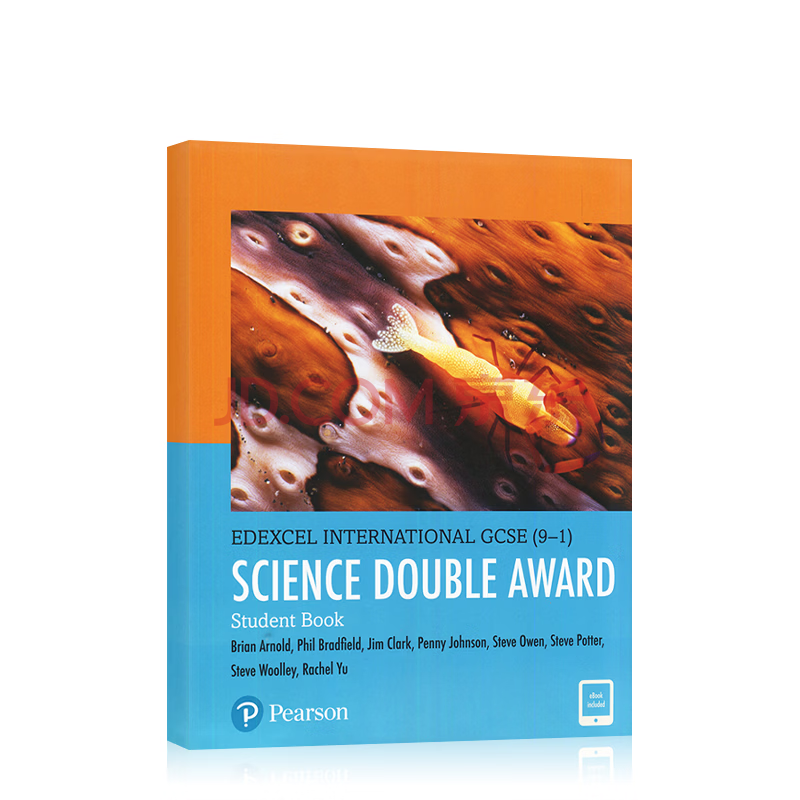
八、高效备考时间规划
理想的Edexcel IGCSE科学备考周期为12-16周。前4周完成知识扫盲:用CGP Revision Guide或Collins教材逐章梳理,重点标记自己薄弱的专题。中间4-6周进入专题强化,每完成一个专题立即做对应的分类真题(topical past papers),至少做近5年的题目。最后2-4周进行全真模考(mock exams),严格按照考试时间计时完成整份试卷,模拟考场压力。建议每周为每门科学分配3-4小时专项时间,另加1小时的Paper 6练习。错题本(error log)是提分利器:每道错题旁标注错误类型(知识盲区、审题失误、计算粗心、语言表述不清),考前重点回顾高频错误类型对应的知识点。
The ideal revision timeline for Edexcel IGCSE Science spans 12 to 16 weeks. The first 4 weeks focus on knowledge consolidation -- systematically reviewing each chapter using the CGP Revision Guide or Collins textbook, with particular attention to weaker topics. The middle 4-6 weeks shift to targeted practice, completing topical past paper questions for each topic immediately after reviewing it, covering at least the most recent five years of papers. The final 2-4 weeks are dedicated to full mock examinations under timed conditions to simulate exam pressure. Allocate 3-4 hours per week to each science subject, plus one additional hour for Paper 6 practice. An error log is a powerful tool for improvement -- beside each incorrect question, note the error type (knowledge gap, misinterpretation, calculation carelessness, unclear expression), and focus revision on the topics associated with the most frequent error types before the examination.
九、常见失分陷阱与规避方法
根据历年阅卷报告,Edexcel IGCSE科学考生最容易掉入以下陷阱。第一,"describe"与"explain"混用:describe只需陈述观察到的事实(如"溶液颜色从蓝色变为无色"),explain必须给出原因(如"因为铜离子被还原为铜原子")。第二,单位遗漏或错误:物理计算题中漏写单位直接扣1分,化学中混淆mol/dm³与g/dm³也是常见失误。第三,实验变量表述不严谨:"same amount"应为"same mass"或"same volume","same temperature"应注明"controlled using a water bath at 25°C"。第四,图表类题目没有用尺子画坐标轴,曲线未用平滑曲线拟合。第五,生物学术语拼写错误:"photosynthesis"、"respiration"、"haemoglobin"等高频词的拼写必须精准。
Based on examiner reports from past years, Edexcel IGCSE Science candidates most commonly fall into the following traps. First, confusing "describe" with "explain" -- describe only requires stating observed facts (e.g., "the solution colour changed from blue to colourless"), whereas explain must provide a reason (e.g., "because copper ions were reduced to copper atoms"). Second, missing or incorrect units -- omitting units in Physics calculations costs one mark, and confusing mol/dm with g/dm in Chemistry is a frequent error. Third, imprecise variable descriptions -- "same amount" should be "same mass" or "same volume", and "same temperature" should specify "controlled using a water bath at 25 degrees Celsius". Fourth, graph questions where axes are drawn without a ruler and curves are not fitted with a smooth line. Fifth, spelling errors in biological terminology -- high-frequency words such as "photosynthesis", "respiration", and "haemoglobin" must be spelled with absolute accuracy.
十、真题刷题的科学方法
做真题是Edexcel IGCSE科学备考的核心环节,但"刷题"不等于"做完对答案"。有效刷题分三步走:第一步,限时完成:严格按照考试规定的时间(如Paper 1为2小时),中途不翻书、不看手机,完全模拟考场环境。第二步,精细批改:用官方评分标准(mark scheme)逐题对照,不只看答案对错,更要看表述是否与评分点完全吻合。评分标准中常出现"Accept..."(可接受替代答案)和"Reject..."(不接受)的提示,这是理解阅卷逻辑的关键。第三步,归纳复盘:将错题按题型分类(选择题、简答题、计算题、实验题),找出自己的薄弱题型而非薄弱知识点。很多学生发现自己不是不会,而是不擅长某种题型的时间分配或答题格式。
Past paper practice is the central component of Edexcel IGCSE Science revision, but "doing papers" is not the same as "doing and checking answers". Effective practice follows three steps. Step one: timed completion -- strictly adhere to the exam time limit (e.g., 2 hours for Paper 1) without consulting textbooks or phones, fully simulating examination conditions. Step two: detailed marking -- compare each answer against the official mark scheme, checking not only correctness but also whether the wording precisely matches the marking points. Mark schemes frequently contain "Accept..." (alternative acceptable answers) and "Reject..." (unacceptable answers) annotations, which are key to understanding the marking logic. Step three: pattern review -- classify incorrect answers by question type (multiple choice, short answer, calculation, practical) to identify weak question types rather than weak knowledge areas. Many students discover they are not lacking understanding but are instead struggling with time allocation or answer formatting for specific question types.
十一、公式与定义的记忆策略
Edexcel IGCSE科学累计涉及约60个核心公式和超过200个关键定义。单纯死记硬背效率低下,建议采用"理解-关联-应用"三层记忆法。第一层理解:每个公式背后的物理或化学意义,例如理解F=ma是"力是改变运动状态的原因"而非"力维持运动"。第二层关联:将公式按主题归类,例如化学中与"摩尔"相关的所有公式(n=m/M、n=cV、n=V/24)放在同一张思维导图中,标注彼此之间的推导关系。第三层应用:为每个公式找3-5个典型真题例题,做完后记录公式变形和常见单位转换。定义方面,建议将关键词用荧光笔标记,例如"Diffusion is the net movement of particles from a region of higher concentration to a region of lower concentration down a concentration gradient"中的"net movement"和"down a concentration gradient"是评分的核心词组。
Edexcel IGCSE Science involves approximately 60 core formulas and over 200 key definitions. Rote memorisation alone is inefficient; a three-layer approach of "understand, connect, apply" is recommended. Layer one -- understand: the physical or chemical significance behind each formula, for example understanding that F=ma means "force is what causes a change in motion" rather than "force maintains motion". Layer two -- connect: group formulas by theme. For instance, place all "mole-related" formulas in Chemistry (n=m/M, n=cV, n=V/24) on a single mind map, annotating the derivational relationships between them. Layer three -- apply: find 3-5 typical past-paper examples for each formula, and after solving them, record formula rearrangements and common unit conversions. For definitions, highlight keywords with a marker pen. For example, in "Diffusion is the net movement of particles from a region of higher concentration to a region of lower concentration down a concentration gradient", the phrases "net movement" and "down a concentration gradient" are the core marking points.
十二、考试当天:决胜的最后一公里
考试当天的状态管理和策略执行往往决定了最终成绩的上限。以下五条建议来自多位高分考生的实战经验。第一,提前检查考试用品:透明铅笔盒、两支以上黑色水笔、HB铅笔(用于作图)、橡皮、尺子(至少15cm,用于画坐标轴)、计算器(确保电池充足、角度模式设置为Deg)。第二,阅读试卷时的黄金5分钟:通览全卷,标记出自己最有把握的大题,先做它们建立信心;计算题占比大的卷子(如化学Paper 1),优先完成计算板块。第三,时间分配的刚性纪律:每道题的时间预算=该题分值÷卷面总分×考试时长,超时2分钟仍未答完立即跳过。第四,最后5分钟的反查策略:不纠结于未完成的难题,而是回头检查已完成题目的单位和有效数字。第五,保持平稳心态:Edexcel IGCSE科学有多次考试窗口(1月和5/6月),一次不理想不代表终点。
State management and strategy execution on exam day often determine the upper limit of final results. The following five tips come from the practical experience of high-scoring candidates. First, check your examination equipment in advance -- a transparent pencil case, two or more black pens, HB pencils for graph drawing, an eraser, a ruler (at least 15 cm for drawing axes), and a calculator with sufficient battery and the angle mode set to Deg. Second, use the golden five minutes of reading time wisely -- scan the entire paper, mark the high-confidence questions, and start with those to build momentum; for calculation-heavy papers such as Chemistry Paper 1, prioritise the calculation section. Third, maintain rigid time discipline -- the time budget per question equals the question's mark value divided by the total paper marks multiplied by the exam duration; skip any question exceeding the budget by more than two minutes. Fourth, use the final five minutes for a reverse check -- rather than struggling with unfinished challenging questions, revisit completed answers to verify units and significant figures. Fifth, maintain a calm mindset -- Edexcel IGCSE Science offers multiple examination windows (January and May/June), and one unsatisfactory sitting does not represent the endpoint.
需要专业A-Level辅导?
16621398022
同微信 | 免费咨询课程规划
访问 aleveler.com 了解更多
更多咨询请联系16621398022(同微信)

或截图后用「扫一扫 → 相册」选择本图